

Key points:
- Biological age and chronological age are two different indicators of health and ageing.
- Chronological age is the number of years since birth, while biological age reflects the condition of the body.
- Understanding biological age helps predict the risk of disease and motivates people to take care of their health.
- You can reduce your biological age through lifestyle changes such as better sleep, physical activity and healthy eating.
- Mindset and approach to ageing have a significant impact on longevity and well-being.
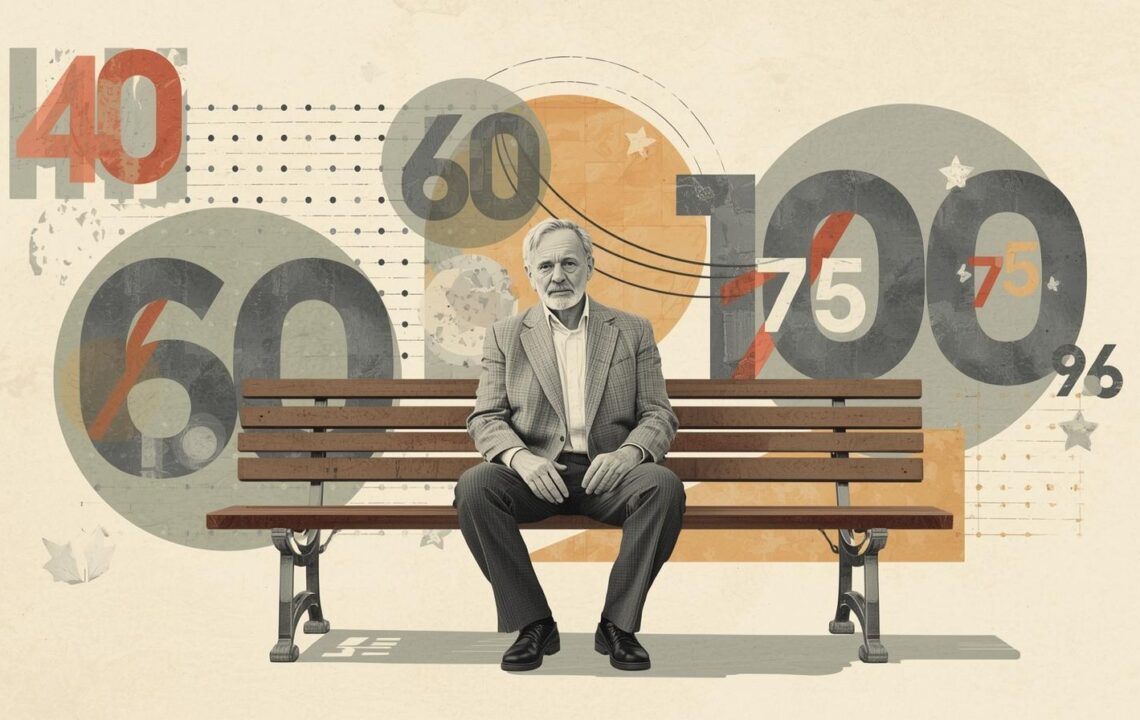
Everything is simple on your identity card: date of birth, a few digits, one ‘official’ age. However, our body has its own calendar. For some, a 50-year-old is still a fit, curious 40-year-old, for others – a tired 30-something in the body of a 60-year-old. The key to understanding longevity is biological age, not just chronological age.
What is chronological age and what is biological age?
Chronological age is simply the number of years since the day of birth. It is the same for everyone, regardless of lifestyle, genes or past illnesses. This number determines retirement, insurance and official forms.
Biological age describes the actual condition of the body: cells, organs, tissues and systems. It is a kind of ‘technical report’ on how our body copes with the passage of time, stress, habits and the environment. We may be 45 years old according to our chronological age and 38 years old according to our biological age – or vice versa.
For the longevity movement, the key question is: how to make our biological age as low as possible in relation to our chronological age – and maintain this advantage for as long as possible.
Why is biological age so important for longevity?
It is not the number of candles on the cake that determines how long we will be healthy and fit, but the degree of ‘wear and tear’ on the body. In practice, biological age is a better predictor of the risk of many chronic diseases: hypertension, type 2 diabetes, heart disease, dementia and cancer. A person whose body is biologically ‘younger’ than their age usually enters the phase of disease-related ageing more slowly.
Being aware of one’s biological age is also extremely motivating. Instead of the abstract slogan ‘take care of yourself’, we get specific information: your body is 52 years old today, but it actually functions like that of a 45-year-old. Or vice versa – like a 60-year-old, even though you are 45. This allows you to turn caring for your health into a real, measurable project.
How is biological age measured?
There is no single, universal, ideal test that will give us our ‘true’ biological age down to the month. Instead, various groups of indicators – biomarkers – are used, which together give a picture of the condition of the body. The most commonly used are:
- Blood parameters – including fasting blood sugar, glycated haemoglobin, lipid profile (total cholesterol, HDL, LDL, triglycerides), markers of inflammation (e.g. CRP).
- Blood pressure and cardiovascular health – hypertension and blood vessel stiffness are typical signs of a biologically ‘aged’ body.
- Body composition – body fat percentage, muscle mass, especially the presence of visceral fat around the organs.
- Physical fitness – grip strength, time taken to climb stairs, chair test, respiratory capacity.
- Cognitive tests – memory, information processing speed, concentration.
- Cellular markers – e.g. telomere length or so-called epigenetic clocks, which are tested in specialised laboratories.
More and more laboratories and clinics now offer ‘biological age’ test panels, and apps and wearable devices help monitor some parameters at home – although it is worth treating them as a tool for tracking trends rather than absolute truth.
Is it possible to rejuvenate your biological age?
The good news is that, unlike your chronological age, your biological age is malleable. Lifestyle changes can improve key markers in a surprisingly short time. You cannot turn back the clock on your birthday, but you can make your body behave like that of someone several or even a dozen years younger.
Four pillars have the greatest impact on biological age:
- Sleep – 7–9 hours regularly, proper sleep hygiene, avoiding late-night scrolling and heavy meals just before bedtime.
- Exercise – a combination of strength training, aerobic activity (walking, running, cycling) and balance and mobility exercises. Consistency is more important than extreme feats.
- Nutrition – a diet rich in vegetables, fruit, whole grains, healthy fats, good sources of protein, limiting ultra-processed foods, alcohol and excess sugar.
- Stress and recovery – conscious stress management, breathing exercises, microbreaks during the day, building relationships that strengthen us rather than exhaust us.
Added to this are individual elements: quitting smoking, controlling blood pressure, maintaining a healthy weight, and medical support tailored to age and lifestyle. The common denominator is simple: anything that helps cells regenerate better and reduces chronic inflammation usually ‘rejuvenates’ our biological age.
Biological age and mindset: how thinking can age or rejuvenate us
The ageing process is influenced not only by test results, but also by our beliefs. If we treat age as an excuse (‘it’s too late for that’, ‘it’s not appropriate at my age’), we limit our activity, curiosity and willingness to learn – and this directly translates into the rate of ageing of the brain and body.
Research shows that people who perceive ageing as a time of development, relationships and new experiences live longer and are less likely to get sick. In other words, working on your longevity mindset is just as important as your training plan.
How to start working on your biological age?
You don’t have to order a full package of genetic tests and examinations right away. A good start is a simple, honest lifestyle audit:
- how many hours you actually sleep at night, not how many you plan to,
- how often do you get up from your chair and move around,
- what does your plate look like on a typical day,
- what do you do when you are stressed: do you reach for your phone, sweets, alcohol, or do you take a breath, go for a walk, have a conversation, write in your notebook,
- do you have people around you with whom you can talk honestly about life, plans and fears.
The next step is to consult a doctor or lifestyle medicine specialist and determine which tests make sense to start with. Together, you can come up with a plan that is realistic – tailored to your work, family and finances.
The most common myths about biological age
Many simplifications have arisen around the concept of biological age. One of the most popular is the belief that the result of such a test is permanent – like a sentence. In reality, it is more like a snapshot of a specific moment in time, which can be updated if we consistently change our habits.
The second myth is the belief that one magical test or supplement is enough to suddenly ‘rejuvenate’ you by 10 years. Longevity is a process, not a single treatment. Instead of looking for miracle solutions, it is better to consistently work on the fundamentals: sleep, exercise, nutrition, relationships and inner peace. These are the factors that most often determine how quickly we really age.
Longevity: a long-term game that is worth starting today
Biological age is not a sentence, but feedback. It is a number that says, ‘This is where you are today. You can go towards faster ageing or towards a younger, fitter body.’ The longevity movement does not promise immortality. It promises something more realistic: more years in which you truly live – present, conscious, in relationships, in motion.
The first step is simple: instead of just asking ‘how old am I?’, start asking ‘how am I really ageing – and what can I do to age more wisely from tomorrow onwards?’.
Author: Paweł Wieczorek