
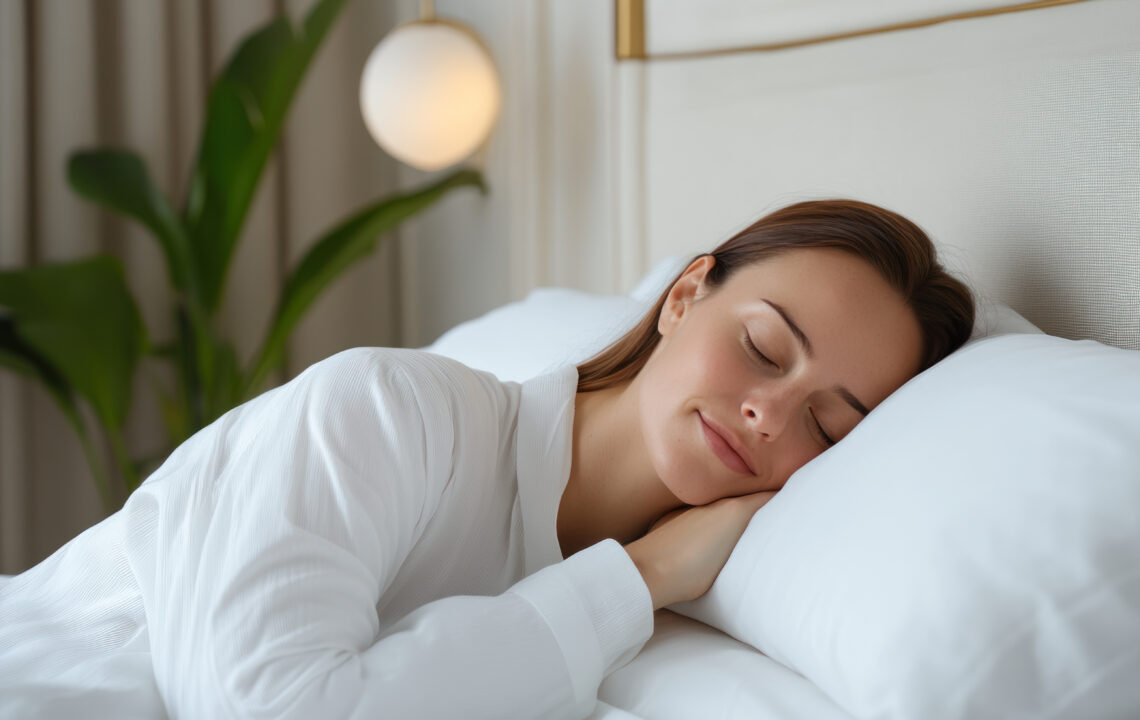
Every night you have a chance to reset your body and wake up with energy for the whole day. The problem is that most people don’t use this potential – they sleep poorly, wake up tired, and drink another coffee instead of fixing the basics. Sleep quality doesn’t depend on luck or genetics, but on specific habits you can implement today. Twelve simple rules can transform your nights and days – each backed by scientific research and confirmed by experts. Ready for the best sleep of your life?
Key information about sleep quality:
- Regular sleep hours synchronize the internal biological clock
- Room temperature of 16-19°C promotes deep sleep
- Blue light in the evening blocks melatonin and delays sleep
- Caffeine after 2:00 PM disrupts falling asleep even 6 hours later
- Short nap (20-30 minutes) can improve productivity, but longer naps destroy nighttime sleep
Fixed hours – the foundation of good sleep
Your body loves predictability. When you go to bed and get up at the same time every day, even on weekends – your internal biological clock works like a Swiss watch. Melatonin is secreted punctually, body temperature drops at the right moment, and sleep comes naturally.
Benefits of regular sleep rhythm:
- Faster falling asleep without tossing and turning in bed
- Deeper and more regenerative sleep
- Natural waking up without an alarm clock
- Better energy and concentration during the day
- More stable mood and stress resistance
Irregular hours are like constantly changing time zones. Your body doesn’t know when it should rest and when to be active. The result? Difficulty falling asleep, shallow sleep, and fatigue despite sufficient hours in bed. Research shows that people with regular sleep rhythm have 30% better quality of rest.
Bedroom temperature – cold is your ally
Your body temperature must drop by about 1 degree to fall asleep deeply. A too warm bedroom blocks this process and causes you to wake up at night. The optimal temperature is 16-19 degrees Celsius, it may seem cool, but that’s when you sleep best.
A cool environment also helps maintain deep sleep throughout the night. When the room temperature exceeds 22 degrees, deep sleep phases shorten, and awakenings are more frequent. Investing in temperature regulation is one of the most effective changes you can make.
Darkness – total and absolute
Your brain detects light even through closed eyelids. Every ray – from a street lamp outside the window, a TV LED, or a glowing alarm clock – can disrupt melatonin production. The hormone that not only helps you fall asleep but also regulates sleep depth.
How to ensure ideal darkness:
- Blackout blinds or curtains blocking light from outside
- Taping or turning off all LED lights in the bedroom
- Avoiding phone and tablet for an hour before bed
- Considering an eye mask if eliminating light is impossible
Even 8 lux (less than a night light shines) can disturb your sleep. Darkness is not a luxury – it’s a biological need.
Evening screens – sleep’s worst enemy
Blue light emitted by phones, tablets, and computers tricks your brain. It signals “it’s day,” inhibiting melatonin production and delaying sleep by 1-2 hours. Even 30 minutes in front of a screen is enough to disrupt the entire rhythm.
If you must use screens in the evening, turn on blue light filters or night mode. But the best strategy is a simple rule – no screens for an hour before bed. Replace scrolling with a book, conversation, or calm music. Your brain will reward you with better sleep.
Caffeine – know its time limits
Caffeine has a half-life of 5-6 hours. This means that coffee drunk at 4:00 PM is still circulating in your body at 10:00 PM in an amount sufficient to disrupt sleep. It blocks adenosine receptors – a compound that signals fatigue and the need for rest.
People sensitive to caffeine should avoid it after 2:00 PM. Even if you fall asleep without problems after evening coffee, the quality of your sleep – especially deep phases – is worse. Research confirms – caffeine in the afternoon is stolen hours of regeneration, even if you don’t feel it.
Alcohol – sleep’s false friend
Many people drink alcohol “for sleep” because it actually makes falling asleep easier. The problem? It destroys sleep quality in the second half of the night. It blocks REM phase – crucial for mental health and cognitive functions. You wake up more often, sleep shallower, regeneration is incomplete.
Alcohol also increases the risk of sleep apnea and snoring. It relaxes throat muscles, making breathing difficult. If you drink, do it at least 3-4 hours before bed. Better not at all – your sleep will gain more than you’ll lose from a Friday drink.
Physical activity – but not right before bed
Regular exercise is one of the strongest stimulators of deep sleep. It increases the need for regeneration, lowers stress levels, and helps you fall asleep faster. But timing matters – intensive effort 2-3 hours before bed raises body temperature and stimulates, making falling asleep difficult.
Best forms of activity for better sleep:
- Cardio training in the morning or afternoon
- Strength training at least 4 hours before bed
- Yoga or stretching in the evening
- Walk after dinner
- Swimming in cooler water
The best time to train is morning or afternoon. In the evening – if you must – opt for light movement like stretching, yoga, or walking. These forms of activity calm the nervous system instead of stimulating it. Biological age depends not only on how much you exercise, but also on the quality of regeneration – and sleep is its foundation.
Light meals in the evening
A heavy, fatty dinner 1-2 hours before bed is a guarantee of problems. Your digestive system works at full capacity, body temperature rises, and the body cannot prepare for sleep. Reflux, heartburn, and stomach discomfort are just the beginning of troubles.
The last meal should be light and at least 2-3 hours before bed. If you feel hungry just before sleeping, reach for a small snack rich in tryptophan – a handful of nuts, banana, or natural yogurt. This is an amino acid that supports melatonin production.
Warm bath or shower
A warm bath 60-90 minutes before bed is a simple trick using biology. Your body temperature rises in water, then drops quickly after getting out. This drop signals the brain that it’s time to lie down – exactly as it happens naturally in the evening.
Research shows that a bath at 40-43 degrees for 10-15 minutes shortens falling asleep time by 10 minutes and improves sleep quality. It’s not magic – it’s using natural thermoregulation mechanisms to your advantage.
Bedroom only for sleep
Your brain creates associations. If you work, watch series, eat meals, and argue with your partner in the bedroom, it stops being a place of rest. The brain doesn’t know whether to relax or be in alert mode.
The bedroom should primarily serve rest. Everything else – work, eating, watching TV – move to other rooms. This simple rule trains the brain that bed = rest. The effect comes after a few weeks – you fall asleep faster and wake up less often.
Avoid naps after 3:00 PM
A short nap (20-30 minutes) early in the afternoon can be refreshing and improve productivity. The problem starts when you sleep longer than half an hour or nap in late afternoon. You reduce sleep pressure for the evening – the body gets part of the regeneration and then doesn’t feel the need for nighttime rest.
If you must nap, do it between 1:00 PM and 3:00 PM and set an alarm for a maximum of 30 minutes. Longer sleep will put you into deep phases, from which it’s hard to wake up – you’ll feel numbness instead of energy. Later naps are a straight path to nighttime insomnia.
Evening routine – signal for rest
Your brain needs time to transition from activity mode to sleep mode. A consistent evening routine: always the same activities in the same order – becomes a signal “we’re sleeping soon.” After a few weeks, just the beginning of the routine triggers a cascade of sleep-promoting hormones.
The ideal routine lasts 30-60 minutes and includes calm activities. Dimming lights, warm bath, reading a book, stretching, meditation – choose what suits you. It’s important that it’s repeatable. Your body will quickly learn that these signals mean approaching sleep.
Start with one change
Twelve rules can be overwhelming. Don’t try to implement everything at once – that’s a path to frustration and failure. Choose one rule that seems easiest to introduce, and stick to it for a week. When it becomes a habit, add another. Small steps bring lasting effects – radical changes rarely persist. Sleep is the foundation of health, and every improvement in this area radiates to the rest of life. Invest in your rest – it’s a decision you won’t regret.
FAQ – most frequently asked questions about perfect sleep
Can I sleep longer on weekends to make up for lack of sleep?
Catching up on sleep on weekends can partially alleviate the effects of deficiency, but it doesn’t reverse long-term consequences and additionally disrupts biological rhythm – it’s better to maintain fixed hours throughout the week.
How much time does it take for a new sleep habit to take hold?
Most sleep-related habits take hold after 2-4 weeks of consistent application – your internal biological clock needs time to tune in to the new rhythm.
What to do when I can’t fall asleep despite following all the rules?
If after 20 minutes you don’t fall asleep, get out of bed and do something calm in dim light – return only when you feel sleepy, so you don’t train your brain to associate bed with insomnia.
Can melatonin supplements replace following sleep rules?
Melatonin can help in short-term situations (time zone change, shift work), but it won’t replace healthy habits – long-term, the body functions best with natural hormone production.
References:
- Walker, M. (2017). Why We Sleep: Unlocking the Power of Sleep and Dreams. Scribner. https://doi.org/10.1093/sleep/zsw032
- Czeisler, C. A., et al. (1999). Stability, precision, and near-24-hour period of the human circadian pacemaker. Science, 284(5423), 2177-2181. https://doi.org/10.1126/science.284.5423.2177
- Haghayegh, S., et al. (2019). Before-bedtime passive body heating by warm shower or bath to improve sleep: A systematic review and meta-analysis. Sleep Medicine Reviews, 46, 124-135. https://doi.org/10.1016/j.smrv.2019.04.008