
One in three people over 65 experiences significant loss of vision and hearing – and in most cases, these can be prevented. Both senses degenerate slowly and painlessly, so we tend to notice changes only when the damage is already substantial. Find out which protective strategies work – starting today!
Key facts about protecting your senses:
- Age-related macular degeneration (AMD) is the leading cause of vision loss after the age of 50
- Age-related hearing loss affects half of people over 75, but begins as early as your thirties
- The AREDS2 study found that appropriate supplementation reduces the risk of AMD progression by nearly 25%
- A single noise exposure above 120 dB can permanently damage the hair cells of the cochlea (the sensory cells responsible for converting sound into nerve signals)
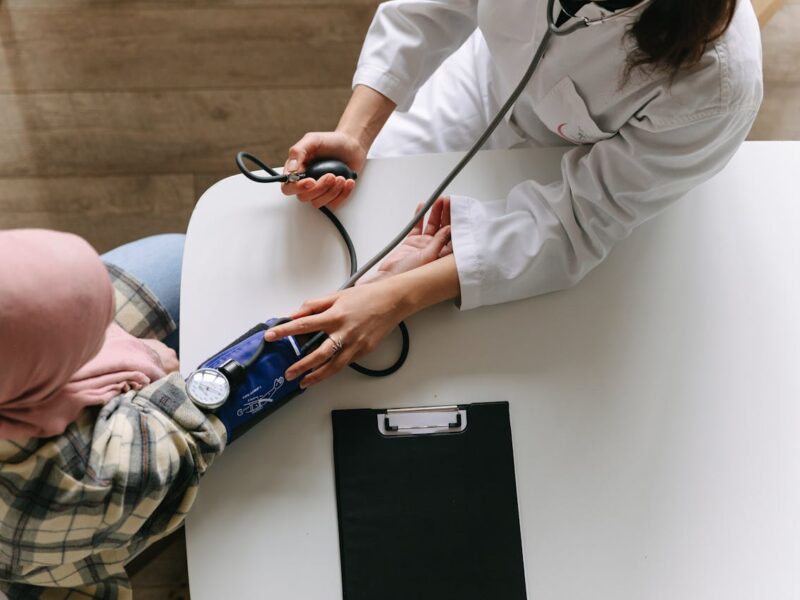
- Regular eye tests and audiograms allow changes to be detected before they become irreversible
Why do we lose our sight and hearing with age?
In the eye, drusen (small deposits) accumulate beneath the macula, intraocular pressure rises, and the lens gradually clouds over – three distinct processes leading to age-related macular degeneration (AMD), glaucoma, and cataracts. Each has its own biology and requires a separate approach. You can learn more about the link between sensory decline and dementia in the article on Alzheimer’s disease and dementia.
In the inner ear, the hair cells of the cochlea gradually die off – the body cannot regenerate them. Tinnitus often appears as the first warning sign, before measurable hearing loss becomes visible on an audiogram. Noise exposure, micronutrient deficiencies, and oxidative stress accelerate this process over decades.
How to prevent age-related macular degeneration (AMD)?
Research published in JAMA (the AREDS2 programme) found that daily supplementation with lutein (10 mg), zeaxanthin (2 mg) – doses from the AREDS2 study, to be agreed with an ophthalmologist – vitamins C and E, and zinc reduces the risk of macular degeneration progressing to an advanced stage by nearly 25%. The results confirm the effectiveness of this strategy in people with early-stage macular degeneration.
What to eat to protect your eyesight?
Lutein and zeaxanthin accumulate in the macula and act as a natural light filter. You’ll find them in dark leafy greens (kale, spinach) and in egg yolk. Omega-3 fatty acids from oily fish protect the retinal blood vessels. For more on building a diet that supports both brain and eye health, see the article on a brain-supporting meal plan.
Foods that support eye health:
- Kale and spinach – the highest concentration of lutein and zeaxanthin among commonly available vegetables
- Egg yolk – lutein in a highly bioavailable form, paired with fat for better absorption
- Oily fish (salmon, mackerel) – omega-3 fatty acids protect the blood vessels of the retina
- Nuts and seeds – vitamin E as an antioxidant that reduces oxidative stress
- Carrots and sweet potato – beta-carotene supporting the corneal epithelium
Does blue light really damage the eyes?
Laboratory studies show that intense blue light exposure increases oxidative stress in photoreceptor cells (the retinal cells responsible for detecting light) – but routine screen use does not damage the retina. The more significant concern is disruption to the circadian rhythm from evening screen use. Protection methods are covered in the article on effective blue light blocking.
How to prevent age-related hearing loss?
The biggest leverage we have is over environmental factors – particularly noise and diet. Biological causes (presbycusis, or age-related hearing decline) are largely outside our control, but environmental ones are not. Women following a Mediterranean diet had a 30% lower risk of hearing loss (Curhan et al.). Practical recipes are available in the article on the Mediterranean diet.
Which diet reduces the risk of hearing loss?
Key nutrients for hearing health:
- Omega-3 fatty acids – protect the cochlear microcirculation from degenerative changes
- Magnesium – reduces noise-induced damage by blocking excessive calcium ion influx
- Zinc – supports regeneration of the epithelium of the organ of Corti (the sensitive cochlear structure responsible for processing sound)
- Vitamin B12 – deficiency correlates with a higher risk of tinnitus
- Antioxidants (C, E, beta-carotene) – neutralise free radicals produced following noise exposure
Which everyday habits damage your sight and hearing?
Smoking doubles the risk of macular degeneration – nicotine constricts the retinal blood vessels and increases oxidative stress. Chronic sleep deprivation impairs the regeneration of retinal cells. High blood pressure damages the fine capillaries of both the eye and the inner ear. Noise exposure above 85 dB accumulates micro-damage that compounds year by year into a measurable hearing deficit.
How many hours in front of a screen each day is harmful to eyesight?
The number of hours matters less than the absence of breaks. When looking at a screen, we blink three to five times less frequently than usual – which causes dry eye syndrome and accommodative fatigue (the strain placed on the eye muscles as they constantly refocus). The 20-20-20 rule (every 20 minutes, look for 20 seconds at an object 6 metres away) reduces this strain and is recommended by the American Academy of Ophthalmology.
Daily habits that protect your senses:
- Apply the 20-20-20 rule during screen work – without exception
- Wear earplugs or protective earmuffs in noisy environments (above 85 dB)
- Keep headphone volume below 60% of the maximum level – this is the safe threshold for the cochlea
- Don’t smoke – it’s one of the strongest documented risk factors for both AMD and hearing loss
- Sleep 7-9 hours a night – overnight recovery includes the neural tissues of both the eye and the ear
Audiograms and eye examinations – how often should you have them?
Eye examinations are worth scheduling regularly from the age of 40 – every one to two years. Glaucoma damages the peripheral visual field first and can remain undetected for years. Intraocular pressure measurement and retinal OCT (optical coherence tomography) are the only tools for early detection. An audiogram is worth having before the age of 50 as a baseline. Then every three to five years or after significant noise exposure.
FAQ: Frequently asked questions about protecting your sight and hearing
Do computer glasses help?
Glasses with a blue light filter may reduce eye fatigue and make it easier to fall asleep after evening screen use, but there’s no proven evidence that they prevent retinal degeneration.
From what age should you have regular eye tests?
It’s worth having a first comprehensive eye examination before the age of 40, then every one to two years – sooner if you have myopia, diabetes, or a family risk of glaucoma.
From what age should you have an audiogram?
Having a first audiogram before the age of 50 is advisable as a baseline, with follow-ups every three to five years or after significant noise exposure.
Do in-ear headphones accelerate hearing loss?
In-ear headphones can damage hearing when used at volumes above 60-70% for more than an hour a day – the volume level is what matters, not the type of headphone.
References:
- Age-Related Eye Disease Study 2 Research Group (2013). Lutein + Zeaxanthin and Omega-3 Fatty Acids for Age-Related Macular Degeneration. JAMA. https://doi.org/10.1001/jama.2013.4997
- Curhan, S. G., et al. (2018). Adherence to healthful dietary patterns is associated with lower risk of hearing loss in women. Journal of Nutrition. https://doi.org/10.1093/jn/nxx017
- Cruickshanks, K. J., et al. (1998). Cigarette Smoking and Hearing Loss. JAMA. https://doi.org/10.1001/jama.279.21.1715