

The immune system is not just a ‘shield’ against infections. It is also a system that helps the body regain its balance after exercise, stress, minor inflammation or seasonal colds. And that is why in the world of longevity, it is increasingly said: if you want to age well, you need to understand immunity.
The problem is that most research on immune ageing has so far looked like a single photograph: we compare a group of 30-year-olds with a group of 70-year-olds and draw conclusions. This makes sense, but… the immune system is as changeable as the weather. Today it works differently than it did a week ago because you slept less, had more stress, had a mild infection, or the season changed.
That’s why the study published in late October 2025 in Nature is so important: instead of a single snapshot, the researchers tried to make a movie.
What the researchers did
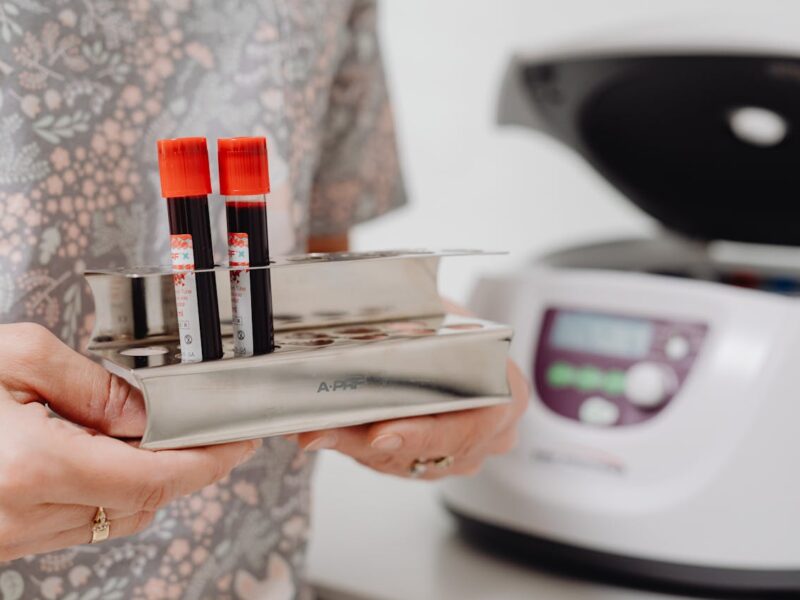
They gathered a group of healthy adults and observed them over a long period of time, taking blood samples regularly. The aim was not to ‘look for diseases’ but to see how immunity changes in normal life when a person is essentially healthy.
To organise this, they also used a very practical idea: they treated the flu vaccination as a safe, controlled ‘test’ for the immune system. It’s a bit like a stress test for the heart – not to ‘wipe someone out’, but to see how the system responds and returns to balance.
And now the most interesting part: the researchers did not look at a single indicator. They took a ‘wide-angle’ approach – they checked many things at once (so-called multi-omics), including:
- what types of immune cells circulate in the blood,
- how these cells ‘behave’ after vaccination,
- what proteins appear in the plasma (these are often signals sent in the body, e.g. ‘activate the response,’ ‘calm the response’).
This is not a study that says, ‘do X and you will live longer.’ It is a study that provides something equally valuable: a map of how immunity ages in healthy people when we look at it over time.
The most important lesson: immunity does not age ‘evenly’
The results (to simplify) lead to one very human thought: the ageing of immunity is not a straight line down.
In some people, the changes come more slowly, in others more quickly. In some, they are more visible in one area, in others in another. It’s a bit like fitness: two people may be the same age but in completely different ‘shape’ – and it doesn’t necessarily have to be a matter of illness.
What does this mean for longevity? That it makes more and more sense to think not only about ‘how old you are’, but also about:
- how your body copes with challenges,
- how quickly it returns to balance,
- whether your immunity is already ‘tired’ before clear symptoms appear.
What changes most in immunity (and why it matters)
This work particularly emphasises the role of T lymphocytes. These cells can be compared to:
- ‘coordinators’ of the immune response,
- guardians of immunological memory (‘do we already know this enemy?’),
- ‘trainers’ of other cells, including those responsible for antibodies.
The researchers noted that in many cases, it is in T cells that the most age-related changes are seen. This is important because T cells are like a command centre. If the command centre works a little differently, the entire body’s response may be less precise – even if you don’t feel it on a daily basis.
The vaccine as a ‘window’ to immunity
A very accessible conclusion from this study is that vaccination allows you to see how your immunity works in action.
It’s not just about whether you ‘have antibodies’. It’s about:
- how quickly your immunity responds,
- whether it activates the right elements,
- how efficiently your body builds protection.
In older people, the response after vaccination is often less ‘resilient’ – not dramatically worse, but different in quality and dynamics. This partly explains why it is more difficult to achieve the same strong and lasting response to certain vaccinations with age, and why medicine is increasingly considering other vaccination strategies for seniors (e.g. different doses, different types of vaccines) .
This is not scaremongering. Rather, it is normalising the fact that the body changes – and that this can be measured more and more accurately.
This is not just a story about “inflammation”
The term “inflammation” often comes up in popular discussions about ageing. And it’s true: chronic, low-grade inflammation is one of the elements of ageing.
But this work shows something reassuring and at the same time motivating: changes in immunity can also occur without spectacular ‘alarms’ in standard tests. In other words, ‘everything is normal’ does not always mean that the body is not quietly adapting to age.
This is good news for longevity because it draws attention to a lifestyle that supports immunity on a daily basis, before problems arise.
What does this mean for the average reader?
This study does not provide a simple ‘do three things’ solution. Instead, it offers three very practical perspectives:
- Immunity is a process, not a state.
- You are not ‘immune’ or ‘non-immune.’ Your immunity has a rhythm. Longevity is about supporting that rhythm.
- The most important thing may be the rate of regeneration.
- In longevity, what matters more and more is not whether you have a bad day sometimes, but whether you return to balance – after stress, after poor sleep, after an infection.
- Immune prevention is part of longevity.
- Vaccinations, sleep, exercise, stress reduction, good protein in your diet, taking care of your muscle mass – these are not ‘wellness’ activities. They are the foundation on which immunity maintains stability for decades.
A mini-checklist in the spirit of longevity
If you want to treat immunity as one of the pillars of longevity, the safest and most ‘boring but effective’ things are:
- regular sleep (quantity + consistency),
- exercise during the week (walks + strength training in a reasonable form),
- vaccinations as recommended by your doctor (especially after the age of 50),
- stress management (because immunity ‘hears’ stress),
- check-ups and talking to your doctor when something changes (e.g. recurring infections, prolonged loss of energy).
It may not sound like a breakthrough, but it is this ‘ordinary’ set of habits that makes the biggest difference in the long run.
Why this perspective is important for the future
The most promising aspect of this study is that it shows the direction: immunity will increasingly be described individually, not just by chronological age. In the future, this may mean:
- better tailored prevention,
- better tailored vaccinations and protection strategies,
- earlier detection that the body is beginning to ‘lose its resilience’ before disease strikes.
Who is behind this study
The results described come from a scientific paper published in the journal Nature entitled Multi-omic profiling reveals age-related immune dynamics in healthy adults.
The study was prepared by a large team, and the first authors (with equal contribution) are Qiuyu Gong and Mehul Sharma from the Allen Institute for Immunology (Seattle, USA).
The corresponding authors (contact persons for the publication) are Peter J. Skene and Claire E. Gustafson.
Teams from the Benaroya Research Institute at Virginia Mason (Seattle), the University of Pennsylvania and Stanford University, among others, also participated in the project – a collaboration between several strong immunology centres in the USA.
As part of the publication, the authors also provided open, interactive tools for viewing the results (the so-called immunity atlas) so that other researchers could further utilise the data.
‘There’s so much more information to be gained by looking at this dataset we’ve produced,’ said Claire Gustafson in the Allen Institute material.