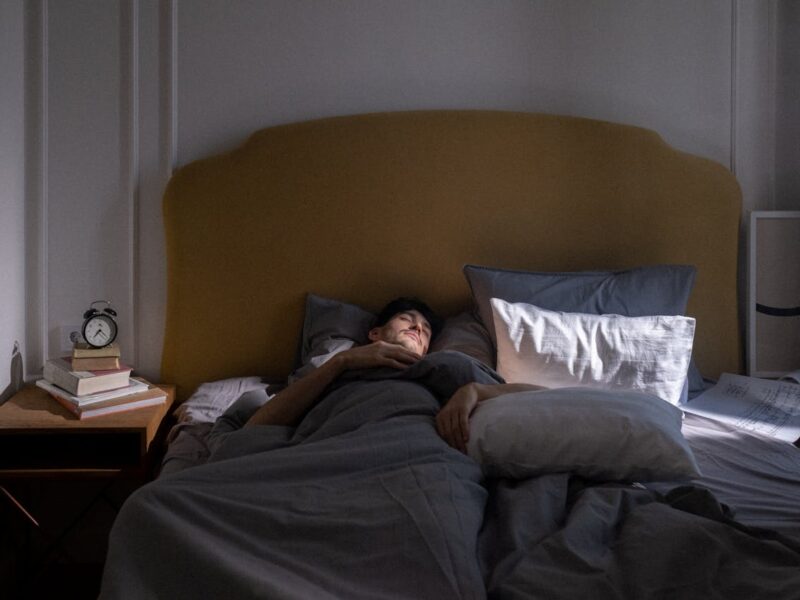


Do you close your eyes after a glass of wine, fall asleep faster than usual, and wake up after a few hours feeling worse than before sleep? Alcohol creates an illusion of rest, while in reality it sabotages the most regenerative phases of nighttime renewal. Your brain loses the ability for deep sleep, the body doesn’t regenerate properly, and in the morning there’s fatigue instead of energy. This is no accident – it’s a precise biochemical mechanism you can understand and control. Discover what really happens to your body after an evening drink!
Key facts about alcohol and sleep:
- Alcohol shortens REM phase, crucial for mental health and memory
- Blocks deep sleep, where the body conducts most important repairs
- Causes more frequent awakenings in second half of night
- Increases risk of sleep apnea and snoring
- Even small amounts of alcohol worsen regeneration quality
Why do we sleep worse after alcohol?
Alcohol acts as a central nervous system depressant. Initially it lowers brain activity, making falling asleep easier. The problem appears later, when the body starts metabolizing ethanol. Acetaldehyde forms – a toxic substance that stimulates the nervous system and disrupts the natural sleep cycle.
Your brain enters emergency mode. Mechanisms regulating sleep lose control over phase transitions. Instead of smooth passage through NREM and REM cycles, you experience fragmentation – short sleep periods interrupted by micro–awakenings. You don’t remember them in the morning, but the body remembers – it didn’t get full regeneration.
How does alcohol affect sleep phases and nighttime body regeneration?
REM phase, where the brain consolidates memories and processes emotions, becomes drastically shortened. Research shows that even moderate alcohol consumption reduces REM by 20–30%. In the second half of the night, when this phase normally dominates, the body fights toxins instead of regenerating cognitive functions.
Deep sleep also suffers. This is the stage where growth hormone is secreted, tissues are repaired, and the immune system conducts key operations. Alcohol shortens these phases or changes their quality. Muscles don’t regenerate properly, memory doesn’t consolidate information, the immune system doesn’t complete full repair cycle.
Alcohol’s impact on sleep structure:
- REM phase shortening by 20–30% in entire night cycle
- Sleep fragmentation – more transitions between phases
- Shallower sleep in second half of night
- Disruption of sleep hormone production (melatonin, growth hormone)
- Increased sympathetic system activity (fight or flight mode)
Does alcohol actually help with falling asleep problems?
Alcohol shortens falling asleep time – that’s a fact. If you normally need 30 minutes, after alcohol it might be 10. But it’s a trap. You fall asleep faster because the brain is suppressed, not because it’s ready for regeneration. It’s the difference between natural sleep transition and forced consciousness shutdown.
People with chronic insomnia often reach for alcohol as self–medication. Short–term it works, long–term it worsens the problem. The body builds tolerance, you need larger doses, and insomnia intensifies on nights without alcohol. This is a vicious circle that leads to addiction without solving the basic problem.
Key sleep hygiene rules supporting faster falling asleep
Instead of alcohol, rely on proven sleep hygiene methods. Fixed bedtime and wake time – even on weekends – synchronizes the internal biological clock. Your brain knows when to prepare for sleep, produces melatonin punctually, body temperature drops at the right moment.
Room temperature matters. Optimal is 16–19 degrees Celsius. A cool environment promotes body temperature lowering, which is a natural sleep signal. Darkness is the second key element – each light ray, even from a TV LED, can disrupt melatonin production. Find more proven strategies in 12 rules for perfect sleep, which comprehensively discuss nighttime rest hygiene.
Natural methods for faster falling asleep:
- Bedtime routine – same activities at same time
- Screen limitation 60 minutes before sleep
- Warm bath 90 minutes before lying down
- Breathing techniques (4–7–8, diaphragmatic breathing)
- Room temperature 16–19°C
Connection between chronic stress and rest quality
Chronic stress and poor sleep create a destructive loop. High evening cortisol blocks melatonin production. You don’t fall asleep because the body is in alert mode. You wake up unrefreshed in the morning, which raises stress levels. The next night is even worse.
Alcohol seems like a solution – lowers tension, calms mind, helps disconnect from problems. But this apparent symptom relief worsens the cause. Sleep after alcohol doesn’t lower cortisol, doesn’t regenerate the nervous system, doesn’t give true rest. The body wakes equally stressed but additionally weakened by toxins.
Real solution requires working at the source. Stress management techniques – meditation, physical activity, cognitive–behavioral therapy – work slower but more effectively. Stress can be a friend, not enemy, if you learn to regulate it instead of suppressing it with chemicals.
Why is healthy sleep the best investment in longevity?
Sleep is the foundation of every health aspect. Without proper nighttime regeneration, all other strategies – diet, training, supplements – lose effectiveness. The brain doesn’t cleanse toxins, the immune system doesn’t renew cells, hormones don’t return to balance.
Research on longevity consistently shows: people sleeping regularly 7–9 hours of high–quality sleep live longer and healthier. It’s not just about number of years, but quality of life in those years. Lower risk of Alzheimer’s, heart disease, diabetes, depression. Better memory, faster thinking, more stable mood. All this depends on what happens in your brain every night. That’s why sleep is an investment in longevity that cannot be replaced by any other health intervention.
Long–term benefits of quality sleep:
- Protection against neurodegenerative diseases (Alzheimer’s, Parkinson’s)
- Lower risk of metabolic and cardiovascular diseases
- Stronger immune system and faster regeneration
- Better weight regulation and metabolism
- Greater mental resilience and emotional stability
Circadian rhythm disturbances after alcohol consumption
Alcohol disorganizes the internal biological clock. Normally body temperature drops in the evening, melatonin rises, cortisol decreases. This precise rhythm prepares the body for sleep. Alcohol disrupts the entire cascade – temperature fluctuates, melatonin is suppressed, cortisol remains elevated.
The effect? You wake at 3–4 AM, feel anxious, and can’t fall asleep again. This is no accident – it’s the moment when the body finished metabolizing alcohol and tries to return to normal rhythm, but it’s too late for full regeneration.
When is it best to stop drinking alcohol before going to bed?
Alcohol metabolizes at about one standard portion per hour (10g pure ethanol). If you want to minimize impact on sleep, the last drink should be consumed minimum 3–4 hours before sleep. This gives the body time to break down substances and stabilize the nervous system.
In practice this means: if you go to bed at 11:00 PM, last alcohol at 7:00–8:00 PM. This doesn’t eliminate all effects but significantly reduces sleep fragmentation and protects REM phase in second half of night.
Alcohol’s impact on sleep in long–term perspective
Regular drinking, even in moderate amounts, accumulates sleep deficit. Every night with alcohol is a night without full regeneration. After a week you have seven incomplete renewal cycles. After a month – thirty. The body tries to catch up but never fully recovers what it lost.
Long–term this leads to chronic fatigue, memory problems, immune system weakening, and higher risk of chronic diseases. If you care about longevity and quality of life, the relationship between alcohol and sleep requires honest assessment – each glass is a transaction where you pay with regeneration for momentary relief.
FAQ – most frequently asked questions about alcohol and sleep
Does one glass of wine in the evening harm sleep?
Even a small amount of alcohol (one drink) shortens REM phase and can cause nighttime awakenings, though the effect is smaller than with larger doses.
How long does alcohol affect sleep quality?
Alcohol affects sleep throughout the night, but most in the second half, when the body metabolizes ethanol and tries to return to normal rhythm – effects can persist for 6–8 hours.
Can I improve sleep after alcohol somehow?
Drink lots of water before sleep, avoid more drinks 3–4 hours before bed, ensure a cool and dark room – this will ease but not eliminate negative impact.
Does alcohol cause insomnia?
Long–term use of alcohol as sleep aid leads to tolerance and paradoxically intensifies insomnia on nights without alcohol, creating a vicious circle of addiction.
References:
- Ebrahim, I. O., et al. (2013). Alcohol and sleep I: effects on normal sleep. Alcoholism: Clinical and Experimental Research, 37(4). https://doi.org/10.1111/acer.12006
- Colrain, I. M., et al. (2014). Alcohol and the sleeping brain. Handbook of Clinical Neurology, 125. https://doi.org/10.1016/B978-0-444-62619-6.00024-0