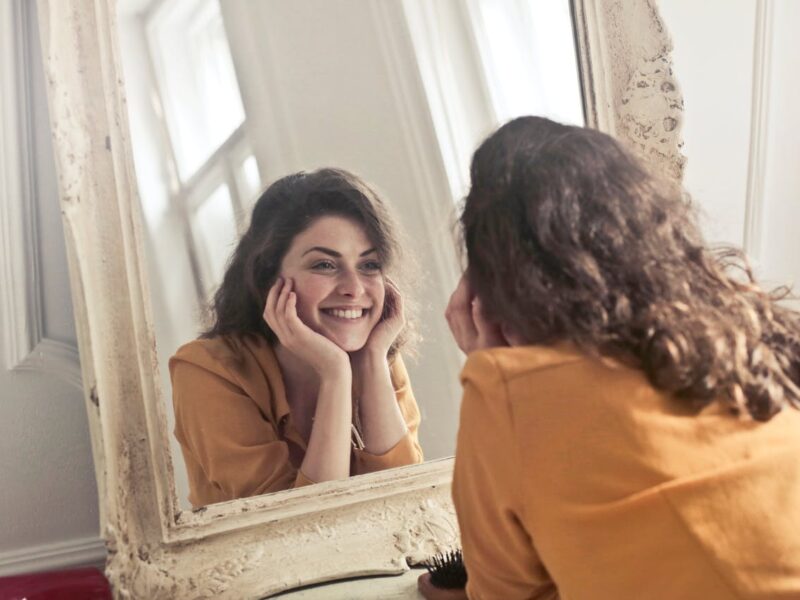


Most people can list their flaws in a matter of seconds but need minutes to identify their strengths. This lopsided self-image isn’t an inborn trait – it’s the product of years of criticism, comparison, and unrealistic standards. Self-acceptance is a skill that can be developed at any age, and its impact on both mental and physical health is scientifically confirmed. Discover the practical methods that help build a healthier relationship with yourself!
Key facts about self-acceptance:
- Self-acceptance lowers cortisol levels and reduces chronic stress
- People who accept themselves have a 30% lower risk of depression
- Social media worsens self-image in 60% of regular users
- Self-acceptance doesn’t mean giving up on growth – it actually makes it easier
- Regular self-compassion practice changes brain structure within 8 weeks
Why is self-acceptance so difficult?
The human brain evolved to detect threats – and criticism from the social group posed a real danger for thousands of years. This mechanism means we absorb negative information about ourselves more quickly and remember it longer than the positive kind. Psychologists call this the negativity bias – a single critical comment carries the weight of five positive ones.
Years of socialisation compound the issue. Children learn that acceptance depends on meeting expectations – those of parents, teachers, and peers. Over time, this pattern transfers into adult life. An adult who misses out on a promotion automatically questions their own worth rather than assessing the situation objectively. The inner critic grows louder than reality.
The most common sources of low self-acceptance:
- A critical environment in childhood that made love conditional on achievement
- Comparing yourself to unrealistic media standards
- Perfectionism – the belief that only the ideal is acceptable
- Traumatic experiences of rejection or humiliation
What is self-acceptance and what is it not?
Accepting yourself is the conscious acknowledgement of one’s traits – both strengths and limitations – without judging them as good or bad. It isn’t passive resignation and it isn’t naive optimism. A person who accepts themselves sees their weaknesses but doesn’t allow them to define the whole picture.
Research conducted at the University of Hertfordshire found that people with high levels of self-acceptance make better health decisions – they exercise more often, eat better, and are less likely to reach for substances. Paradoxically, accepting who we are right now makes it easier to change for the better. Self-criticism paralyses; acceptance provides the energy to act.
Does self-acceptance mean giving up on personal growth?
Accepting yourself and pursuing personal development aren’t mutually exclusive. The difference lies in motivation: change rooted in self-acceptance lasts longer than change driven by dissatisfaction. Someone who exercises because they want to look after their body sticks with the habit longer than someone who exercises because they hate the way they look.
Differences between healthy and unhealthy motivation:
- Healthy motivation – “I want to grow because I deserve it”
- Unhealthy motivation – “I must change because I’m not enough”
- Acceptance + growth – a realistic assessment without self-blame
- Criticism + growth – constant dissatisfaction that leads to burnout
How does a lack of self-acceptance affect health?
A chronic lack of self-acceptance keeps the body in a state of chronic stress. Cortisol remains elevated, the immune system weakens, and blood pressure rises. Research published in the Journal of Personality found that people with low self-acceptance have 40% higher levels of inflammation in the blood than those who accept themselves.
The impact extends to daily habits. People dissatisfied with themselves are more likely to eat emotionally, avoid physical activity, and withdraw socially. This creates a spiral – worse habits lead to worse well-being, which deepens the lack of acceptance. Breaking this cycle starts with a conscious decision to treat oneself with the same respect we show to others.
Physical consequences of chronic lack of self-acceptance:
- Elevated cortisol over time damages blood vessels and weakens immunity
- Sleep disturbances – negative self-talk makes it harder to fall asleep and reduces sleep quality
- Digestive problems – stress disrupts communication between the gut and the brain and alters the microbiota
- Higher risk of depression – lack of self-acceptance is one of the strongest predictors of depressive episodes
- Impaired recovery – a chronically stressed body repairs tissues more slowly and heals less effectively
Social media and self-image
Social media algorithms favour content that triggers strong emotions – envy, comparison, a sense of inadequacy. The average person scrolls for 2.5 hours a day, viewing hundreds of curated images of other people’s lives during that time. The brain doesn’t distinguish filtered photographs from reality – it registers them as a genuine standard to aspire to.
Research from the Royal Society for Public Health found that Instagram is the platform most damaging to the mental health of young adults. Regular use correlates with higher anxiety levels, a poorer body image, and lower self-acceptance. People who limited social media to 30 minutes a day reported an improvement in mood and self-esteem after just three weeks.
How social media affect self-image:
- The comparison effect – the brain automatically measures your life against curated images
- The dopamine loop – likes and comments make self-worth dependent on external validation
- A distorted body image – filters and retouching create unattainable beauty standards
How does comparing yourself to others destroy self-acceptance?
Comparing ourselves to others is a natural social mechanism – but social media have turned it into a compulsive habit. Instead of comparing ourselves with a neighbour, we compare ourselves with millions of people at once. The scale of comparison is unprecedented and impossible for the brain to process in a healthy way.
The key is consciously limiting exposure and replacing comparisons with others with comparisons with yourself a month or a year ago. Progress measured on your own scale provides lasting satisfaction. Comparisons with others deliver only fleeting relief or frustration.
Practical ways to build self-acceptance
Building a healthy self-image is a practice, not a one-off decision. It requires regular repetition, much like physical training. The brain learns new thinking patterns – but it needs time and consistency to do so.
Methods for building self-acceptance:
- Self-compassion – speak to yourself the way you’d speak to a close friend in a difficult moment
- A strengths journal – write down 3 things you did well each day
- Limiting social media – fewer comparisons, more presence in real life
- Movement and physical activity – endorphins improve self-image regardless of visible results
- Cognitive behavioural therapy – effectively changes negative self-related thinking patterns
Practising self-compassion alters activity in the brain regions responsible for empathy and emotional regulation. After 8 weeks of regular exercises, the prefrontal cortex – the part of the brain responsible for emotional control – responds differently to criticism – less impulsively and with greater distance. This isn’t magic or positive thinking – it’s a measurable neurological change.
Self-acceptance as the foundation of mental health
Self-acceptance doesn’t solve every problem, but it provides a solid base from which to face challenges more effectively. People with higher levels of self-acceptance recover more quickly from setbacks, experience fewer depressive episodes, and cope better with stress. Those who regularly practise self-compassion show lower cortisol levels, better sleep quality, and stronger relationships with others. A healthy relationship with yourself translates into a healthier relationship with the world.
FAQ: Most frequently asked questions about self-acceptance
Is self-acceptance the same as self-confidence?
Self-acceptance and self-confidence are different concepts – self-acceptance means acknowledging yourself as you are, whereas self-confidence relates to belief in your own competence in specific situations.
How to work on self-acceptance in a relationship?
Building self-acceptance in a relationship requires open communication about needs and boundaries, without expecting a partner to fill gaps in your self-image.
Does therapy help with building self-acceptance?
Cognitive behavioural therapy and compassion-focused therapy effectively help build self-acceptance, and the results are maintained long-term after the sessions end.
References:
- Neff, K. D. (2011). Self-Compassion, Self-Esteem, and Well-Being. Social and Personality Psychology Compass. https://doi.org/10.1111/j.1751-9004.2010.00330.x
- Macbeth, A., Gumley, A. (2012). Exploring compassion: A meta-analysis of the association between self-compassion and psychopathology. Clinical Psychology Review. https://doi.org/10.1016/j.cpr.2012.06.003