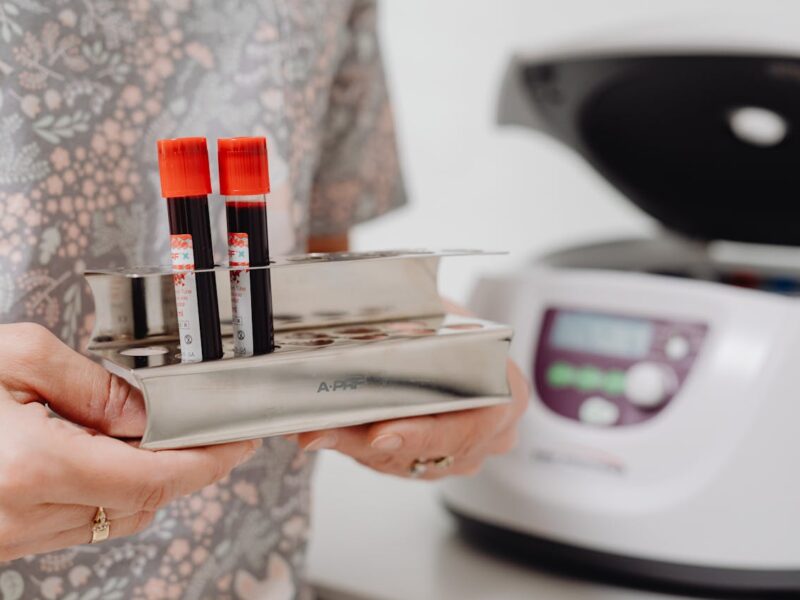

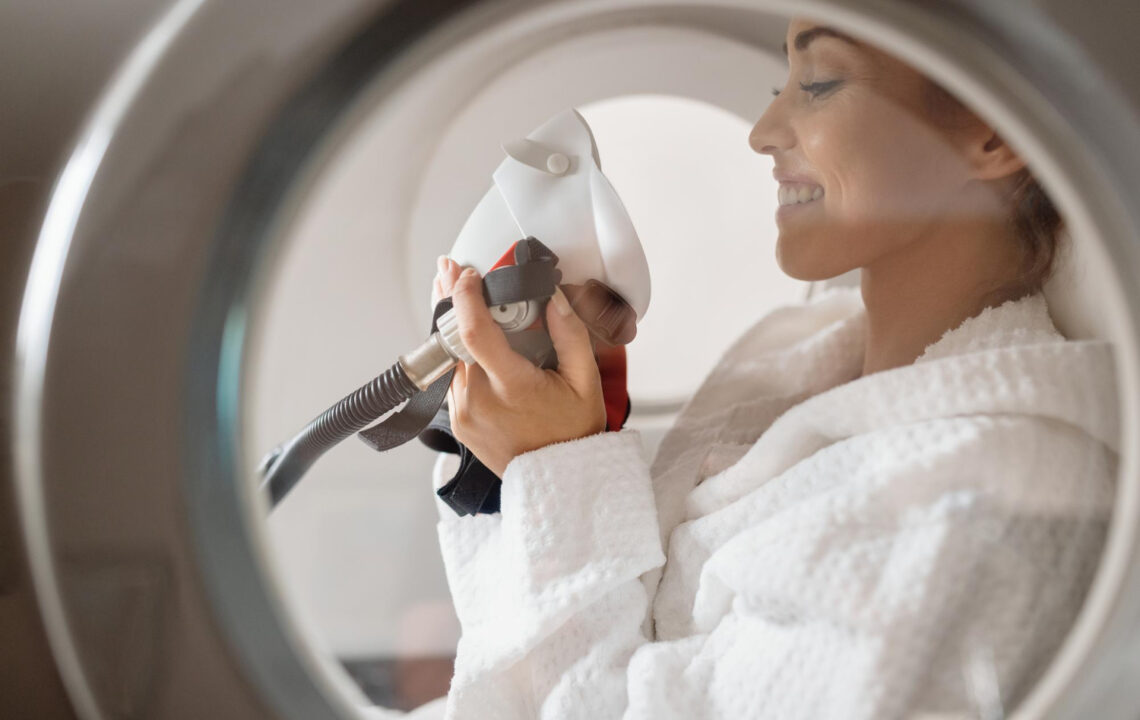
In a hospital in Szczecin, a patient poisoned by carbon monoxide lies inside a transparent chamber filled with pure oxygen at twice the atmospheric pressure. Three hours away, in a private longevity clinic, a middle-aged entrepreneur pays for a similar session, hoping for cellular rejuvenation. The same equipment, two entirely different worlds of scientific evidence. A hyperbaric chamber saves lives in strict medical indications, but in anti-ageing applications it remains an experimental field. See what the studies actually show about this therapy.
Key facts about hyperbaric oxygen therapy:
- HBOT involves breathing 100% oxygen at 2-3 times the normal atmospheric pressure, typically for 60-90 minutes
- Officially approved indications include carbon monoxide poisoning, decompression sickness, radiation-induced tissue injury and chronic diabetic wounds
- Longevity applications (telomeres, cognitive function, cellular rejuvenation) remain experimental and await independent replication
- A single session lasts around 60-90 minutes, and medical protocols usually include 20-60 sessions
- The therapy carries real risks – ear barotrauma, fire hazard and, rarely, seizures from oxygen toxicity
What is a hyperbaric chamber and how does it work?
Put simply, a hyperbaric chamber is an enclosed medical device in which a patient breathes pure oxygen at a pressure greater than atmospheric. The standard therapeutic pressure is 2-3 atmospheres absolute, which is about two to three times higher than at sea level. Under such conditions, oxygen dissolves in blood plasma in amounts many times higher than during normal breathing.
The mechanism of action relies on Henry’s law, which states that gas solubility in a liquid increases with pressure. As a result, oxygen reaches tissues that would otherwise be deprived of it, such as poorly vascularised wounds. Hyperbaric therapy also stimulates the formation of new blood vessels and supports the activity of immune cells.
What does a session in a hyperbaric chamber look like?
The patient enters a sealed chamber (single or multi-person), where the pressure rises gradually over several minutes. During the so-called compression phase, a sensation of pressure in the ears appears, similar to that felt during take-off on a plane. The main session usually lasts 60-90 minutes, and decompression adds a few more minutes. Throughout the session, a patient can read, listen to music or simply rest.
Which conditions is HBOT officially approved for?
The Undersea and Hyperbaric Medical Society (UHMS) lists more than a dozen recognised clinical indications. The answer to what HBOT actually treats covers conditions in which the therapy’s effectiveness has been confirmed by high-quality studies and in which HBOT represents the standard of care.
Standard medical indications include, among others:
- Carbon monoxide poisoning – HBOT accelerates the removal of CO from haemoglobin and protects the brain from damage
- Decompression sickness – in divers who have surfaced too quickly
- Radiation-induced tissue injury – damage following radiotherapy, especially in the head, neck and pelvic regions
- Diabetic foot ulcers – slow-healing wounds in people with diabetes, when standard treatment fails
- Gas embolism – a complication of surgery or trauma in which gas bubbles block blood flow
- Acute tissue ischaemia – after crush injuries or in anaerobic infections
Does HBOT lengthen telomeres and remove senescent cells?
Studies suggest such a possibility, but the evidence is preliminary, comes from small samples and has not been independently confirmed. The most frequently cited work is an Israeli study from 2020, published in the journal Aging, in which the team of Shai Efrati at Tel Aviv University observed in 35 healthy adults over 60 an elongation of blood telomeres by around 20-38% and a reduction in the proportion of senescent cells after 60 sessions.
The problem is that nobody has yet independently replicated these findings in a larger sample. Control group was small, and telomere changes were measured only in blood leukocytes, which may not reflect other tissues. In the context of the biology of ageing, such isolated data should be treated as a hypothesis.
Does a hyperbaric chamber improve cognitive function in seniors?
What cognitive benefits might a hyperbaric chamber offer? Improvements in memory and attention have been reported in isolated studies on small groups, but the results are not yet strong enough to recommend HBOT for dementia prevention. In a paper published in Aging in 2020, the same Israeli team observed better working memory and information processing speed in a group of older adults after 60 sessions.
Hypothetical mechanisms include an increase in cerebral blood flow, stimulation of new vessel formation and support for neuroplasticity. None of these changes, however, has been clearly linked to long-term protection against neurodegenerative disease in humans. In clinical practice, no neurological society today recommends HBOT for the prevention or treatment of mild cognitive impairment.
Are hyperbaric chamber studies reliable?
The reliability of HBOT research depends heavily on the indication – for recognised conditions the evidence base is solid, but for longevity applications the data are preliminary and often of low quality. In research on ageing, most studies are small, without a sham-chamber control group, and are frequently funded by centres offering such services commercially.
Typical weaknesses of HBOT studies in the anti-ageing context include small sample sizes, a lack of randomisation, short follow-up periods and the selection of healthy volunteers. Without a control group, it is difficult to distinguish the effect of the therapy itself from the placebo effect or from lifestyle changes that accompany visits to a clinic.
Has anyone independently reproduced these findings?
To date, the flagship studies by Efrati’s team on telomeres and senescent cells have not been independently reproduced by other research groups. Replication in science means that a different team repeats the experiment and obtains similar results. Without replication, it is difficult to speak of established knowledge, especially in such a hot field as longevity. Until this happens, a cautious interpretation of these findings is reasonable.
How much does a hyperbaric chamber cost and is it worth it?
Costs vary considerably depending on the country, clinic and chamber type, with a single session in Poland ranging from a few dozen to several hundred zlotys. For recognised medical indications, the therapy is often reimbursed or partly covered by health insurance. Commercial sessions in longevity clinics are a fully private option, and a full protocol of 40-60 treatments can cost between a few and a dozen thousand zlotys. It is worth remembering that the time for a single HBOT session (60-90 minutes) is only part of the commitment – the protocol usually involves dozens of visits spread over weeks. Time and money represent a real investment that should be compared with other, better-evidenced interventions for health and longevity.
Who can benefit and who simply loses money?
People with medical indications confirmed by their doctor may gain measurable benefit, whereas healthy adults seeking a rejuvenating effect most often lack solid evidence of efficacy. In diabetes care there are defined indications (diabetic foot ulcers), whereas in oncology the picture is more complex – HBOT is sometimes used for radiation complications, while cancer treatment itself remains outside standard care.
<strPatient profile and realistic chances of benefit:
- Patients after CO poisoning or with decompression sickness – high efficacy, a life-saving standard of care
- People with slow-healing diabetic wounds – evidence of moderate quality, often reimbursed
- Patients with radiation-induced tissue injury – clear benefits in specific anatomical locations
- Healthy adults seeking rejuvenation – no conclusive evidence, high costs and risks without guarantees
- People with respiratory or cardiac contraindications – therapy not advisable without specialist consultation
Contraindications and situations that require caution:
- Untreated pneumothorax – an absolute contraindication because of the risk of air expansion
- Severe respiratory diseases – COPD, emphysema or uncontrolled asthma
- Recent ear or sinus surgery – risk of damaging healing tissues
- Claustrophobia – particularly in single-person monoplace chambers
- Pregnancy – outside of situations in which the mother’s life is at stake, HBOT is not recommended
What are the risks of a hyperbaric chamber?
The most common adverse effect is middle-ear barotrauma, which in most patients resolves spontaneously. More serious risks include oxygen toxicity in the form of seizures and a real fire risk in the oxygen-enriched environment. HBOT acts on cellular repair mechanisms, and elevated oxygen temporarily increases free radical production, which ties into processes of oxidative stress
A hyperbaric chamber should be used under the supervision of a physician experienced in hyperbaric medicine. Research on HBOT in the context of anti-ageing is preliminary and requires independent replication. Before considering this therapy, please consult a doctor.
FAQ: Frequently asked questions about the hyperbaric chamber
How much does a hyperbaric chamber cost?
A single session in Poland ranges from a few dozen to several hundred zlotys, while a full medical protocol amounts to a cost between a few and a dozen thousand zlotys, depending on the number of sessions and the
Does a hyperbaric chamber help with ageing?
Preliminary studies suggest an effect on telomeres and senescent cells, but the evidence is small, unreplicated and insufficient to recommend HBOT as an established way of slowing
How many HBOT sessions are needed to see results?
For recognised medical indications the protocol usually includes 20-40 sessions, while studies on longevity applications have used 60 sessions lasting 90 minut
Is a hyperbaric chamber safe?
In an experienced medical centre HBOT is considered relatively safe, but the therapy carries a risk of ear barotrauma, seizures from oxygen toxicity and fire, which is why it should take place under medical supe
References:
- Hachmo, Y., et al. (2020). Hyperbaric oxygen therapy increases telomere length and decreases immunosenescence in isolated blood cells. Aging. https://doi.org/10.18632/aging.202188
- Thom, S. R. (2011). Hyperbaric oxygen: its mechanisms and efficacy. Plastic and Reconstructive Surgery. https://doi.org/10.1097/PRS.0b013e3181fbe2bf
- Löndahl, M., et al. (2010). Hyperbaric oxygen therapy facilitates healing of chronic foot ulcers in patients with diabetes. Diabetes Care. https://doi.org/10.2337/dc09-1754