

Onions, apples, and capers share one common feature – they all contain quercetin, a yellow-green flavonoid that for decades was treated simply as another dietary antioxidant. Everything changed in 2015, when a team at Mayo Clinic showed that this flavonoid combined with another compound clears so-called zombie cells from tissues. Find out what the research really shows and what senolytics are.
Key facts about quercetin:
- Quercetin is a flavonoid naturally found in onions, apples, capers, black tea, and berries
- Early research suggests senolytic action – clearing aged cells from tissues
- Senescent cells accumulate with age and drive chronic inflammation
- Senolytics are an experimental field – clinical trials are still ongoing, no therapeutic recommendations yet
- The simplest path is a diet rich in colourful plants, not supplementation
What is quercetin?
This compound is a natural flavonoid in the polyphenol group – plant compounds with antioxidant action. It belongs to the most abundant flavonoids in human diet, with typical European intake around 15-30 mg per day. In the body it acts as an antioxidant – scavenging free radicals and supporting detoxifying enzymes. It also shows anti-inflammatory properties, inhibiting the release of histamine and cytokines – signalling proteins of the immune system.
Where does quercetin naturally occur?
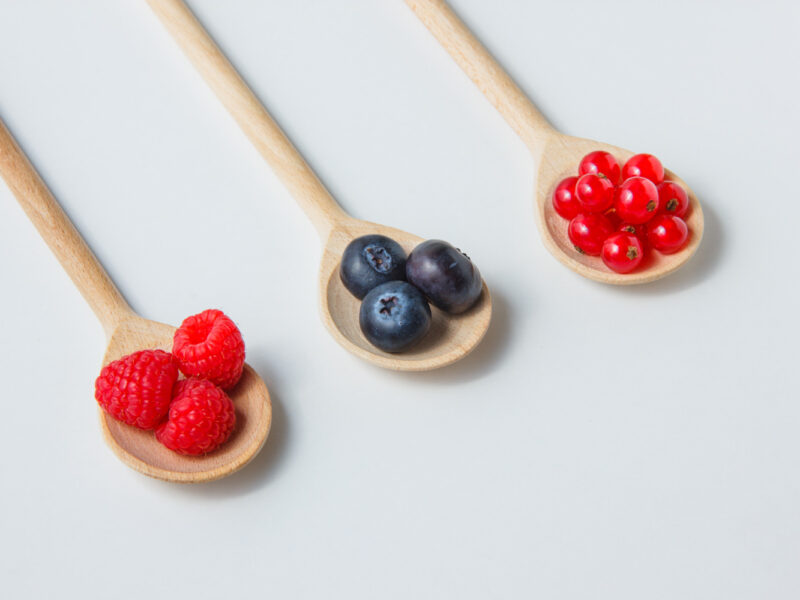
The question of where quercetin appears in the largest amounts has a simple answer. Capers, red onions, kale, apples with skin, and berries contain the most. Pickled capers are the record-holder – around 234 mg per 100 g. A medium apple delivers 4-10 mg, a single onion roughly 30 mg, and a handful of blueberries about 5 mg. These are everyday products from a local shop, not exotic ingredients.
What are senescent (zombie) cells?
Zombie cells are cells that have stopped dividing but haven’t been cleared by the body. They’ve stalled in intermediate death – they no longer perform their function, yet still release biochemical signals. They form due to DNA damage, telomere shortening – the ends of chromosomes that protect DNA – or oxidative stress.
A young body deals with them efficiently – the immune system recognises and removes them. With age the process weakens, cells accumulate in tissues. Research shows that their excess accelerates the decline in organ function. The phenomenon is described by the concept of the hallmarks of ageing.
How do senescent cells affect the ageing process?
Senescent cells release a set of compounds known as SASP – the senescence-associated secretory phenotype, a kind of chemical signalling from aged cells. It’s a mixture of pro-inflammatory cytokines and enzymes breaking down the extracellular matrix. They act like a smouldering fire, poisoning neighbouring healthy cells and driving so-called inflammaging – chronic low-grade inflammation.
What are senolytics?
Senolytics are substances that selectively remove senescent cells while sparing healthy ones. The term was introduced in 2015 by James Kirkland and Tamar Tchkonia at Mayo Clinic. This is an experimental field – no senolytic is approved as a therapy, and data come mainly from preclinical studies and early clinical trials.
The first identified senolytic candidate was this flavonoid itself – in combination with a prescription-only medicine. Studies paired it with various pharmacological agents, testing the synergistic action of flavonoids with synthetic compounds. Early results are promising.
How does quercetin act on senescent cells?
In laboratory conditions this compound blocks survival pathways in senescent cells, primarily the BCL-2/BCL-xL axis – proteins protecting old cells from natural programmed death. Without that axis, even an aged cell removes itself, which theoretically rejuvenates the tissue. Translation into a living organism tends to be more complex though.
However, this flavonoid’s strength as a single senolytic is limited. In research protocols it was paired with a stronger compound for a synergistic effect. A regulatory role in cellular ageing is also played by the telomerase enzyme – senolytics work on another arm of the puzzle, removing cells whose telomeres have already shortened.
What do clinical studies say about quercetin in the context of healthy ageing?
The best-documented clinical study comes from 2019 at Mayo Clinic. The Justice team gave this compound with another senolytic to 14 patients with idiopathic pulmonary fibrosis – a chronic scarring lung disease. After three weeks they showed improvement in physical performance tests, including 6-minute walk distance. Quercetin and ageing – this question remains at the centre of ongoing clinical trials.
A second study by the Hickson team involved patients with type 2 diabetes and kidney disease. Fewer senescent cells were detected in their adipose tissue and skin. Independently of senolytics, these compounds affect oxidative stress and lower blood pressure in people with mild hypertension.
Directions of quercetin research:
- Experimental senolysis – clearing senescent cells in research protocols
- Cardiovascular profile – mild blood pressure drops and improved endothelial function, the inner lining of blood vessels
- Inflammation – modulation of pro-inflammatory cytokines
- Metabolic conditions – preliminary results in type 2 diabetes
- Lung function – studies in idiopathic pulmonary fibrosis
What other natural compounds show senolytic activity?
Natural senolytics are a group of plant compounds researchers look at alongside quercetin. They include fisetin from strawberries, resveratrol from red wine, and piperlongumine from long pepper. The strongest evidence concerns fisetin – in mice the effect was stronger, although human data remain preliminary.
Natural compounds studied as potential senolytics:
- Fisetin – flavonoid from strawberries, the strongest in animal studies
- Quercetin – onions, apples, capers, black tea
- Resveratrol – grape skins, red wine, peanuts
- Curcumin – turmeric, studied in inflammatory conditions
- EGCG – catechin from green tea, antioxidant action
Which foods contain the most quercetin?
Including quercetin in your diet doesn’t require sophisticated sources. In everyday menus a greater role belongs to red onions, kale, apples with skin, and berries. These foods tie directly into the mechanisms behind why we age – flavonoids limit oxidative stress in cells. Absorption is moderate – around 1-2% of the dose reaches the bloodstream, the rest goes to metabolites with biological activity. Fat increases bioavailability – a salad with onion and olive oil is a practical pairing.
The richest dietary sources of quercetin:
- Pickled capers – around 234 mg per 100 g, the record among foods
- Red onions – 20-40 mg per medium onion
- Kale – around 23 mg per 100 g, the highest among leafy greens
- Apples with skin – 4-10 mg per medium fruit, with most in the skin
- Black tea – 2-5 mg per cup, depending on steeping time
Quercetin in the diet – how to use this knowledge wisely
The most sensible approach to quercetin is to treat it as a natural part of the diet, not a miracle anti-ageing remedy. The best investment in healthy ageing remains a varied plant-based diet, movement, and sleep.
Text above is for educational purposes. Before quercetin supplementation, especially with chronic conditions or prescription medicines, consult your doctor.
FAQ: Frequently asked questions about quercetin
Can quercetin be obtained from the diet?
Quercetin is a natural part of a healthy diet – typical intake is 15-30 mg per day from onions, apples, capers, kale, and berries, and regularly including these foods doesn’t require medical supervision.
What do clinical studies say about quercetin dosing?
In senolytic research protocols, doses of several hundred milligrams have been used in short cycles of a few days, but the data are early and don’t allow general therapeutic recommendations for healthy people.
Who should be cautious with quercetin?
People taking anticoagulants, antidiabetics or immunosuppressants, pregnant and breastfeeding women, and those with kidney or liver conditions should discuss supplementation with their doctor.
Does quercetin really slow the ageing process?
Early studies suggest that this flavonoid with other senolytics may clear senescent cells in patients with specific conditions, but there’s no evidence it slows ageing in healthy individuals at typical dietary amounts.
References:
- Justice, J. N., et al. (2019). Senolytics in idiopathic pulmonary fibrosis: results from a first-in-human, open-label, pilot study. EBioMedicine. https://doi.org/10.1016/j.ebiom.2018.12.052
- Hickson, L. J., et al. (2019). Senolytics decrease senescent cells in humans: Preliminary report from a clinical trial of Dasatinib plus Quercetin in individuals with diabetic kidney disease. EBioMedicine. https://doi.org/10.1016/j.ebiom.2019.08.069
- Zhu, Y., et al. (2015). The Achilles’ heel of senescent cells: from transcriptome to senolytic drugs. Aging Cell. https://doi.org/10.1111/acel.12344