

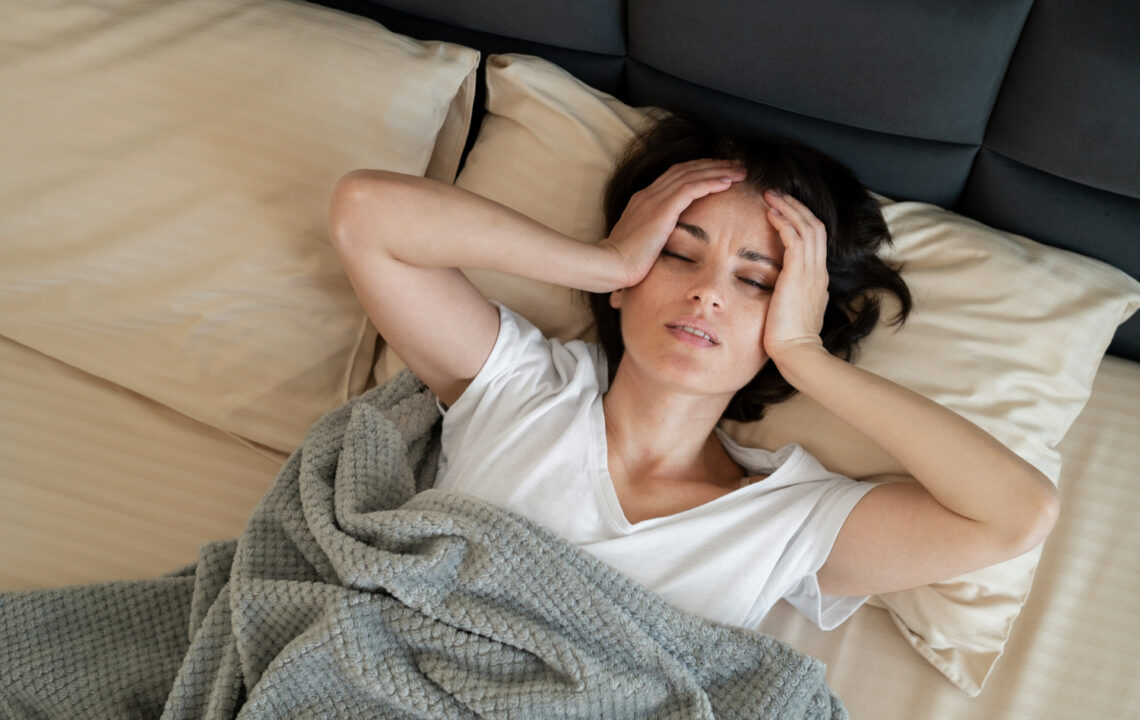
In 1964, seventeen-year-old Randy Gardner stayed awake for 264 hours as part of a school experiment. By the fourth day, he couldn’t perform simple subtraction. By the sixth, he was hallucinating. His case remains one of the best-documented pieces of evidence of what long-term sleep deprivation does to the human body. Find out what chronic sleep deprivation really does to your body!
Key facts about chronic sleep deprivation:
- Just 4 nights of short sleep reduce insulin sensitivity by 30%
- Sleep deprivation raises the risk of heart disease, diabetes, and depression
- Memory and concentration deteriorate after a single night below 6 hours of sleep
- Chronic sleep deficiency accelerates ageing at the cellular level
- Rebuilding a healthy rhythm requires consistency but is possible at any age
What happens in the body when you don’t sleep long enough?
The brain begins losing its ability to clear toxic proteins after just one night of reduced sleep. During deep sleep, the glymphatic system – the brain’s waste-clearance network – removes beta-amyloid – a protein linked to Alzheimer’s disease – and other metabolic by-products. Without this process, toxins accumulate in nerve tissue.
The hormonal system reacts immediately. Cortisol levels rise, whilst growth hormone production falls. Leptin – the satiety hormone – drops, whilst ghrelin – the hunger hormone – increases. This is why sleep-deprived people reach for high-calorie snacks totalling 300-400 extra calories a day more than usual. At the same time, glucose metabolism is disrupted, leading to insulin resistance.
Symptoms of chronic sleep deprivation
Tiredness is merely the tip of the iceberg. Long-term sleep deprivation manifests on a cognitive, emotional, and physical level simultaneously, and many people don’t connect their problems with a lack of sleep.
How does sleep deprivation affect memory and concentration?
Memory and concentration deteriorate after just one night below 6 hours of sleep. The hippocampus – the structure responsible for memory consolidation – needs deep sleep to transfer information from short-term to long-term memory, and without enough sleep, this process is interrupted. People sleeping fewer than 6 hours for a week show a decline in reaction time comparable to a blood alcohol level of 0.1%. Concentration drops, decisions become impulsive, and the ability to learn new things falls by 40%.
Why isn’t tiredness the only symptom?
Chronic sleep deprivation presents with symptoms rarely associated with a lack of rest. Frequent colds, digestive problems, increased headaches, and low mood are typical signals. The skin loses elasticity, wounds heal more slowly, and cravings for sweet foods intensify.
Symptoms of chronic sleep deprivation beyond tiredness:
- Irritability and mood swings – the body interprets a lack of sleep as a threat and switches into survival mode
- Immune problems – more frequent infections, slower wound healing, heightened inflammation
- Appetite disruption – increased hunger, particularly for simple carbohydrates and fats
- Difficulty making decisions – the part of the brain responsible for logical thinking works more slowly
- Microsleeps – brief lapses in consciousness during the day, dangerous behind the wheel
Sleep deprivation weakens the heart and immune system
People who sleep fewer than 6 hours a night have a 48% higher risk of coronary heart disease than those sleeping 7-8 hours. Sleep deprivation raises blood pressure, increases vascular inflammation, and accelerates the development of atherosclerosis. REM and deep sleep phases play a crucial role in cardiovascular system recovery.
The immune system loses efficiency in proportion to the sleep deficit. Production of cytokines – proteins that coordinate the immune response – drops by 70% after a single sleepless night. Natural killer cells, responsible for destroying cancerous cells, reduce their activity. Dr Matthew Walker of the University of California, Berkeley, stresses: “There isn’t a single organ in the body or process in the brain that doesn’t degrade when you don’t sleep enough.”
Sleep deprivation and depression and anxiety
The amygdala – the brain’s emotional centre – becomes 60% more reactive after a sleepless night. Negative stimuli provoke a stronger response, whilst positive ones are suppressed. This is the biological mechanism that explains why sleep-deprived people are irritable, anxious, and prone to catastrophising.
The link between insomnia and depression runs in both directions. Long-term sleep deprivation triples the risk of depression, and depression worsens sleep quality. Breaking this cycle requires working on both problems simultaneously. Cognitive behavioural therapy for insomnia (CBT-I) proves more effective than sleeping pills in the long term.
How sleep deprivation affects mental health:
- Anxiety escalates – the sleep-deprived brain interprets neutral situations as threats
- Emotional regulation weakens – minor frustrations trigger disproportionate reactions
- The risk of depression rises fivefold with chronic insomnia lasting more than 6 months
- Motivation drops – the brain’s reward system operates with reduced efficiency
Does sleep deprivation accelerate ageing?
Telomeres – the protective caps on chromosomes – shorten faster in people who sleep fewer than 6 hours. Shorter telomeres mean faster cellular ageing and a higher risk of age-related diseases. The biological age of a chronically sleep-deprived person can be as much as 5-8 years higher than their chronological age.
Deep sleep is a time of intensive DNA repair. Cells remove oxidative damage, produce repair proteins, and renew mitochondria – the cells’ energy centres. Without this window of recovery, damage accumulates with each passing night, accelerating degenerative processes throughout the body.
How many hours of sleep does an adult really need?
An adult needs 7-9 hours of sleep per night, with the optimal window for most people being 7.5-8 hours. Fewer than 1% of the population carry a genetic mutation of the DEC2 gene that allows them to function on 6 hours without health consequences.
Signs that you’re not sleeping enough:
- You need an alarm clock – a well-rested body wakes naturally at a consistent time
- You fall asleep in under 5 minutes – this is a sign of serious sleep deficit, not good health
- Coffee is essential in the morning – caffeine dependency masks chronic tiredness
- Weekend lie-ins last more than 2 hours longer than on weekdays
Can some people manage on 5 hours of sleep?
The belief that one needs less sleep is one of the most common cognitive illusions associated with sleep deprivation. The brain adapts to chronic tiredness and stops registering it as a problem. Cognitive tests show, however, that mental performance declines steadily with each night below 7 hours, even when the person subjectively feels fine.
How to break the cycle of chronic sleep deprivation
Rebuilding a healthy sleep rhythm starts with one rule – a fixed wake-up time, even at weekends. The body needs 2-4 weeks of a regular schedule to reset the biological clock. Limiting screens for 60-90 minutes before bed, lowering the bedroom temperature to 18-20 degrees, and cutting out caffeine after 2 p.m. all speed up this process. The first effects typically appear after 10-14 days – falling asleep becomes easier and daytime energy grows more stable.
FAQ: Most frequently asked questions about sleep deprivation
Can you make up for lost sleep at the weekend?
Weekend lie-ins compensate for a small portion of the deficit but don’t reverse the metabolic and hormonal changes caused by chronic sleep deprivation during the week.
Can sleep deprivation lead to obesity?
Chronic sleep deficiency disrupts the balance of hunger and satiety hormones, increases the appetite for high-calorie meals, and slows metabolism, all of which promote weight gain.
When does sleep deprivation require a doctor’s visit?
A visit to a doctor is advisable when sleep problems persist for longer than 4 weeks, are accompanied by snoring with apnoeas, or when fatigue significantly impairs daily functioning.
References:
- Walker, M. P. (2017). The role of sleep in cognition and emotion. Annals of the New York Academy of Sciences. https://doi.org/10.1111/nyas.13416
- Cappuccio, F. P., et al. (2011). Sleep duration predicts cardiovascular outcomes: A systematic review and meta-analysis. European Heart Journal. https://doi.org/10.1093/eurheartj/ehr007
- Prather, A. A., et al. (2015). Behaviourally assessed sleep and susceptibility to the common cold. Sleep. https://doi.org/10.5665/sleep.4968