
In Rishikesh on the banks of the Ganges, yoga has been practised for over five thousand years. In London studios, queues form at six in the morning. Between these two worlds lies the same principle – breath, movement, and focus can transform the body and mind faster than any medication. Yoga for beginners requires neither flexibility nor experience. Find out how to start a practice that changes habits and health!
Key facts about yoga for beginners:
- Yoga combines body work and mental training, improving strength, flexibility, and concentration simultaneously
- Hatha yoga is the best choice for starting out – a slow pace and simple poses
- Correct breathing is more important than perfect execution of poses
- A regular practice 3 times a week produces visible results after 4-6 weeks
- Yoga lowers cortisol and activates the parasympathetic nervous system, reducing stress
How does yoga affect the body and mind?
Yoga improves flexibility, muscular strength, and balance whilst lowering cortisol levels and blood pressure. It’s one of the few forms of activity that works on both systems at once.
On a physical level, yoga poses (asanas) strengthen postural muscles, improve joint range of motion, and increase bone density. On a mental level, the practice teaches mindful awareness, which translates into better concentration, less emotional reactivity, and deeper sleep. Those who practise regularly for 12 weeks tend to show around 27% lower levels of inflammatory markers in the blood.
Proven benefits of a regular yoga practice:
- Flexibility increases by an average of 35% after 8 weeks of regular practice
- Postural muscle strength improves, reducing back and neck pain
- Blood pressure drops by 5-8 mmHg in those with mild hypertension
- Sleep quality rises – time to fall asleep shortens by an average of 10 minutes
Types of yoga for beginners
Choosing the right style of yoga determines whether the practice becomes a pleasure or a frustration. Yoga for beginners calls for a slow pace and clear instructions.
What’s the difference between hatha yoga and vinyasa?
Hatha yoga is a classical style based on holding individual poses for several breaths. The pace is calm, and the instructor takes time to explain body alignment. Vinyasa, on the other hand, links poses into flowing sequences synchronised with the breath. Transitions between poses are faster, requiring better coordination and a basic knowledge of asanas.
Which yoga styles suit beginners:
- Hatha yoga – calm pace, ideal for starting out, emphasis on correct alignment
- Yin yoga – very slow, poses held for 3-5 minutes, excellent for those who are stiff
- Restorative yoga – gentle, using props, focused on relaxation and recovery
- Iyengar yoga – precise, using blocks and straps, superb for learning correct technique
Is online yoga suitable for beginners?
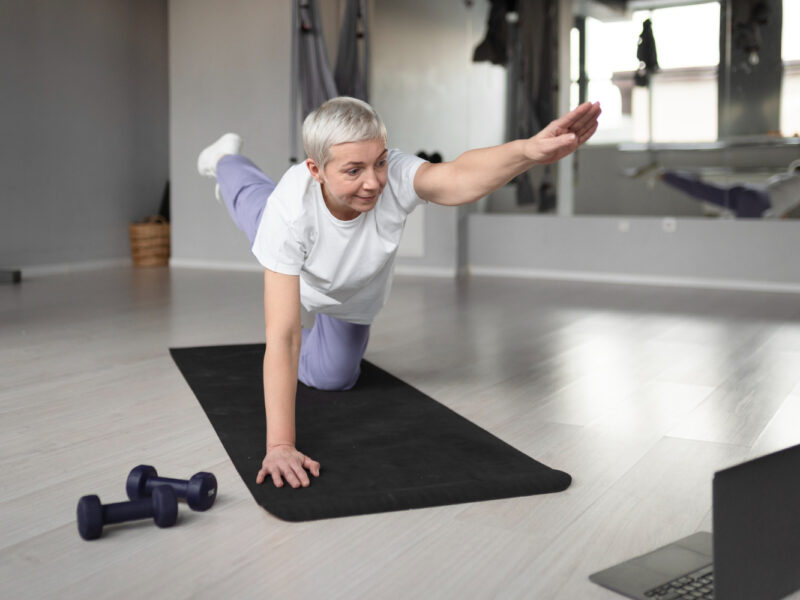
Online yoga works well as a supplement to regular classes with an instructor but shouldn’t be the only form of learning at the start. Without a teacher’s corrections, it’s easy to ingrain incorrect movement patterns that are hard to change later. The first 8-12 lessons are best taken in person, then you can practise independently with videos.
Breath in yoga – why is it so important?
The breath is a bridge between body and mind. In yoga, it serves as an active tool, not merely an automatic process. Pranayama – controlled breathing techniques – lower the heart rate, activate the parasympathetic nervous system, and improve tissue oxygenation.
The basic technique is ujjayi breathing – a slow breath through the nose with a gentle constriction of the throat. The sound resembles the hum of the sea. This type of breathing maintains body heat, aids concentration, and signals when effort is too great. If you can’t breathe calmly in a pose, move back to an easier variation.
Basic yoga poses for beginners
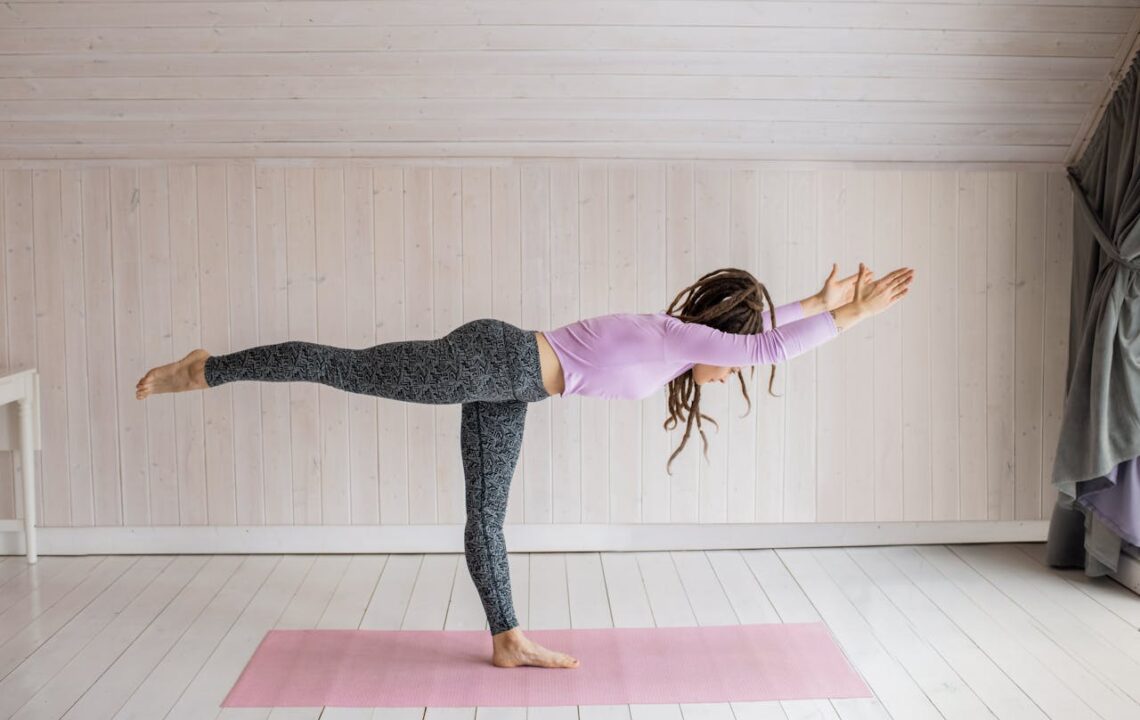
A handful of fundamental asanas form the foundation upon which the entire practice is built. Each of these poses engages different muscle groups and teaches different aspects of body control. Those with injuries, blood pressure issues, or who are pregnant should consult an instructor or doctor before choosing poses.
Poses worth starting with:
- Mountain pose (tadasana) – standing upright, teaches conscious body alignment and balance
- Downward-facing dog (adho mukha svanasana) – strengthens the arms, stretches the posterior chain
- Warrior I (virabhadrasana I) – builds leg strength and opens the chest
- Child’s pose (balasana) – a resting position that relaxes the back and hips
- Cat-cow pose (marjariasana-bitilasana) – mobilises the spine and links movement with breath
Does yoga help with managing stress?
Regular yoga practice lowers cortisol levels by 15-25% within the first eight weeks. This is a direct result of parasympathetic activation during the exercises. Chronic stress leads to inflammation and accelerates ageing, and yoga counteracts both processes simultaneously.
How does yoga affect the nervous system?
Yoga switches the body from fight-or-flight mode (the sympathetic system) to recovery mode (the parasympathetic system). Every session contains elements that make this possible – deep breathing, holding poses, and consciously releasing muscle tension. The vagus nerve, which connects the brain to the internal organs, responds to these stimuli by lowering heart rate and blood pressure. The effect persists for several hours after the practice ends.
How to start a regular yoga practice
Begin with two sessions a week lasting 30-45 minutes. After a month, increase to three. Consistency matters more than the length of any single session – pick a fixed time (morning or evening), lay out a mat in a quiet corner, and switch off your phone. The most common mistake beginners make is an overly ambitious plan that leads to giving up after a fortnight. Listen to your body – discomfort is natural, but sharp pain means you need to ease off. After 4 weeks, compare how you feel with your first day.
FAQ: Most frequently asked questions about yoga for beginners
How many times a week should you practise yoga?
Beginners should start with 2-3 sessions per week lasting 30-45 minutes, and after a month can increase to 4-5 times if the body responds well.
Is yoga a sufficient form of physical activity?
Yoga improves flexibility, balance, and strength, but for complete health it’s worth supplementing with cardio training and resistance exercises, particularly after the age of 40.
Is yoga safe for people with spinal problems?
Most yoga poses can be modified to individual needs, but those with a disc herniation or spinal stenosis should consult a physiotherapist before starting.
References:
- Pascoe, M. C., et al. (2017). Yoga, mindfulness-based stress reduction and stress-related physiological measures: A meta-analysis. Psychoneuroendocrinology. https://doi.org/10.1016/j.psyneuen.2017.08.008
- Gothe, N. P., et al. (2019). Yoga effects on brain health: A systematic review of the current literature. Brain Plasticity. https://doi.org/10.3233/BPL-190084