

At Griffith University in Australia, postmenopausal women lifted barbells with loads exceeding 80 percent of their maximum. After eight months, the bone mineral density in their spine and hip didn’t just stop falling – it increased. The LIFTMOR trial showed that exercises for bone density produce a measurable biomechanical effect – visible on DEXA scans. Find out which loads truly build bone mass and how to train safely after forty.
Key facts about exercises for bone density:
- High-intensity resistance training provides a stronger stimulus than light dumbbell exercises
- Jumps and hops stimulate the femur and tibia better than walking
- Swimming and cycling don’t build bone, although they support other aspects of health
- Two strength sessions weekly are enough to slow the loss of bone mass
- A training plan for osteoporosis requires modification, not the exclusion of loads
What is bone density?
Bone density is the amount of minerals – mainly calcium and phosphorus – per cubic centimetre of bone tissue. The higher the value, the harder and more fracture-resistant the bones. Peak bone mass is reached around the age of thirty, after which a slow decline begins.
Bones constantly remodel themselves. Osteoclasts break down old fragments, while osteoblasts build new ones. When the balance tips towards breakdown, bones weaken. On average we lose 0.5-1 percent of density per year, and postmenopausal women lose even 2-3 percent. The mechanical stimulus from exercise activates osteoblasts and shifts the balance towards building.
Can bone density be measured?
Bone density can be measured precisely with a DEXA scan, which assesses X-ray absorption at two energy levels. The test takes a dozen or so minutes, is painless and emits a minimal radiation dose. The result is given as a T-score, or deviation from the density of a young adult. T-scores from -1 are considered normal, between -1 and -2.5 indicate osteopenia, and below -2.5 indicate osteoporosis.
Do exercises affect bone density?
Weight-bearing exercise increases bone density at every age, although the strength of the effect depends on the type of training. Bones respond to forces that stretch and compress them – the higher the intensity, the stronger the remodelling signal. Swimming and cycling, while supporting cardiovascular health, don’t deliver such a stimulus.
Types of activity and their effect on bones:
- Strength training with heavy loads – the strongest stimulus for the hip and spine
- Jumping and running – good for leg bones, limited in people with osteoporosis
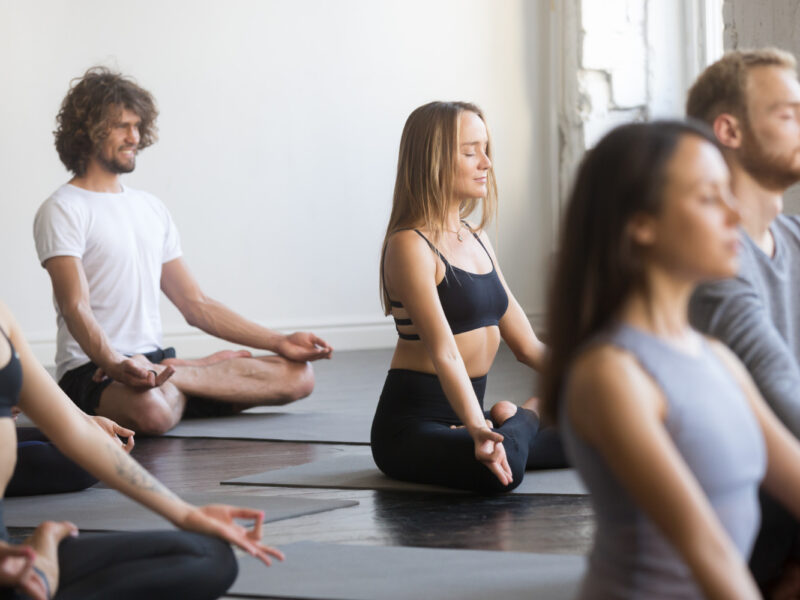
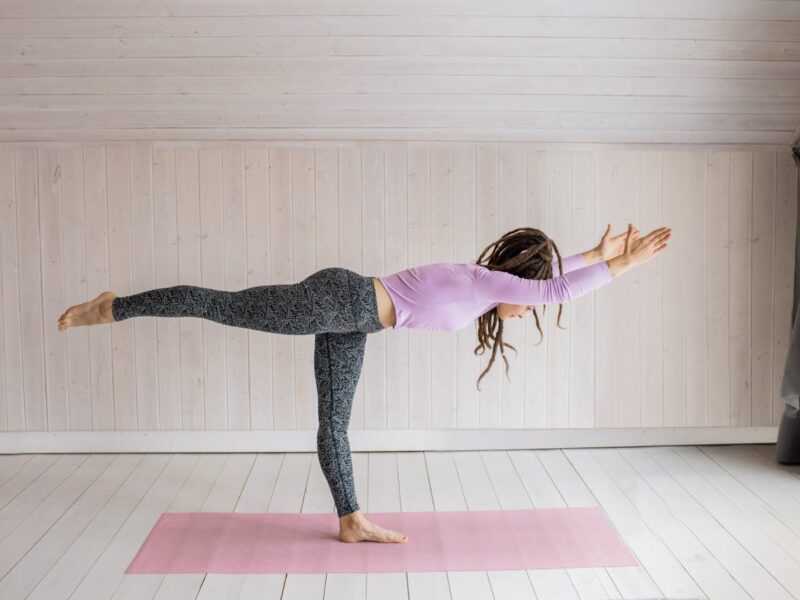
- Tai chi and yoga – improve balance, with a weaker direct effect on bone mass
- Swimming and cycling – no osteogenic stimulus, but supportive of overall fitness
Which strength exercises build bone mass?
The strongest stimulus for bones comes from resistance training with loads of 70-85 percent of maximum – a weight allowing 5-8 repetitions. Multi-joint exercises matter most: squats, deadlifts, overhead presses. They transfer forces through the spine and hip, the most common sites of osteoporotic fractures. Strength training after 40 rests on exactly these compound movements.
Resistance vs cardio for bones?
Resistance exercise builds bone mass more effectively than cardio because it requires generating force against a load. Running and walking provide a moderate stimulus – mainly for leg bones. Swimming and stationary cycling work in an offloading environment and don’t stimulate bone building, even though they improve fitness.
Which weight-bearing exercises are best?
The best weight-bearing exercises are those that compress the spine vertically and load the hip joint. They include barbell squats, deadlifts, overhead presses and pull-ups. Each can be scaled – from bodyweight to a barbell loaded with tens of kilograms.
Which strength exercises after 40 are safe for bones?
Safe strength exercises after 40 are those performed with proper technique and progression suited to the individual’s level. Age alone doesn’t rule out any exercise – injuries, mobility limitations and inappropriate loads do. After forty, recovery takes longer, so it’s worth training 2-3 times weekly with a rest day between sessions.
Pillars of safe training after 40:
- A 10-minute warm-up with mobilisation of the hips, chest and spine
- Load progression of 2-5 percent every 2-3 weeks, not more often
- Two days of recovery between heavy strength sessions
- Sleep of 7-9 hours, since bones and muscles rebuild mainly at night
- Protein of 1.2-1.6 grams per kilogram of body weight daily
Women over 40 are particularly encouraged to use external resistance – it provides a stronger osteogenic signal than bodyweight alone. Contrary to common worry, strength training doesn’t make women bulky in the way men become muscular – testosterone levels are too low for that. The practical training plan for 50+ offers a ready-made weekly structure.
Which exercises for osteoporosis to choose?
For diagnosed osteoporosis, the key exercises are resistance training, weight-bearing movements and balance work – together they reduce the risk of fractures. The LIFTMOR trial conducted by Dr Belinda Beck’s team at Griffith University in 2018 showed that even women with low bone density could safely train at 80-85 percent of their maximum under specialist supervision.
Which exercises to avoid with osteoporosis?
With osteoporosis, dynamic forward bends, sudden trunk rotations and contact sports should be avoided. Forward bending loads the front of the vertebral body, where compression fractures most often occur. Exercises for the spine in osteoporosis focus on strengthening the back extensors and deep trunk muscles – without bending. Safer options include planks, bird-dog, glute bridges and band rowing.
Training plan for bone density
An effective training plan for bone density includes two strength sessions weekly, one session with plyometric elements – dynamic jumps and hops – and daily low-intensity activity. Structured exercises for bone density add up to about 3-4 hours of training per week – the rest is walking, stairs and everyday lifting.
A weekly plan for bones – example:
- Monday – strength training focused on the lower body (squats, deadlifts)
- Wednesday – a short session with hops and balance work (15-20 minutes)
- Friday – strength training of the upper body (presses, rows, pull-ups)
- Daily – 7-10 thousand steps and 5 minutes of mobilisation in the morning
It sounds like a lot, but three 45-minute sessions plus walks add up to less than an hour a day. Training plan 60+ tailors loads to joint capacity. Alongside building strength runs the slowing of muscle loss with age, which often progresses in parallel with weakening bones.
Training for strong bones – rules worth remembering
Strong bones are built over years of consistent training, good sleep and a proper diet. A single session changes nothing, a month of training won’t reverse decades of neglect. The first measurable changes on DEXA appear after 6-12 months of regular loading. What counts is consistency, technique and gradual progression – not heroic efforts once a quarter.
The above text is for educational purposes and doesn’t replace a medical consultation. Before starting strength training, especially with diagnosed osteoporosis, osteopenia or other musculoskeletal conditions, discuss your plan with your doctor or physiotherapist.
FAQ: Frequently asked questions about exercises for bone density
How many times a week to train for bone health?
The optimal frequency is 2-3 strength sessions weekly with a rest day between them, plus daily low-intensity activity such as walking and stairs.
Does yoga help increase bone density?
Yoga improves balance and mobility, but its effect on bone mineral density is moderate – stronger results come from exercises with external loads.
Does running build bones?
Running moderately strengthens leg bones through repeated impacts, but it doesn’t significantly affect the spine or hips to the same extent as strength training.
References:
- Watson, S. L., et al. (2018). High-Intensity Resistance and Impact Training Improves Bone Mineral Density and Physical Function in Postmenopausal Women With Osteopenia and Osteoporosis: The LIFTMOR Randomized Controlled Trial. Journal of Bone and Mineral Research. https://doi.org/10.1002/jbmr.3284
- Howe, T. E., et al. (2011). Exercise for preventing and treating osteoporosis in postmenopausal women. Cochrane Database of Systematic Reviews. https://doi.org/10.1002/14651858.CD000333.pub2
- Beck, B. R., et al. (2017). Exercise and Sports Science Australia (ESSA) position statement on exercise prescription for the prevention and management of osteoporosis. Journal of Science and Medicine in Sport. https://doi.org/10.1016/j.jsams.2016.10.001