
After the sixth decade of life, a fall is no longer the same as a teenager’s stumble. A single slip on the rug can start a cascade of events ending in a broken hip and loss of independence. Preventing falls in older adults relies on training strength, balance, and anticipating risks at home. Movement is an ally of the older person. Discover what genuinely protects an older person from a dangerous fall.
Key facts about falls in older adults:
- One in three people over 65 falls each year, and after 80 it’s already one in two
- A broken hip ends in death within a year in 20-30% of cases
- Strength and balance training reduces fall risk by as much as 30-40 per cent
- Most falls happen at home – the bathroom, stairs, and thresholds are the most common spots
- Dizziness and polypharmacy are among the main modifiable risk factors
Why are falls in older adults so common?
Falls in older adults result from several biological processes overlapping. Loss of muscle mass, declining balance, and slower nerve responses. After 50, the body loses an average of 1-2% of muscle mass each year, and the rate accelerates after 70. Weaker leg muscles mean a less stable posture and difficulty regaining balance after a stumble.
With age, the inner-ear balance system and proprioception. The sense of body position in space. Also weaken. The brain takes longer to process signals about loss of stability, and muscles respond more slowly with corrective posture. Add to this vision problems, heart rhythm disturbances, and the effects of medications, and the result is a situation where an ordinary uneven rug becomes a real hazard.
How many people over 65 experience a fall each year?
About 28-30% of people aged 65 and over report at least one fall per year. After 80, that figure rises to roughly 50%. Among those with a previous fracture, the risk of another incident multiplies several times.
What are the most common causes of falls in older adults?
The most common causes of falls in older adults are weakened leg muscles, balance disorders, dizziness, vision problems, and the effects of certain medications. A single factor rarely acts alone. Usually several mechanisms combine at an unfortunate moment. An older person weakened after an infection, taking a new sleeping pill. And getting up at night to use the toilet in a poorly lit corridor accumulates three risks at once.
The most common causes of falls:
- Weakened leg muscles and loss of stability while walking
- Balance disorders linked to the vestibular or neurological system
- Dizziness when changing position, often due to drops in blood pressure
- Declining eyesight – cataracts, glaucoma, age-related macular degeneration
- Side effects of medications – sleeping pills, blood-pressure drugs, antidepressants
- An unsafe home environment – rugs, slippery floors, missing handrails
How does dizziness affect fall risk?
Dizziness and falls in older adults are closely linked. Dizziness is one of the most commonly reported symptoms after an incident. It can result from orthostatic hypotension (a drop in blood pressure on standing or sitting up), inner-ear disorders, dehydration, or drug interactions.
Do medications increase the risk of falling?
Some medications meaningfully increase the risk of an older person falling, especially when they take five or more preparations a day. The most frequently cited groups are sleeping and sedative medications, certain blood-pressure drugs, antidepressants, and strong painkillers. The mechanisms include excessive sedation, blood-pressure drops, dizziness, and impaired coordination. When in doubt, it’s worth asking the GP for a review of the entire medicine cabinet. This is standard practice known as “deprescribing”.
What are the warning signs of increased fall risk?
The warning signs appear long before the first serious fall. Reaching for walls while walking, struggling to get up from a chair without using the arms, an uncertain gait in the dark, or being unable to stand on one leg for 10 seconds. These small symptoms are an opportunity to act preventively, not a reason to panic.
The Brazilian cardiologist Claudio Gil Araujo published an analysis in the British Journal of Sports Medicine in 2022 showing that people between 51 and 75 who couldn’t stand on one leg for 10 seconds had nearly double the risk of dying within the next decade. It’s a simple, at-home functional test that says more about the body’s condition than many expensive examinations.
How can balance problems in an older person be recognised?
Balance problems in an older person can be recognised through observation of daily activities and a few simple functional tests. It’s worth noting whether the person walks with a wider stance, reaches for support when turning, or avoids stairs. A well-established tool is the “timed up and go” test. Measuring how long it takes to stand up from a chair, walk three metres, turn round, and return to the chair. A result above 12-14 seconds suggests an increased risk of falls.
When to see a doctor after a fall?
It’s worth seeing a doctor after every fall in a person over 65. Even when there’s no visible injury. The bruise itself is secondary here. What counts is what the fall might mean: a new heart-rhythm disturbance, orthostatic hypotension, a urinary-tract infection causing confusion, or a side effect of medication. Urgent care is needed for injuries and falls in older adults with severe hip pain, an inability to bear weight on the leg, a head injury with loss of consciousness, or neurological symptoms.
A post-fall visit should include blood-pressure measurements lying, sitting, and standing, an ECG, basic blood tests, and a review of medications. In many cases, an eye examination and a hearing assessment are also helpful – impairments in these senses meaningfully raise the risk of another incident.
How to prevent falls at home?
Preventing falls at home starts with an audit of the surroundings – most incidents in older adults happen in familiar spaces, most often in the bathroom, bedroom, and on the stairs. The first three changes that bring the greatest effect are removing loose rugs, lighting up corridors with night lighting, and installing grab bars in the bathroom.
The most important changes in an older person’s home:
- Remove loose rugs and cables lying on the floor in walkways
- Install grab bars by the bath, shower, and toilet, and a non-slip mat
- Light up corridors with motion sensors and a bedside night light
- Secure the stairs with anti-slip tape and check the handrail’s stability
- Tidy the kitchen – frequently used items at hip height, not above the head
What diet supports muscle and bone strength in older adults?
A diet supporting strength in older people relies on adequate intake of protein, calcium, vitamin D, and good hydration. Recommendations for those over 65 indicate around 1.0-1.2 grams of protein per kilogram of body weight per day – noticeably more than for younger adults. Protein should be spread evenly across three meals. Because the older body uses a single large evening portion less efficiently.
Calcium comes mainly from fermented dairy, sardines with bones, tofu, and green leafy vegetables. Vitamin D, key to calcium absorption and muscle strength, requires monitoring in most older people. A 25(OH)D blood test (the active form of vitamin D in the blood) allows the dose to be tailored individually.
Exercises that reduce the risk of falling
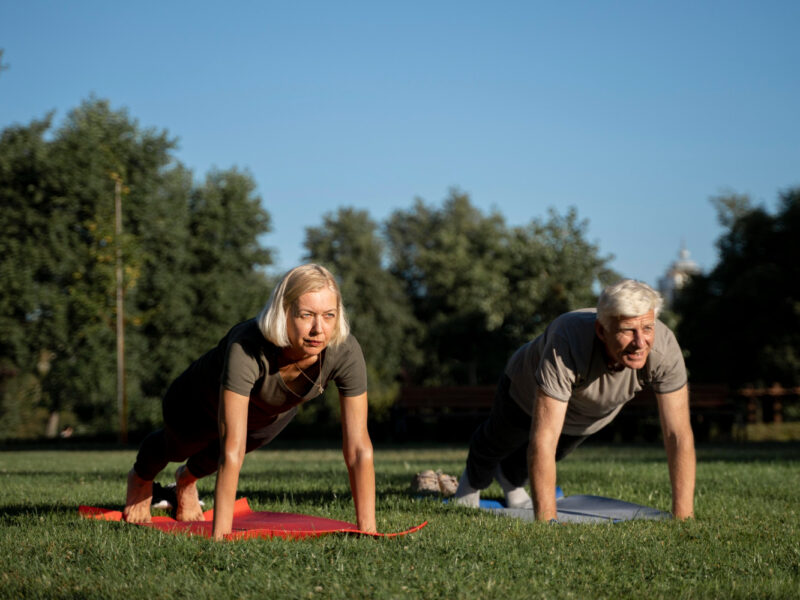
The most effective exercises combine leg-strength training with balance work. General fitness alone isn’t enough. A 2019 Cochrane Collaboration meta-analysis showed that exercise programmes including these two elements reduce the number of falls by an average of 23%. And in those at the highest risk by as much as 30-40 per cent. Consistency is key – two to three times a week, for at least three months.
Strength training builds muscle mass and counters muscle loss with age. A process that markedly raises fall risk. Daily NEAT-type movement adds activity without effort, while a structured training plan after 60 combines strength with balance work.
Effective preventive exercises:
- Standing up from a chair without using the arms – 10-15 repetitions twice a day
- Standing on one leg by the kitchen counter – 30 seconds on each side
- Tandem walking heel-to-toe along a rug – a few metres a day
- Partial squats while holding the back of a chair – twice a week
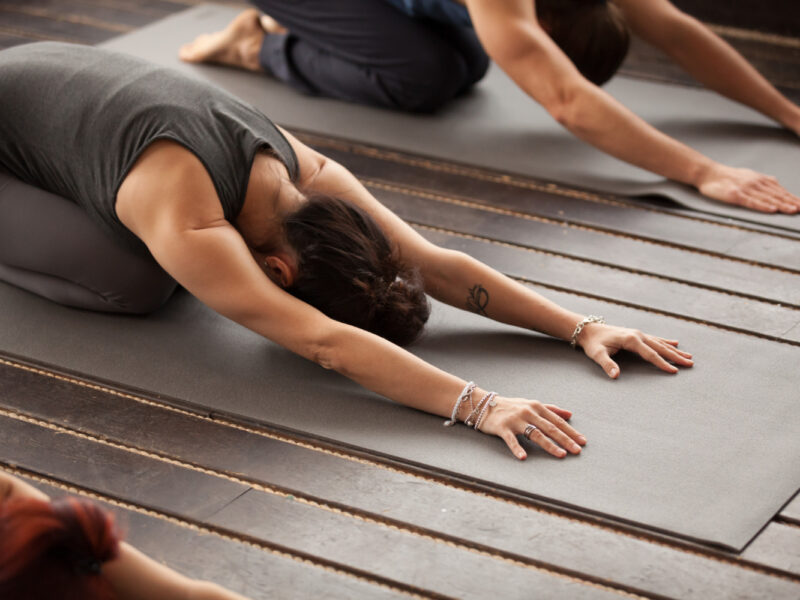
- Tai chi or yoga for older adults – 1-2 sessions a week, with proven effects
How to effectively protect an older person from falling?
Effective prevention of falls in older adults combines four elements. Regular strength and balance exercise, a home audit, a medication review with the doctor, and annual eye and hearing tests. The earlier the action begins, the greater the chance that the first fall will never happen.
This article is for educational purposes and doesn’t replace medical consultation. In the case of repeated falls, dizziness, or injuries. It’s worth consulting a GP or geriatrician for a comprehensive assessment of causes and an individual prevention plan.
FAQ: Frequently asked questions about preventing falls in older adults
How can fall risk in an older person be recognised?
Increased risk is signalled by an unsteady gait, reaching for walls, difficulty rising from a chair without using the arms, an inability to stand on one leg for 10 seconds, and dizziness on changing position.
Which exercises reduce the risk of falling?
The most effective programmes combine leg-strength training with balance work – tai chi, sit-to-stand, single-leg standing, and tandem walking – performed 2-3 times a week.
How can a flat be arranged to be safe for an older person?
Key changes include removing loose rugs, installing grab bars in the bathroom, lighting up corridors with motion sensors, anti-slip tape on the stairs, and a stable handrail along every flight of stairs.
References:
- Sherrington, C., et al. (2019). Exercise for preventing falls in older people living in the community. Cochrane Database of Systematic Reviews. https://doi.org/10.1002/14651858.CD012424.pub2
- Araujo, C. G., et al. (2022). Successful 10-second one-legged stance performance predicts survival in middle-aged and older individuals. British Journal of Sports Medicine. https://doi.org/10.1136/bjsports-2021-105360
- Bergen, G., et al. (2016). Falls and Fall Injuries Among Adults Aged 65 Years and Older – United States, 2014. Morbidity and Mortality Weekly Report. https://doi.org/10.15585/mmwr.mm6537a2