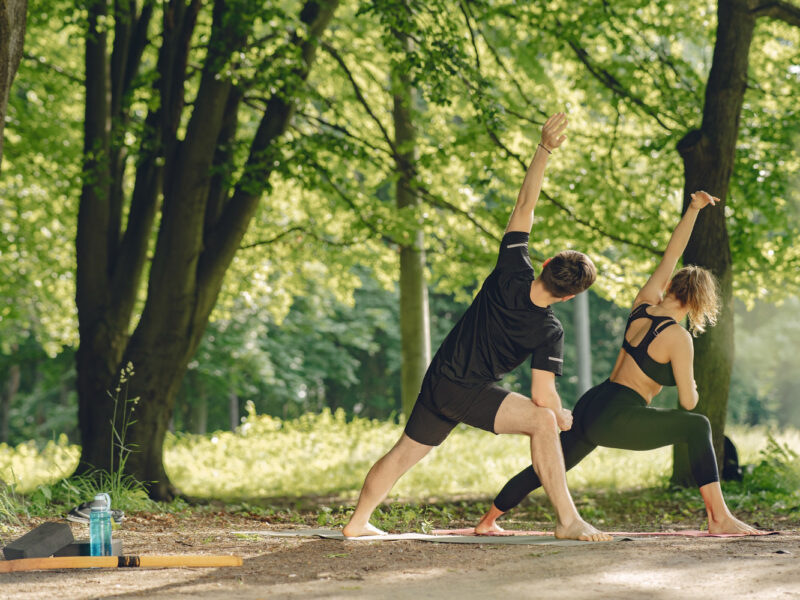

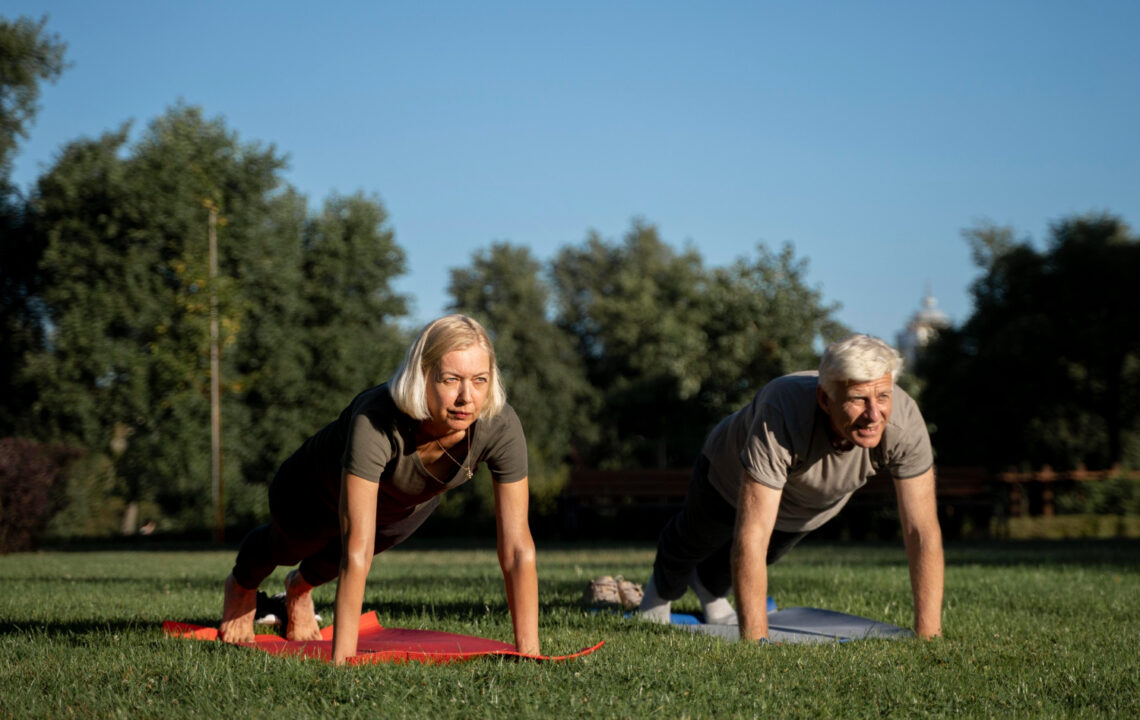
Crossing sixty doesn’t mark the end of an active life – it’s the beginning of a new chapter where conscious movement becomes an investment in every following day. A training plan tailored to the body’s needs after age 60 isn’t a list of sacrifices, but rather a roadmap built upon scientific research and proven methods. Properly selected exercises can turn back the biological clock by years – increase bone density, rebuild muscles, improve metabolism, and ensure mobility for decades to come. It’s time to discover how training can transform daily life!
Key information about training after 60:
- Strength training 2–3 times weekly prevents muscle mass loss
- Balance exercises reduce fall risk by 30–40%
- Outdoor activity supports cellular regeneration and mental health
- Intermittent fasting may support autophagy and body composition improvement
- Heart rate monitoring and RPE scale ensure safety during exertion
How to create an effective training plan after age 60?
An effective training plan after 60 relies on three pillars: strength training, balance exercises, and cardio activity. Each of these elements serves a specific function – strength protects joints and bones, balance prevents falls, cardio supports the heart and metabolism.
Foundations of an effective plan:
- Strength training 2–3 times weekly with at least one day of rest
- Balance exercises 10–15 minutes daily for stabilization
- Cardio activity (walks, cycling) 4–5 times weekly
- Recovery – the body needs more time for tissue rebuilding
- Progression – gradual increase in load and intensity
Research shows that people over 60 derive the greatest benefits from moderate–intensity workouts performed regularly. Start with 2–3 weekly sessions, leaving at least one day of rest between strength workouts.
Rules of safe activity and mobility
Safety begins with a warm-up – 5–10 minutes of gentle movement prepares joints and muscles for exertion. Dynamic stretching, marching in place, shoulder and hip rotations increase range of motion without injury risk. After training, dedicate time to static stretching – this improves flexibility and accelerates recovery.
Why is strength training crucial for seniors?
Strength training is the most effective method for stopping sarcopenia – the natural loss of muscle mass after age 60. Without intervention, you lose 3–8% of muscle mass per decade. Muscles aren’t just about strength, but also joint protection, spine stabilization, and an active metabolism.
Resistance training increases bone density by stimulating osteoblasts – the cells building bone tissue. This is crucial for preventing osteoporosis, which affects 30% of women and 20% of men over 60. Learn about strength training after 40, because the principles of building strength at this age form the foundation for subsequent decades.
Movement in fresh air and contact with nature
Outdoor activity combines physical benefits with psychological ones. Exposure to natural light regulates the circadian rhythm and improves vitamin D production – crucial for bone health and the immune system. Green surroundings reduce cortisol, lower blood pressure, and improve mood.
Daily contact with nature supports cellular regeneration and reduces inflammation. What David Attenborough says about health, movement, and contact with nature – the legendary documentarian’s words underscore how fundamental the connection between nature and longevity truly is.
How walking improves cellular regeneration every day
Walking is the simplest and safest cardio exercise after 60. 30–45 minutes daily at a moderate pace improves circulation, delivers oxygen to tissues, and supports metabolite removal. Regular walks increase mitochondrial production – the cellular powerhouses responsible for energy. This translates to greater vitality and better performance in daily activities.
Does intermittent fasting help in building fitness after 60?
Intermittent fasting may support metabolic health and body composition in seniors, but requires caution. The 16:8 eating window (16 hours fasting, 8 hours eating) is the most popular form – it allows maintaining regular meals without extreme calorie restriction.
Fasting activates autophagy – a process where cells remove damaged elements and renew themselves. Insulin sensitivity improves, inflammatory levels drop, and the body more efficiently utilizes energy stores. If you’re considering this method, check how to start intermittent fasting safely and effectively.
Best exercises for balance and stabilization
Balance exercises are the foundation of fall prevention. Standing on one leg, heel–to–toe walking, tai chi, and exercises on a balance board train the proprioceptive system – the body’s ability to recognize its position in space. Dedicate 10–15 minutes daily to balance – effects will be visible after 4–6 weeks.
Progression is key. Start with simple supported exercises – standing on one leg while holding a chair. When you feel confident, remove the support. Later add closed eyes or unstable surfaces.
Most effective balance exercises:
- Standing on one leg (3 sets of 30 seconds each leg)
- Heel-to-toe walk along a straight line (10 meters both directions)
- Standing on a pillow or balance mat (3 sets of 30 seconds)
- Single-leg squats with support (3 sets of 8–10 repetitions)
- Torso rotations while standing on one leg (3 sets of 10 rotations)
Proven methods for preventing falls in seniors
Falls are the main cause of injuries after 60, but most can be avoided through prevention. Besides balance training, check your home environment – remove loose rugs, install handrails in the bathroom, ensure good lighting. Wear shoes with good traction, avoid walking in socks alone on slippery floors.
Ready training plan for active people 60+
A training plan covering all aspects of physical fitness can ensure comprehensive development.
Sample schedule:
- Monday – full-body strength training
- Tuesday – 45–minute walk
- Wednesday – balance exercises and stretching
- Thursday – strength training
- Friday – cardio activity (cycling, swimming)
- Saturday – yoga or tai chi
- Sunday – recovery or light walk.
Adjust intensity to your capabilities. If you’re just starting, begin with 2 strength workouts and daily walks. Progression is key – don’t try to do everything at once.
Exercise schedule with dumbbells and body weight
Sample strength training (3 sets of 10–12 repetitions):
- Squats (with chair as safety measure)
- Wall or knee push-ups
- Dumbbell deadlifts (light weight)
- Dumbbell rows leaning on chair
- Plank (15–30 seconds, depending on ability)
Start with light weights – 1–3 kg is enough initially. Technique is more important than weight. When an exercise becomes easy, increase the number of repetitions or add 0.5–1 kg. Don’t rush – progression may be slow, but it must be consistent.
Diet supporting muscles and joints in seniors
A diet after 60 must provide adequate protein, healthy fats, and joint-protecting compounds. Protein is the foundation – every meal should contain a source (meat, fish, eggs, legumes, dairy). Healthy fats from olive oil, nuts, and fatty fish support the heart and reduce inflammation.
Joints need collagen, glucosamine, and omega-3 fatty acids. Bone broth, gelatin, fatty fish (salmon, mackerel) naturally provide these components. Vegetables rich in vitamin C (peppers, broccoli, citrus fruits) support collagen synthesis in the body.
Key dietary components for seniors:
- Protein: 1.2–1.6 g per kg body weight daily
- Omega-3: fatty fish 2–3 times weekly
- Calcium: dairy, sardines, green leafy vegetables
- Vitamin D: sun exposure, supplementation 1000–2000 IU daily
- Collagen: bone broth, gelatin, 10 g supplementation daily
Role of protein and collagen supplementation in recovery
Protein is the building material for muscles – without adequate amounts, training results will be minimal. After 60, the body uses protein less efficiently, so you need more than at a younger age. Distribute intake evenly throughout the day – 25–30 g protein per meal.
How to monitor training intensity?
Intensity monitoring protects against overload and ensures you’re training effectively. The two main tools are the RPE scale (Rate of Perceived Exertion) and heart rate measurement. The RPE scale is a subjective perception of effort from 1 to 10, where 1 is rest and 10 is maximum effort. For most strength workouts, aim for 6–7 on the RPE scale – you feel you’re working, but can complete the set.
Heart rate shows objective cardiovascular load. After 60, training at 50–70% of maximum heart rate is recommended. Calculate maximum heart rate using the formula 220 minus age. For a 65-year-old, that’s 155 beats per minute, so the training zone is 78–109 beats per minute. Investing in a heart rate monitor or sports watch makes control easier.
RPE scale and heart rate control for heart safety
The RPE scale is a simple tool you always have with you. During exertion, ask yourself: “How hard am I working?” If you can talk freely, the level is 4–5. If speaking requires breaks, it’s 6–7. If you’re barely catching your breath, it’s 8–9. For safety, train in the 5–7 range – intense enough to see progress, but without overload risk.
Proven methods for vitality and longevity principles
Vitality after 60 is the sum of daily habits – movement, nutrition, sleep, and social contacts. Active seniors who combine regular exercise with a protein-rich diet, spending time outdoors, and caring for sleep live longer and healthier. Start with one weekly workout, daily walking, and increased protein intake. After a month, add more elements – greater energy, better balance, stronger muscles, and joy from daily activity come gradually, but are lasting.
FAQ – most frequently asked questions about training after 60
How many times weekly should a senior train?
Optimally 3–5 times weekly – 2–3 strength sessions, 3–4 cardio sessions (walks, cycling) with at least one full recovery day per week.
Can a senior build muscle mass?
Yes, research confirms that people over 60 can increase muscle mass and strength through strength training and an appropriate protein-rich diet – the pace is slower than in younger people, but the effects are real.
What weights are safe for seniors?
Start with 1–3 kg dumbbells or body weight – if you can perform 12–15 repetitions with good technique, the weight is appropriate, increase it gradually by 0.5–1 kg every 2–3 weeks.
Do joint pains disqualify you from training?
No – mild soreness is normal, but sharp pain is a signal to stop, choose low-impact exercises (swimming, cycling, seated exercises) and consult with a physiotherapist before starting a program.
References:
- Peterson, M. D., et al. (2011). Resistance exercise for muscular strength in older adults: a meta-analysis. Ageing Research Reviews, 10(3). https://doi.org/10.1016/j.arr.2010.08.002
- Sherrington, C., et al. (2019). Exercise for preventing falls in older people living in the community. Cochrane Database of Systematic Reviews, 1(1). https://doi.org/10.1002/14651858.CD012424.pub2
- Landi, F., et al. (2016). Protein intake and muscle health in old age. Current Opinion in Clinical Nutrition & Metabolic Care, 19(1). https://doi.org/10.1097/MCO.0000000000000230