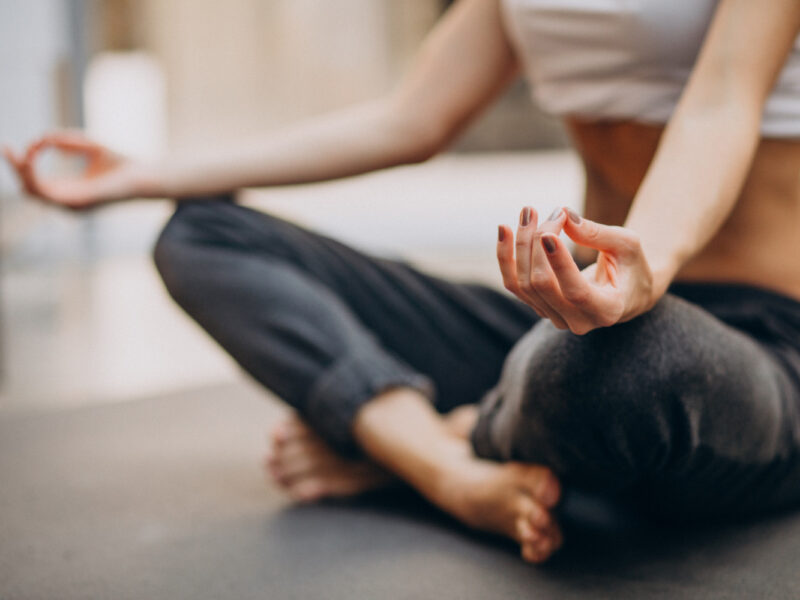


In a world of constant distraction from smartphones, notifications, and endless to–do lists, the mind drowns in a chaos of information. Meditating isn’t about escaping reality – it’s about regaining control over it through conscious pause. An ancient practice that served monks and philosophers for millennia has now become a survival tool in the modern world. Just a few minutes daily is enough to ease the effects of stress, improve concentration, and build mental resilience for everyday challenges. Discover the techniques that will transform the way your mind functions!
Key information about meditation:
- Regular practice lowers cortisol, reduces inflammation, and supports heart health
- Just 10 minutes daily is enough to notice improved concentration and well-being
- The simplest techniques include breath observation and body scanning
- Meditation changes brain structure – strengthens areas responsible for attention and emotional regulation
- Regularity matters most, not perfection – every session counts
What is meditation and what does this practice involve?
Meditation serves as mental training in concentration and awareness. It involves directing attention to a chosen object – breath, sound, word – and gently returning to it when thoughts drift away. This isn’t a battle with thoughts, but rather an observation of their flow without judgment or attachment.
Many forms of meditation exist. Mindfulness meditation focuses on the present moment and accepting what is. Transcendental meditation uses a mantra – a repeated sound or word. Loving–kindness meditation develops feelings of goodwill toward oneself and others. All forms share one thing – they train the mind in controlling attention.
Basic elements of meditative practice:
- Conscious attention on a selected point (breath, body, sound)
- Accepting distractions without frustration – thoughts will drift
- Gently directing attention back to the concentration object
- Regular practice at a fixed time of day
- Body posture supporting alertness – upright but not tense
Why does 10 minutes of meditation daily extend life?
Meditation influences molecular processes related to aging. Research shows that regular practice protects telomeres – chromosome ends that shorten with age. Longer telomeres mean slower cellular aging. Meditators have telomeres comparable to people several years younger.
The practice reduces chronic inflammation – the main cause of age–related diseases. Pro–inflammatory cytokine levels drop, which damage tissues and lead to heart disease, diabetes, and Alzheimer’s. The immune system functions more efficiently, cellular regeneration accelerates. These are mechanisms that directly extend healthy years of life. You can learn more about how 10 minutes of meditation daily can extend your life through these fundamental changes in the body.
How does chronic stress destroy health and how to stop it?
Chronic stress keeps the body in a state of constant readiness. Cortisol and adrenaline circulate in the blood for most of the day, not just in moments of threat. It’s like keeping a car at high RPM for the entire journey – the engine wears out faster. Hypertension, insulin resistance, weakened immune system – these are the effects of uninterrupted tension.
The heart pumps faster, blood vessels constrict, pressure rises. Chronically elevated pressure damages artery walls, promotes atherosclerosis, and increases heart attack risk. Cortisol raises blood sugar levels to provide energy for “fight or flight.” The problem? In an office, you’re not running from a lion – you’re sitting at a desk. Glucose circulates unused, leading to insulin resistance.
Meditation interrupts this cycle. It activates the parasympathetic system – the brake for stress response. Heart rate slows, pressure drops, breathing deepens. Chronic stress, a silent health killer, can be controlled through daily practice that literally reprograms nervous system responses.
The role of meditation in lowering cortisol levels in the body
Meditation lowers cortisol through activation of the parasympathetic system. The vagus nerve – the main communication highway between brain and organs – begins dominating over the sympathetic system responsible for stress response. Body receives a signal – threat has passed, you can relax.
Adrenal glands stop pumping cortisol, its level gradually drops. Those practicing regularly for 8 weeks show a 20–30% cortisol reduction compared to control groups. This is a change visible in blood tests and felt in daily functioning – less tension, better sleep, more stable mood.
Simple breathing techniques for beginners
Breath serves as the simplest and most accessible concentration point. Always with you, requires no equipment or special place. Start with observing natural breath rhythm – don’t change it, just observe. Air enters through the nose, fills the lungs, the belly rises. Exhale – belly falls, air flows out. Thoughts will drift – this is normal.
When you notice you’re thinking about something else, gently direct attention back to breath. Without frustration, without judgment. This is the training – not perfect focus, but repeatedly finding concentration. Each such moment strengthens the “attention muscle” in the brain.
Basic breathing techniques:
- 4–7–8 breath: inhale for 4, hold for 7, exhale for 8 seconds
- Observing natural breath without changing rhythm
- Counting breaths: inhale (1), exhale (2), to 10 and start over
- Deep diaphragmatic breathing – belly rises with inhale
- Alternate nostril breathing (nadi shodhana)
Box breathing method and muscle relaxation
Box breathing is a technique used by Navy SEALs in extreme stress situations. Inhale through nose for 4 seconds, hold breath for 4, exhale through mouth for 4, pause for 4. Repeat for 5–10 minutes. The regular sides of the “box” synchronize the nervous system and dramatically lower tension.
You can do this anywhere – before an important meeting, in traffic, before sleep. Progressive muscle relaxation works complementarily – tense a muscle group for 5 seconds, then relax for 10. Start from feet, move through legs, abdomen, chest, shoulders, neck, face. The contrast between tension and relaxation teaches the body what true relaxation is. Combining box breathing with muscle relaxation creates a powerful combination for reducing physical and mental tension.
Effective ways to build a daily meditation habit
Start with small steps – 5 minutes daily for the first week. Don’t try to sit in lotus position for an hour right away. The brain likes gradualness. Choose a fixed time – morning after waking or evening before sleep. Routine helps because it eliminates the decision “whether to meditate today”. You simply do it automatically at the same time.
Create a dedicated space. It doesn’t have to be large – a corner of the room, a cushion, a candle. A place that associates with practice. The brain more easily enters meditation mode when surroundings are familiar. Avoid the bed – it’s too associated with sleep. Choose a chair or cushion on the floor.
Strategies for building meditation habit:
- Start with 5 minutes daily, not an hour
- Choose a fixed time – best morning or evening
- Create a special place only for practice
- Use an app or timer – you don’t need to look at the clock
- Track progress – mark days on a calendar
Summary of meditation benefits and mental hygiene principles
Meditation isn’t a magical solution to all problems, but rather a foundation for healthy mental functioning. Regular practice changes brain structure – thicker prefrontal cortex responsible for attention, smaller amygdala responsible for anxiety. These are changes visible in studies after just 8 weeks.
Combine meditation with other elements of mental hygiene – regular sleep, physical activity, social relationships. Together they create a mental health protection system that allows functioning in a stressful world without burnout. Don’t wait for a crisis to start caring for your mind – do it today, starting with one inhale and exhale.
FAQ – most frequently asked questions about meditation
How much time daily should I meditate?
For beginners, 5–10 minutes daily is enough – regularity is more important than session length, and effects appear after just a few weeks of consistent practice.
What to do when thoughts constantly drift during meditation?
Thought drifting is normal and part of the process – the training consists precisely of repeatedly gently directing attention back to the concentration object, not achieving mental emptiness.
Does meditation require a special body position?
No, you can meditate sitting on a chair, cushion, or even lying down – what’s important is that the body is upright but not tense, in a way supporting alertness without discomfort.
When will I notice first meditation effects?
You’ll notice the first effects like better focus and less tension after 1–2 weeks of regular practice, deeper changes like lowered cortisol and better stress management appear after 8–12 weeks.
References:
- Tang, Y. Y., et al. (2015). The neuroscience of mindfulness meditation. Nature Reviews Neuroscience, 16(4). https://doi.org/10.1038/nrn3916
- Pascoe, M. C., et al. (2017). Mindfulness mediates the physiological markers of stress. Psychoneuroendocrinology, 86. https://doi.org/10.1016/j.psyneuen.2017.08.004
- Epel, E. S., et al. (2009). Can meditation slow rate of cellular aging? Cognitive stress, mindfulness, and telomeres. Annals of the New York Academy of Sciences, 1172(1). https://doi.org/10.1111/j.1749–6632.2009.04414.x