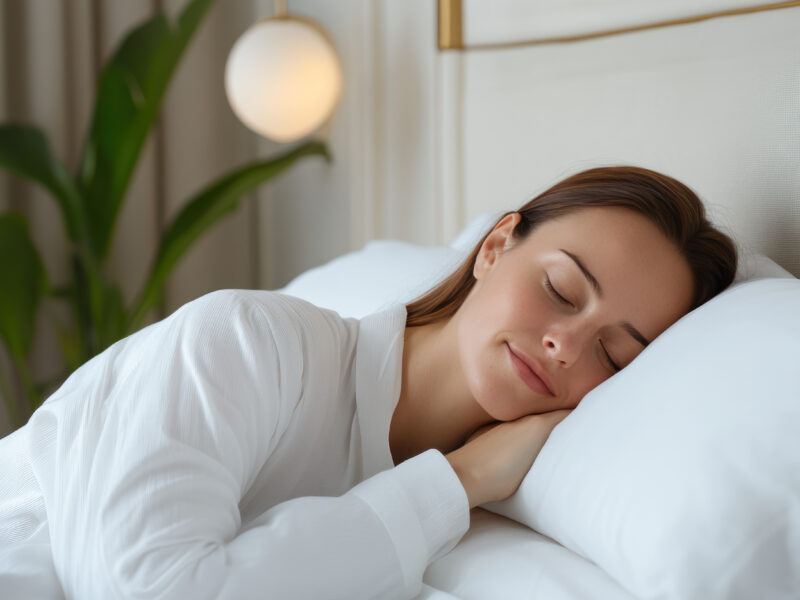


In Japan, there is a word inemuri – the art of napping in public places, socially accepted as proof of hard work. The West approaches sleep differently, but one thing unites both cultures – a chronic lack of rest. Sleep hygiene is a set of habits that help the body and brain switch into recovery mode without medication or complex therapies. Discover how simple changes to your evening routine can transform the quality of your sleep!
What you should know about sleep hygiene:
- A consistent bedtime regulates the body clock more effectively than melatonin tablets
- Bedroom temperature between 16 and 19°C supports deep sleep
- Blue light from screens suppresses melatonin production by up to 50%
- Coffee consumed 6 hours before bed shortens sleep by an average of 40 minutes
- Regular exercise improves sleep quality, but intense training just before bed has the opposite effect
What has a greater impact on sleep quality – duration or habits?
Sleep habits have a greater effect on how you feel after waking than the sheer number of hours in bed. A person who sleeps 7 hours on a consistent schedule feels better than someone who sleeps 9 hours at varying times.
The body clock – the circadian rhythm – functions as an internal metronome. When you fall asleep and wake at similar times, the brain knows when to begin producing melatonin and when to dial it down. An irregular schedule disrupts this process and leads to what is known as social jet lag. The body responds much as it would after crossing time zones, even though you haven’t boarded a plane.
Fundamental sleep hygiene rules
The fundamental sleep hygiene rules prepare the body and mind for rest. It isn’t about a single magic trick but rather a coherent system of habits repeated every evening. The brain learns to associate these signals with falling asleep and, over time, responds more quickly.
Core sleep hygiene rules include:
- A fixed bedtime and wake time – even at weekends, with a maximum deviation of 30-60 minutes
- Reserving the bed solely for sleep – working and eating in bed weakens the association with rest
- Switching off screens at least 60 minutes before bed
- A dark, cool and quiet bedroom – blackout curtains, 16-19°C, minimal noise
- Avoiding caffeine and alcohol in the evening hours
Why is a consistent bedtime so important?
The brain needs 2-3 weeks to stabilise the circadian rhythm after a schedule change. Every shift in bedtime by more than an hour resets this process. Dr Russell Foster, a chronobiologist at the University of Oxford, emphasises: “Sleep regularity matters more than sleep duration. A person sleeping 7 hours on a consistent schedule shows better health outcomes than someone sleeping 8-9 hours without a set pattern.” A good trick to start with – set the alarm for the same time for 14 days, even at weekends, and let your body find its natural bedtime on its own.
How does bedroom temperature affect sleep?
The body needs to lower its core temperature by roughly 1°C to initiate deep sleep. A bedroom that is too warm blocks this process. An optimal 16-19°C allows the body to cool down naturally and enter the recovery phase. Too cold is equally unhelpful – the body diverts energy towards warming itself rather than tissue repair.
How does blue light disrupt falling asleep?
Phone, tablet and computer screens emit short-wavelength light that the brain interprets as a daytime signal. The pineal gland – a small structure in the brain responsible for melatonin production – halts its release even with brief exposure to a bright screen in the evening. Effect persists for 60-90 minutes after the device is put down.
Solution doesn’t require giving up technology. Blue light filters, night mode on your phone and effective blue light blocking through orange-tinted glasses reduce exposure by 50-80%. The crucial window, however, is the final 60 minutes before bed. During this time, reaching for a paper book rather than a screen is the wisest choice.
Food, coffee and alcohol – what to eat and drink before bed?
Caffeine has a half-life of 5-6 hours. A coffee at 4 p.m. is still working at half strength by 10 p.m. Heavy meals just before bed engage the digestive system and raise body temperature – both of which hinder falling asleep. A light snack rich in tryptophan – an amino acid needed to produce melatonin – such as a handful of nuts or a banana, supports serotonin and melatonin production instead.
Alcohol affects sleep in a deceptive way. A single glass of wine makes it easier to doze off, yet it disrupts sleep architecture – cutting the REM phase – the stage of sleep associated with dreaming – short and increasing awakenings in the second half of the night. Even moderate consumption 2-3 hours before bed reduces regenerative sleep quality by 24%.
Foods that support good sleep:
- Walnuts – a natural source of melatonin
- Cherries (especially tart varieties) – contain melatonin and antioxidants
- Oily fish – omega-3 fatty acids and vitamin D help regulate the sleep cycle
- Chamomile tea – apigenin gently calms the nervous system
An evening routine that makes falling asleep easier
The brain needs transitional signals between activity and sleep. An evening routine acts as a buffer – a series of repeatable actions that gradually quieten the nervous system. Research from Harvard Medical School shows that people with an established evening routine fall asleep an average of 20 minutes faster than those without one.
The rules for perfect sleep include dimming the lights 90 minutes before your planned bedtime. A warm bath or shower 60-90 minutes beforehand lowers body temperature after you leave the bathroom and speeds up the onset of sleep. A few minutes of stretching or simple breathing exercises release muscular tension accumulated throughout the day.
Why does physical activity improve sleep?
Regular movement increases the amount of deep sleep. The phase in which the body repairs tissue, strengthens the immune system and consolidates memories. People who exercise for at least 150 minutes per week fall asleep faster and wake less frequently during the night. The effect builds over time – after 4-6 weeks of regular exercise, sleep quality improvement becomes clear and stable.
What time is it best not to exercise?
Intense training raises body temperature, heart rate and cortisol levels. All three make it harder to fall asleep. The optimal time for exercise is the morning or early afternoon. A workout finished at least 3-4 hours before bed doesn’t disrupt the circadian rhythm. The exception is gentle yoga or a walk. These forms of movement can be practised even in the evening without a negative effect on sleep.
Does electronics in the bedroom really cause harm?
A bedroom with a television, a phone on the bedside table and a laptop on the bed is an environment where the brain doesn’t associate the space with rest. Even a silenced phone emits light notifications, and the mere awareness of its presence keeps the prefrontal cortex – the part of the brain responsible for decisions and focus – in a state of alertness. Moving the charger to another room eliminates the temptation to check the screen at 3 a.m.
What is worth removing from the bedroom:
- Phone and tablet – replace the phone alarm with a traditional alarm clock
- Television – even background viewing raises cortical arousal
- Laptop and work documents – the bedroom must not be associated with obligations
- Bright LED indicators – even small points of light can disrupt sleep
- A clock with a backlit display – checking the time during the night worsens insomnia
Habits that will change the quality of your sleep
Changing sleep habits doesn’t require a radical overhaul. Starting with just one element – a consistent wake time – and adding another each week is enough. After 3-4 weeks, the brain begins to treat the new routine as the norm. The most effective first step is moving your phone out of the bedroom and setting the alarm for the same time for a fortnight. The rest of the habits tend to fall into place on their own.
FAQ: Most frequently asked questions about sleep hygiene
Does melatonin help you fall asleep?
Melatonin at a dose of 0.5-3 mg can shorten the time it takes to fall asleep by 10-15 minutes, but it doesn’t replace sleep hygiene and works best for jet lag or shift work.
How to cope with insomnia?
Cognitive behavioural therapy for insomnia (CBT-I) is more effective in the long term than sleeping pills and addresses the causes rather than the symptoms alone.
Do daytime naps harm night-time sleep?
A short nap of up to 20-30 minutes before 3 p.m. improves alertness without disrupting night-time sleep, but longer naps or those taken after 3 p.m. can delay falling asleep in the evening.
References:
- Foster, R. G. (2022). Life Time: The New Science of the Body Clock. Penguin. https://doi.org/10.1093/sleep/zsac140
- Irish, L. A., et al. (2015). The role of sleep hygiene in promoting public health. Sleep Medicine Reviews. https://doi.org/10.1016/j.smrv.2014.10.001
- Chang, A. M., et al. (2015). Evening use of light-emitting eReaders negatively affects sleep. PNAS. https://doi.org/10.1073/pnas.1418490112