
A cup of black coffee contains up to 200 mg of them. A handful of blueberries – roughly the same. Polyphenols are the most numerous group of phytonutrients (bioactive plant compounds) – over 8,000 compounds. How many you eat has a measurable impact on longevity. Find out which foods contain the most!
Key facts about polyphenols:
- Polyphenols are secondary plant metabolites – compounds plants produce as protection against pests, UV radiation, and infections
- They act as plant-based antioxidants – neutralising free radicals and inhibiting cellular oxidation
- Four main classes include flavonoids, phenolic acids, stilbenes, and lignans
- Europeans consume on average 1,000-2,000 mg of polyphenols daily – primarily from coffee, tea, and vegetables
- Bioavailability varies considerably – from 5% to 90% depending on the source and degree of processing
What are polyphenols and flavonoids?
What are polyphenols exactly? They are chemical compounds with at least one phenolic ring, produced by plants as protection against UV, fungi, and insects. The health benefits of polyphenols extend well beyond antioxidant activity – they dampen inflammation, neutralise free radicals, and positively influence the gut microbiome.
Flavonoids are the largest subgroup – over 6,000 compounds divided into 6 classes: flavonols, flavanones, flavones, isoflavones, anthocyanins, and catechins. These compounds are responsible for the colour of most fruits and vegetables – the red of strawberries, the deep purple of blueberries, the golden tones of onions. Each class has a different range of biological activity and different dietary sources.
What types of polyphenols are there?
Four main groups: flavonoids (catechins from tea, anthocyanins from berries, quercetin from onions); phenolic acids in coffee – chlorogenic acid is one of the most studied plant antioxidants; stilbenes including resveratrol, concentrated in grape skins; and lignans (polyphenols from flaxseed) found in whole grains – they act as phytoestrogens, plant compounds with effects similar to oestrogen. These compounds neutralise oxidative stress and free radicals through multiple pathways.
How many polyphenols a day does it take to live longer?
The link between polyphenols and longevity is well documented – the Scalbert study found a 30% lower all-cause mortality risk above 650 mg daily. That threshold is achievable: three cups of coffee and a handful of blueberries already comes to roughly 800 mg.
Polyphenol bioavailability – how much reaches the bloodstream – depends on gut microbiota. The same 700 mg of quercetin (a flavonoid with anti-inflammatory properties) produces different effects in different people. In someone with a rich microbiota, polyphenols are converted into active metabolites; after antibiotic treatment, this pathway is disrupted.
Does eating 30 different plants a week increase polyphenol intake?
The 30 plants a week principle. Popularised by the American Gut Study – drives not only fibre diversity but also polyphenol variety. It sounds like a lot, but count it up: 5 vegetables and fruits daily, varied throughout the week, easily exceeds 30 entries. Diversity is the key factor – each plant contributes a different polyphenol profile, and these compounds act synergistically.
Can supplements with plant-based antioxidants replace fruit and vegetables?
Supplements with isolated polyphenols cannot replace fruit and vegetables. Clinical trials yield inconsistent results, unlike studies on diets rich in phytonutrients from whole foods. Concentrated extracts of resveratrol (an antioxidant from the stilbene class), quercetin, or catechins produce weaker effects than the same compounds consumed through food.
High-dose antioxidant supplements can act as pro-oxidants. Accelerating oxidation rather than inhibiting it – a paradox familiar from beta-carotene research. Food will always be a better vehicle for polyphenols than a capsule. Supplementation makes sense for specific medical indications, not as a substitute for plants.
Which polyphenol-rich foods have the highest content?
Per 100 g, cloves exceed 15,000 mg of polyphenols. In everyday diets, however, polyphenols in coffee and polyphenols in tea deliver the most, consumed as they are in regular volumes. Below is a list of polyphenol-rich foods that actually matter for a typical European diet:
- Black and green tea – 150-300 mg per cup, primarily catechins (antioxidants from tea) and epigallocatechin gallate (EGCG)
- Coffee – 200-550 mg per cup, mainly chlorogenic acids
- Blueberries and bilberries – 400-700 mg per 100 g, rich in anthocyanins responsible for the deep colour
- Dark chocolate (70%+) – 150-250 mg per 30 g, cocoa flavanols support vascular elasticity
- Extra virgin olive oil – 50-100 mg per tablespoon, oleuropein and hydroxytyrosol (the phenolic compounds responsible for olive oil’s characteristic bitterness)
- Onions and apples – 50-100 mg per 100 g, quercetin concentrated mainly in the skin
Why do blueberries, raspberries, and coffee have the most polyphenols?
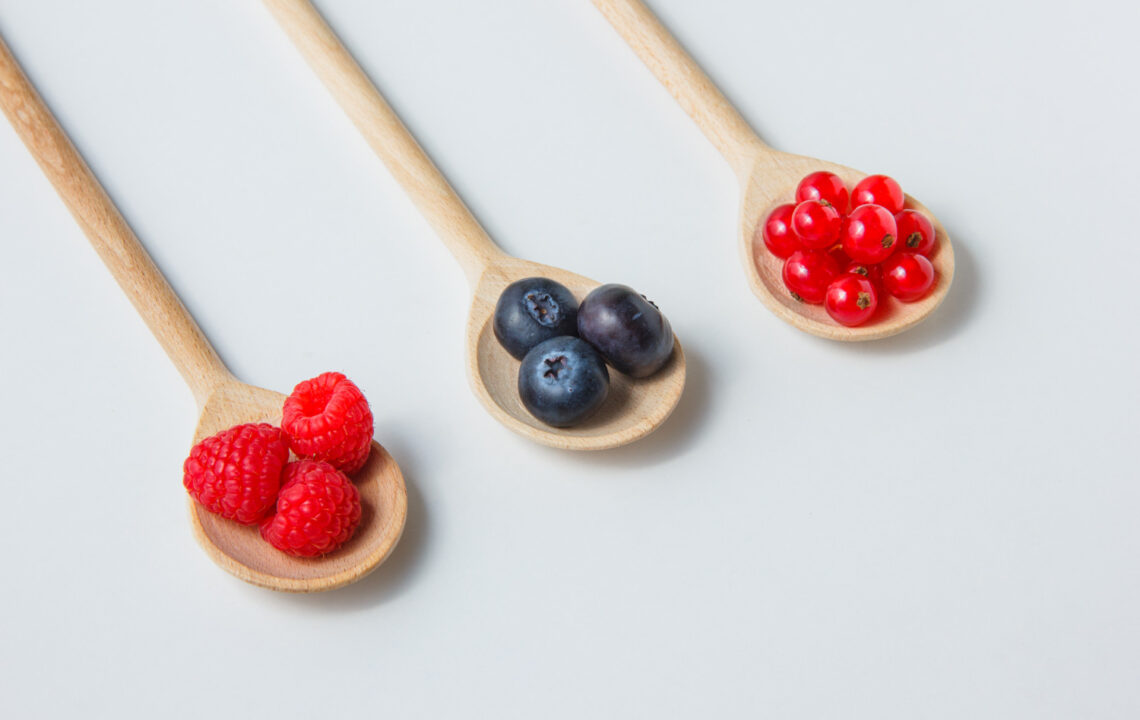
Berry fruits ripen under intense sunlight without the shelter of foliage. The skin of a blueberry must absorb excess UV independently and repel fungal attacks. Hence the exceptionally high concentration of anthocyanins and ellagic acid (a polyphenol with anti-inflammatory and anti-cancer properties). Raspberries and blackberries share a similar defence mechanism. Coffee beans accumulate chlorogenic acids as protection against intense tropical sunlight. The same compounds play a central role in an anti-cancer diet.
How to eat more polyphenols without a kitchen revolution?
Increasing polyphenol intake doesn’t require special products. Polyphenols in tea are primarily catechins (antioxidants from tea), with well-documented effects on heart and metabolic health. A few concrete changes are enough to move from an average 600 mg to over 1,000 mg daily.
How to increase polyphenols step by step:
- Swap sugar in your coffee for cinnamon – a teaspoon adds 50-80 mg of polyphenols and lowers the meal’s glycaemic index
- Eat apple and pear skins – quercetin concentrates just beneath the skin; peeling removes up to 70% of polyphenols
- Add a handful of blueberries or raspberries to porridge – the simplest way to get 200-400 mg of anthocyanins in the morning
- Choose extra virgin olive oil over refined – the difference in phenolic content is more than tenfold
- Drink 2-3 cups of tea or coffee daily – the easiest polyphenol source in a Western European diet
The Mediterranean diet naturally delivers high doses of polyphenols in every meal.
Does cooking destroy polyphenols?
Cooking partially destroys polyphenols, but the degree depends on the method. Anthocyanins degrade at high temperatures; lycopene, by contrast, becomes more bioavailable after heating. Blanching and steaming preserve more polyphenols than frying. Fermentation is different – it doesn’t destroy polyphenols but transforms them into secondary metabolites with higher bioavailability. Fermented products further support the gut microbiome (the community of bacteria in the intestines).
FAQ: Most frequently asked questions about polyphenols
How many cups of coffee a day is the optimal amount?
Research most often points to 3-4 cups daily as the range associated with the greatest health benefits and an acceptable level of caffeine.
What’s the best way to get polyphenols?
From berries, tea, coffee, allium vegetables, and extra virgin olive oil – they deliver the full spectrum of phenolic compounds acting synergistically.
Does dark chocolate count?
Dark chocolate (70%+ cocoa) contains 150-250 mg of polyphenols, mainly flavanols, per 30 g serving and is a recognised source in scientific literature.
How many polyphenols are in coffee and tea?
Black coffee (240 ml): 200-550 mg of polyphenols, mainly chlorogenic acids; green tea: 150-300 mg, including catechins and EGCG.
References:
- Scalbert, A., et al. (2005). Polyphenols: antioxidants and beyond. American Journal of Clinical Nutrition. https://doi.org/10.1093/ajcn/81.1.215S
- Manach, C., et al. (2004). Polyphenols: food sources and bioavailability. American Journal of Clinical Nutrition. https://doi.org/10.1093/ajcn/79.5.727