
In the mountains of Ogliastra in Sardinia, an elderly shepherd returns home each evening to three generations waiting at the table. On Okinawa, neighbours form support circles as children and meet every week for seventy years. In Loma Linda, California, an Adventist congregation shares a communal meal every Saturday. In demographic studies, this is a measurable variable that explains why these regions hold far more centenarians than anywhere else. Discover how the blue zones, family and community translate into additional years of healthy life.
Key facts about blue zones, family and community:
- Five regions worldwide identified by researchers as clusters of centenarians
- Strong family bonds are the common thread across all five locations
- Moai groups on Okinawa provide emotional and financial support for decades
- Daily communal rituals lower stress levels and sustain a sense of purpose
- Social rules from the blue zones can be adapted to life outside them
What are the blue zones?
The blue zones are five regions of the world where people reach the age of 100 far more often than in other populations. The term was coined by demographer Michel Poulain and journalist Dan Buettner, who marked such areas with a blue pen during fieldwork. Since then, the blue zones of the world have become the subject of long-running demographic and epidemiological research.
Residents of these regions share no common genetic code or exceptional climate. What they do share is something else: daily movement built into work, a modest plant-based diet, a sense of purpose and, crucially, a dense network of family and local relationships. That is why longevity demography treats social ties as a factor comparable with diet or not smoking.
Which five places in the world have the most centenarians?
Where the blue zones are located:
- Sardinia (Italy) – the mountainous Ogliastra region with the highest share of male centenarians
- Okinawa (Japan) – an island with a record number of female centenarians and a moai tradition
- Nicoya (Costa Rica) – a Central American peninsula with a strong multigenerational model
- Ikaria (Greece) – an Aegean island where one in three people reaches the age of 90
- Loma Linda (California, USA) – an Adventist community living 7-10 years longer than the national average
What is a moai on Okinawa?
A moai is a group of friends who commit to supporting each other for life. Usually formed in childhood, these circles count from three to six people and meet regularly, often weekly. Each member contributes a small amount to a shared pot, which the group draws from when needed – for a wedding, a funeral, or help during illness.
A study led by Kirsten Tillisch and her team at UCLA showed that regular, close social contact lowers activity of the HPA axis – the body’s stress-cortisol system – and reduces cortisol levels in the blood (2013). On Okinawa, a moai acts like an extended immune system for the mind – it shares worries, cushions crises and provides a stable place in the world. For someone at the age of 80, a group that has been there for decades replaces much of what institutional care would otherwise need to deliver.
Why moai works so well:
- Stable relationships build a sense of safety across decades
- A shared pot removes financial fear during difficult moments
- Regular meetings protect against loneliness and isolation
- Shared rituals reinforce a collective identity
Why does Sardinia have the most male centenarians over 100?
Sardinia is the only blue zone with a balanced ratio of male and female centenarians. In Ogliastra, a mountainous region in the centre of the island, there is one male centenarian for every female centenarian. Elsewhere the ratio stands at 5:1 in favour of women. This outlier caught the attention of demographers.
The explanation is layered, but three factors appear repeatedly: a pastoral lifestyle with daily walking across steep hills, a moderate diet built on vegetables, sourdough bread and red wine, and the particular place older men hold within the family. Elderly men are not pushed to the margins. They keep authority, take part in decisions and work with the flocks. This continuity of role lowers the risk of late-life depression.
What is the role of the multigenerational family?
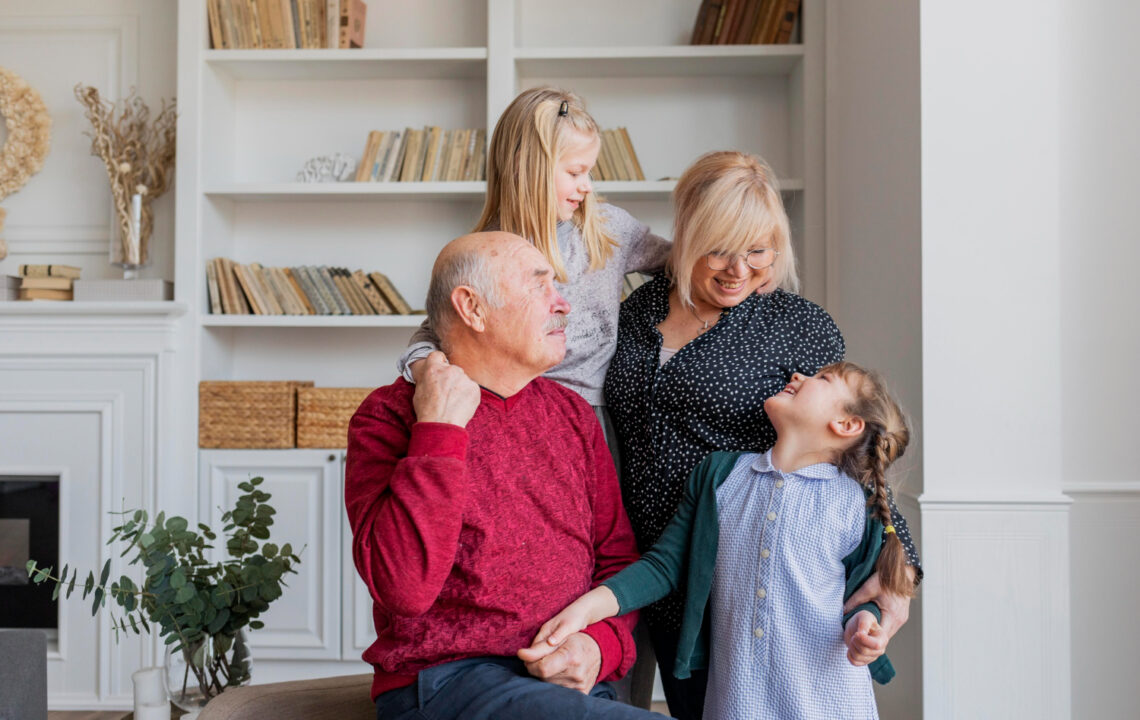
In Sardinia, multigenerational homes are the norm, not the exception. Grandparents live with adult children and grandchildren under the same roof or in neighbouring buildings. Research published in the European Journal of Ageing found that older adults living with family had a 27% lower mortality risk than those living alone (2021).
The mechanism runs both ways. Elders do not feel like a burden because they care for grandchildren, cook and pass on farming knowledge. Younger generations receive everyday care and a living link to the family’s history. Mutual dependence takes the place of the isolated independence that dominates Western cities. As a result, older adults retain cognitive function and physical fitness for longer.
How many years does a religious or social community add?
Regular participation in a religious or secular community adds on average 4-14 years of life, according to analyses carried out in Loma Linda and on Ikaria. In Loma Linda, Adventists who attend church weekly live on average 7 years longer than other residents of California. On Ikaria, weekly religious feasts and local panegyria – annual village festivals combining religious observance with a shared communal meal – serve the same function in a more secular form.
Long-term observational data suggest that regular participation in communal practices correlates with around a 33% lower mortality rate over many years of follow-up. Community also provides a sense of purpose which, on Okinawa, is called ikigai – a reason to get out of bed in the morning.
Is the data on blue zones reliable?
Data on longevity from the blue zones is broadly solid but calls for careful reading. In recent years, statistician Saul Justin Newman has questioned parts of the records from Sardinia and Okinawa, pointing to administrative errors in birth documents from before 1900. He did not, however, undermine the clinical observation: residents of these regions do enjoy better health in old age.
Even if the share of centenarians turned out to be lower than reported, the key question is how many years of healthy life people actually live there. The healthspan indicator, meaning the length of life in good health, is clearly higher than the average in these regions. That means fewer years with chronic disease, disability and dementia.
How to build your own „mini Blue Zone”?
Building your own „mini Blue Zone” does not require moving to Sardinia. It requires rebuilding a few elements: regular meetings with the same group, shared meals, movement woven into everyday life and a sense of belonging to a place. The most important part is consistency – a single gathering once a year will not build strong ties, but a regular Sunday lunch over ten years will.
It is also worth remembering how centenarians eat. The blue zones diet is 90-95% plant-based, with legumes, sourdough bread and seasonal vegetables. What sets these regions apart is how meals are eaten: together, without haste, with three generations around the table. The siesta lowers blood pressure, the rule of hara hachi bu teaches you to stop eating at 80% fullness, and elements of the Mediterranean diet can be easily introduced into any kitchen.
Which social rules can you transfer into your own life?
Blue zones social rules you can adopt:
- A stable circle of close friends – 4-6 people meeting weekly or every other week
- A weekly shared meal with family or friends, phones away
- One consistent local activity – a choir, club, volunteer group or running crew
- Intergenerational contact – conversations with parents, grandparents and grandchildren
- A neighbourhood ritual – a walk, short chats, small favours exchanged
- A sense of purpose – volunteering, mentoring or a long-term project that demands engagement
What blue zones look like in daily practice is less about places and more about a way of organising life that can be recreated in any city. The key is continuity – the same people, the same places, the same rituals repeated over decades. In modern terms, the closest equivalent is a multigenerational village from forty years ago or a tight neighbourhood in a small town. Those models still exist and can be deliberately rebuilt.
What to remember about community and longevity?
Family and local community form a foundation of health comparable to diet and movement. The five blue zones differ in climate, cuisine and religion, yet in every one of them people live within a densely woven social life from birth to death. It is this continuity of relationships, rather than genetics or clean air, that explains most of the observed longevity effect. The good news is that the blue zones model can be adapted anywhere – all it takes is a conscious choice and the time we invest in people.
FAQ: Frequently asked questions about the blue zones
What are the blue zones and how many are there?
The blue zones are five regions of the world – Sardinia, Okinawa, Nicoya, Ikaria and Loma Linda – where the share of centenarians is clearly higher than the global average.
Why do people in the blue zones live so long?
Longevity in these regions comes from a combination of a plant-based diet, daily moderate movement, strong family ties, a stable community and a clear sense of purpose.
What is a moai on Okinawa?
A moai is a group of 3-6 close friends who support each other for life and meet regularly, often from childhood all the way into old age.
How can you apply the blue zones rules outside them?
Build a steady group of 4-6 close people, introduce a weekly shared meal, commit to one local activity and keep active contact with parents and grandparents.
References:
- Poulain, M., Pes, G. M., Grasland, C., et al. (2004). Identification of a geographic area characterized by extreme longevity in the Sardinia island: the AKEA study. Experimental Gerontology. https://doi.org/10.1016/j.exger.2004.06.016
- Li, S., Stampfer, M. J., Williams, D. R., VanderWeele, T. J. (2016). Association of Religious Service Attendance With Mortality Among Women. JAMA Internal Medicine. https://doi.org/10.1001/jamainternmed.2016.1615
- Willcox, B. J., Willcox, D. C., Suzuki, M. (2017). Demographic, phenotypic, and genetic characteristics of centenarians in Okinawa and Japan. Mechanisms of Ageing and Development. https://doi.org/10.1016/j.mad.2016.02.004