

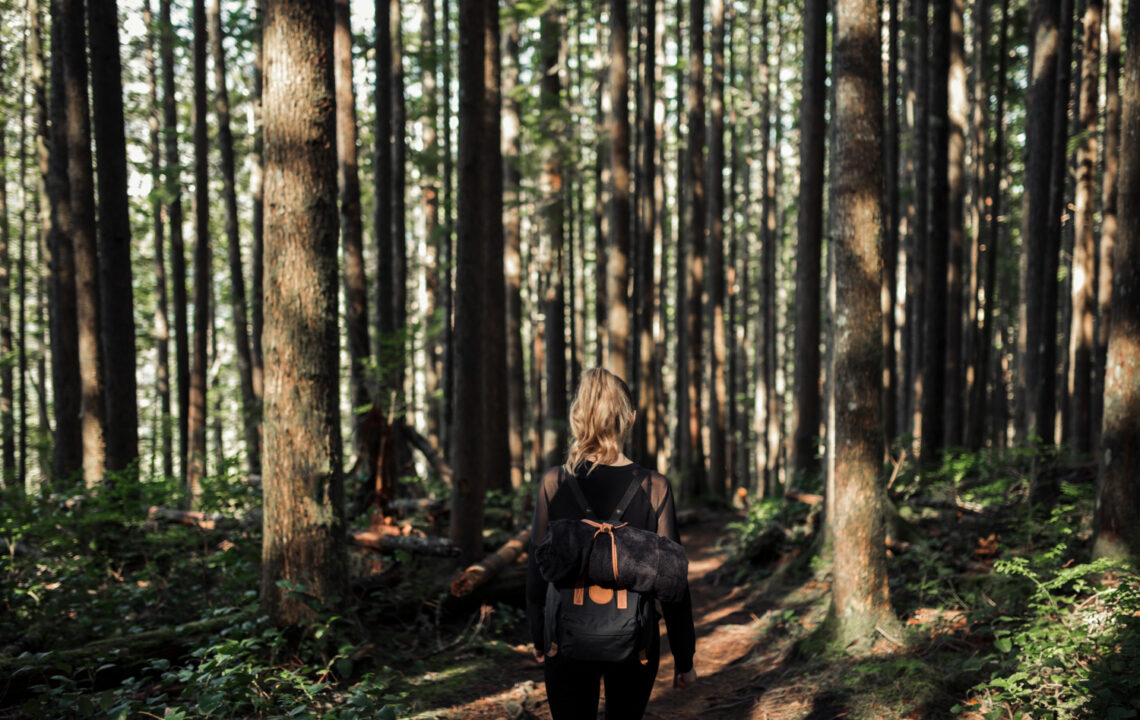
The Japanese have known since the 1980s what science is only now confirming – forests heal. Shinrin-yoku, or forest bathing, is the practice of consciously immersing yourself in the forest atmosphere. It lowers cortisol, strengthens immunity, and regenerates the tired mind. Japan’s Ministry of Health officially recommends this method of health prevention. Discover how a few hours in the forest weekly can transform your quality of life!
Key benefits of Shinrin-yoku:
- Reduction of cortisol and stress hormones
- Enhanced activity of NK cells responsible for immunity
- Lowered blood pressure and heart rate
- Improved sleep quality
- Reduced anxiety and depression symptoms
What is Shinrin-yoku?
Shinrin-yoku literally translates to “bathing in the forest atmosphere”. It doesn’t mean physical immersion in water, but mindful presence among trees with full sensory engagement. Unlike ordinary walking, forest bathing has no fitness goal – its essence is presence and contemplation of nature. The practice involves consciously inhaling forest aromas, listening to rustling leaves, and observing the play of light between tree canopies.
A Shinrin-yoku session typically lasts two to four hours and can be done individually or with a certified forest guide. Everything happens at a slow pace, without hurry or a set distance to cover. This practice requires slowing down and openness to stimuli from nature – something entirely different from a quick jog or Nordic walk through the woods.
History of forest bathing
The term Shinrin-yoku was officially introduced in 1982 by the Japanese Forestry Agency. It was a response to the growing problem of occupational stress and burnout among city dwellers. Japan in the 1980s was experiencing an economic boom, but the price was the nation’s health – cases of karoshi, death from overwork, were becoming increasingly common.
Since the 1990s, Japanese universities have conducted systematic research on the effects of forest exposure. A network of over 60 certified “therapeutic forests” has been established throughout Japan. The practice has spread to South Korea and Taiwan, and in the last decade has gained popularity in Europe and North America.
Nature’s impact on immunity and the mechanism of stress reduction in the forest
Research conducted by Professor Qing Li’s team at Nippon Medical School in Tokyo showed that a three-day forest stay increases NK cell activity by 50%. The effect persists for approximately one month. NK cells form the body’s first line of defence against viruses and cancer cells. The mechanism relates to phytoncides – volatile compounds released by trees that we inhale during forest visits.
How forests reduce stress:
- The sympathetic nervous system (“fight or flight” response) quietens down
- The parasympathetic system responsible for regeneration takes over
- Cortisol levels drop by an average of 12-16% after 15 minutes among trees
- Blood pressure decreases, heart rate slows
- Muscle tension eases
How to practise forest bathing?
Getting started requires no special preparation. Choose a forest with mature trees, away from busy roads. Leave your phone in the car or switch it off – eliminating digital stimuli is key. Plan at least two hours, though the optimal duration is three to four hours.
Basic principles of Shinrin-yoku:
- Move slowly, without a set goal or route
- Engage all senses – smell, touch, listen
- Take frequent breaks, sit or lie on the ground
- Avoid conversation and mental activity
- Focus attention on the present moment
Japanese doctors recommend at least one longer forest visit weekly. In temperate climates, mixed and coniferous forests are most beneficial as they release the most phytoncides. Spring and early autumn are optimal seasons for this practice.
Breathing techniques and mindfulness as a way to calm the mind
Conscious breathing forms a bridge between automatic bodily functions and psychological state control. In Shinrin-yoku, diaphragmatic breathing is used – a slow inhalation through the nose that expands the belly. Exhalation lasts twice as long as inhalation, activating the vagus nerve and strengthening the relaxation response. This technique combined with forest aromas amplifies stress reduction.
Mindfulness practice in the forest:
- Focus for several minutes solely on sounds – wind rustling, birdsong
- Shift attention to scents – damp earth, resin, decomposing leaves
- Observe the play of light between tree canopies
- Touch bark, moss, leaves – engage the sense of touch
Contact with nature and health
Modern humans spend an average of 90% of their time indoors – an evolutionary novelty. For hundreds of thousands of years, people lived in direct contact with nature, and our nervous system still expects signals from the natural environment. Nature deficit contributes to the epidemic of civilisation diseases – from depression through obesity to autoimmune conditions.
Regular time in nature restores balance on multiple levels. Exposure to natural light regulates melatonin production and circadian rhythm. Contact with soil microorganisms strengthens gut microbiota. Even a brief walk among trees lowers pro-inflammatory cytokine levels – markers of chronic inflammation.
Proper breathing in the forest
The forest is a natural laboratory of clean air – oxygen concentration is higher and pollution lower than in cities. The key is conscious nasal breathing, which filters and humidifies the air. It also allows full absorption of phytoncides through the olfactory epithelium. Using breathing techniques in the forest has an additional sensory dimension – each breath carries chemical information about the ecosystem.
Breathing techniques for forest practice:
- 4-7-8 breath: inhale 4 seconds, hold 7, exhale 8
- Box breathing: 4 seconds inhale, 4 hold, 4 exhale, 4 pause
- Coherent breathing: 5-6 breaths per minute with equal inhale and exhale
- Diaphragmatic breathing with extended exhale for deep relaxation
Principles of regeneration in nature
Regeneration in nature is a multidimensional process – it encompasses body, mind, and emotions simultaneously. The forest offers a unique combination of factors supporting renewal: silence that allows the nervous system to rest; green surroundings that reduce visual fatigue; outdoor movement that oxygenates tissues. For optimal regeneration, combine forest bathing with meditation, gentle stretching, or a nap under a tree – the combination of fresh air and natural sounds promotes deep rest.
FAQ: Most frequently asked questions about Shinrin-yoku
Can forest bathing be practised in an urban park?
A park with mature trees provides benefits, though optimal effects come from forests away from urban noise.
How often should one practise Shinrin-yoku?
Japanese experts recommend at least one longer forest visit weekly or several shorter sessions of 20-30 minutes.
Does Shinrin-yoku require special training?
Basic practice can be started independently, though sessions with a certified guide deepen the experience.
Which season is best for forest bathing?
Each season has its merits – spring and autumn offer optimal conditions, summer maximum phytoncide concentration, winter unique silence.
References:
1. Li, Q., et al. (2010). Effect of phytoncide from trees on human natural killer cell function. International Journal of Immunopathology and Pharmacology, 22(4). https://doi.org/10.1177/039463200902200410
2. Park, B. J., et al. (2010). The physiological effects of Shinrin-yoku. Environmental Health and Preventive Medicine, 15(1). https://doi.org/10.1007/s12199-008-0068-3
3. Tsunetsugu, Y., et al. (2013). Physiological and psychological effects of viewing urban forest landscapes. Landscape and Urban Planning, 113. https://doi.org/10.1016/j.landurbplan.2013.01.014