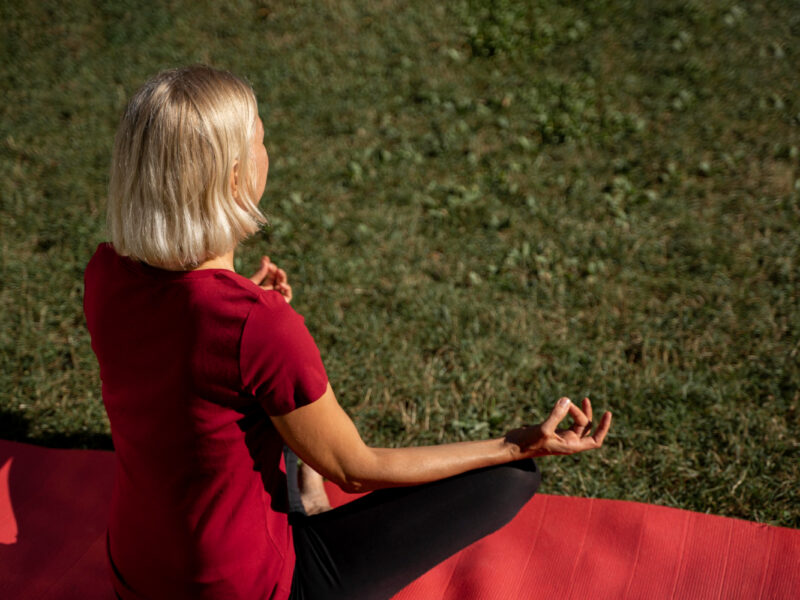

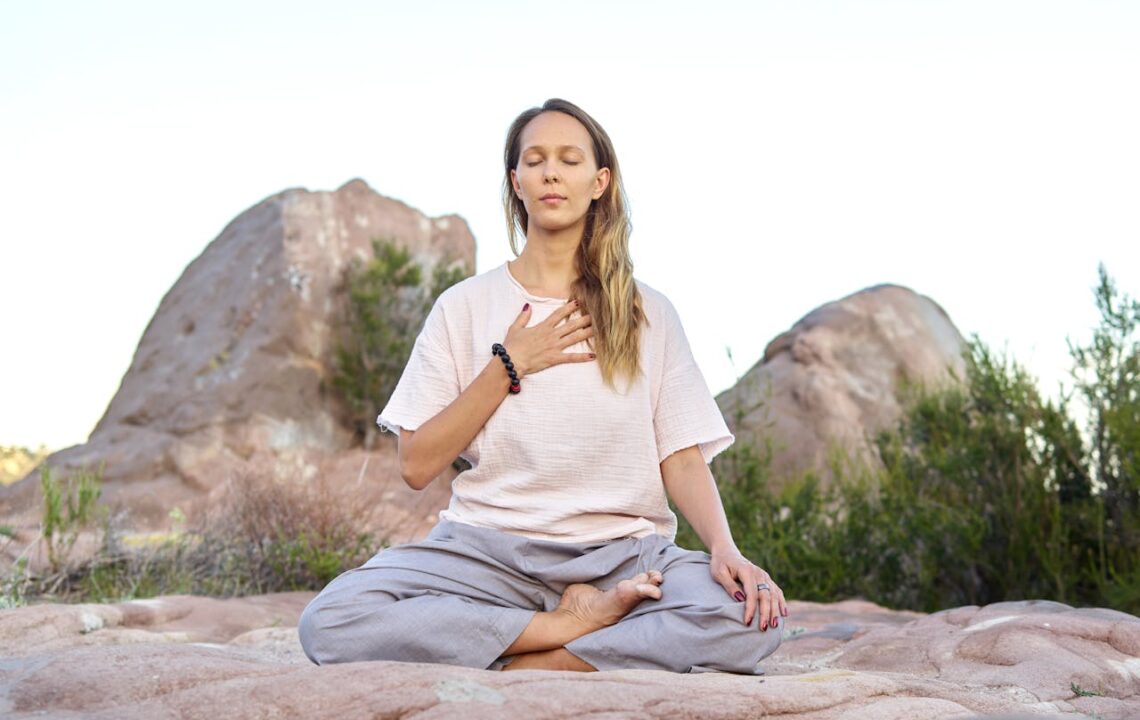
In the midst of daily tasks, notifications, and thoughts about the future, you lose contact with what’s happening here and now. Mindfulness is a practice that restores this lost presence – not through escape from reality, but through complete immersion in it. It’s the ability to observe your own thoughts, emotions, and sensations without judging them as good or bad. Just a few minutes daily is enough to experience changes – here’s how to start a practice that can transform your daily functioning!
Key information about mindfulness:
- Mindfulness is a practice of conscious presence without judging experiences
- Regular practice changes brain structures responsible for stress and emotions
- Just 10–15 minutes daily is enough to notice first effects
- You can practice during everyday activities like eating or walking
- Supports mental health, stress reduction, and better emotion regulation
What is mindfulness?
Mindfulness is a state of conscious attention directed at the present – you observe thoughts, emotions, and physical sensations without trying to change them. It’s not about turning off thinking, but about noticing what’s happening in the mind and body moment by moment. You’re aware of incoming thoughts but don’t let them carry you away.
The practice originates from Buddhist traditions, but the contemporary approach is secular and based on scientific research. Jon Kabat-Zinn, who introduced mindfulness to Western medicine in the 1970s, defines it as conscious attention focused on the present moment without judgment. You don’t need to believe in any philosophy – it’s simply mental training.
What are simple mindfulness techniques for beginners?
Start with breath observation. Sit comfortably, close your eyes, and focus attention on the natural rhythm of inhale and exhale. Don’t control the breath – just observe how air flows in and out. When thoughts wander (and they will), calmly return to the breath. This is a basic technique you can practice for 5–10 minutes daily.
Body scanning is another simple method. Lying or sitting, you direct attention to individual body parts – from feet to head. You notice tensions, warmth, cold, tingling. You don’t need to change anything – just observe. This practice teaches recognition of body signals that we often ignore in daily rush.
Basic techniques for beginners:
- Breath observation for 5–10 minutes daily
- Body scanning from feet to head
- Mindful listening to surrounding sounds without analyzing them
- Observing thoughts like clouds in the sky – they come and go
- Conscious feeling of emotions without trying to change them
Ways for daily mindfulness exercises: the 5–4–3–2–1 technique and mindful eating and walks
The 5–4–3–2–1 technique is a quick grounding exercise – stop and notice: 5 things you see, 4 things you touch, 3 sounds you hear, 2 smells, and 1 taste. This takes a minute and immediately brings you from head to body.
Mindful eating involves slowing down the meal – you notice colors, smells, textures, tastes. Put down utensils between bites. Chew slowly. This transforms eating from a mechanical activity into a sensory experience.
A mindful walk is walking with full awareness – you feel feet touching the ground, air movement on skin, muscle tension. You don’t need to walk especially slowly – just be present in the movement.
How does mindfulness help understand your own emotions?
Mindfulness creates space between emotion and reaction. When you feel anger, instead of immediately exploding or suppressing the feeling, you notice – “this is anger.” You observe where it appears in the body – jaw tension, chest warmth. This moment of observation gives choice – you can respond consciously instead of reacting impulsively.
The practice teaches that emotions are transient. They come like waves, reach a peak, and subside. You don’t need to immediately solve or suppress them. Research shows that regular mindfulness practice reduces reactivity of the amygdala – a brain structure responsible for fear and anger reactions. At the same time, it strengthens the prefrontal cortex, which is responsible for emotion control and decision–making.
Using breath for quick calming of thoughts and improving emotional stability
The breath is immediate access to calming the nervous system. When you’re stressed, breathing becomes shallow and rapid. Consciously lengthening the exhale activates the parasympathetic system – the part of the nervous system responsible for relaxation.
Just a few deep breaths with an exhale longer than inhale (e.g., inhale for 4, exhale for 6) is enough to lower heart rate and muscle tension. This is a physiological reaction, not magic – the vagus nerve, which runs through the diaphragm, sends a calming signal to the brain. Regular practice of mindful breathing builds emotional stability. You learn that you can influence your internal state instead of being its victim.
How does loneliness destroy health and how to build relationships?
Loneliness is a risk factor comparable to smoking 15 cigarettes a day – it raises cortisol, weakens the immune system, and increases heart disease risk. Mindfulness helps in building relationships because it teaches genuine presence. When you talk with someone and actually listen, instead of planning your response, you create authentic contact.
The practice of mindfulness reduces social anxiety and reactivity in relationships. You notice your own patterns – maybe you automatically defend yourself, criticize, or withdraw. This awareness gives the possibility of change. You can consciously choose openness instead of closure, curiosity instead of judgment. Building lasting relationships requires the same presence and awareness that you develop in mindfulness practice.
How mindfulness supports relationships:
- Teaches listening without planning responses
- Reduces impulsive reactions in conflicts
- Increases empathy and understanding of others’ perspectives
- Helps notice your own communication patterns
- Builds presence and authentic contact
Summary of benefits and principles of using mindfulness
Mindfulness doesn’t require hours of meditation or a special place. A few minutes of consistent daily practice is enough. Start with simple exercises – breath observation, mindful eating, the 5–4–3–2–1 technique. Don’t judge your progress, don’t compare yourself to others. Every moment of conscious presence is a success.
Benefits come gradually – better sleep, less reactivity, greater inner peace, better concentration. Don’t wait for the perfect moment. You can start right now – stop for a moment and notice three deep breaths. This is your first step in a practice that can transform the way you experience life.
FAQ – most frequently asked questions about mindfulness
How much time daily do you need to practice mindfulness?
Just 10–15 minutes daily is enough to notice effects after 4–6 weeks – regularity is more important than session length.
Is mindfulness the same as meditation?
Mindfulness is a type of meditation focused on conscious presence, but you can also practice it during everyday activities without formal sitting.
What to do when thoughts constantly escape during practice?
Wandering thoughts are normal – the essence of practice is noticing that thoughts have left and gently returning attention to breath without frustration.
Does mindfulness help with anxiety and depression?
Yes, research shows that regular mindfulness practice effectively reduces symptoms of anxiety and depression, often equaling the effects of cognitive-behavioral therapy.
References:
- Kabat-Zinn, J. (2003). Mindfulness-based interventions in context: past, present, and future. Clinical Psychology: Science and Practice, 10(2). https://doi.org/10.1093/clipsy.bpg016
- Hölzel, B. K., et al. (2011). Mindfulness practice leads to increases in regional brain gray matter density. Psychiatry Research: Neuroimaging, 191(1). https://doi.org/10.1016/j.pscychresns.2010.08.006
- Tang, Y. Y., et al. (2015). The neuroscience of mindfulness meditation. Nature Reviews Neuroscience, 16(4). https://doi.org/10.1038/nrn3916