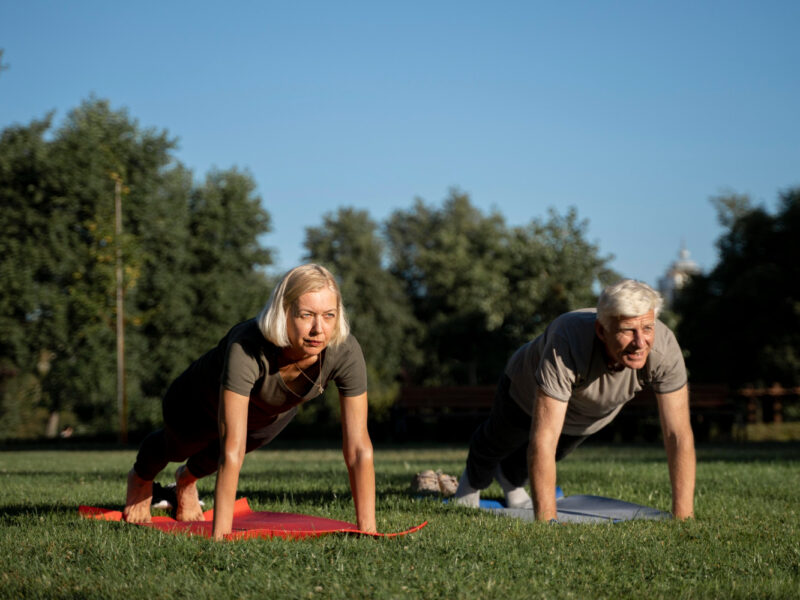

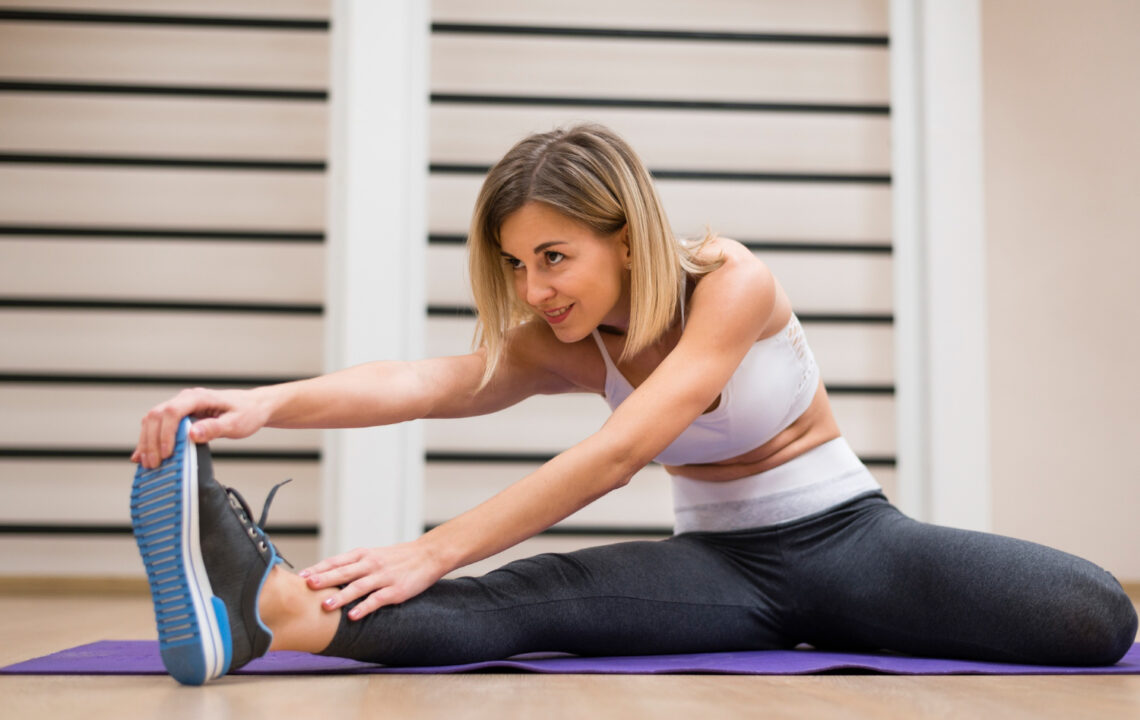
The first attempt to tie a shoe in the morning ends with a loud sigh. Reaching for a glass on the top shelf requires turning the whole torso. Stiffness in the neck after eight hours at the desk stops being surprising. A body that has served without complaint for decades starts sending signals. Flexibility and joint range of motion exercises are not a luxury add-on to training. But a foundation of independence in the coming decades of life. Find out how fifteen minutes a day can change the way you move for the rest of your life!
Key facts about flexibility and mobility:
- Flexibility and mobility are two different things – the first describes tissue length, the second describes controlled joint motion
- Range of motion (ROM) decreases with age by an average of 25-30 per cent between the ages of 30 and 70
- Women over 40 lose mobility faster due to declining oestrogen and ligament laxity
- Static stretching after training, dynamic before – the order matters for effectiveness and safety
- A fifteen-minute daily routine is enough to halt the gradual loss of joint mobility
Why is flexibility important for longevity?
The flexibility of the body translates directly into the risk of injury, falls and loss of independence in older age. Stiff tissues alter the biomechanics of movement and load joints in places they are not adapted for. Back pain often starts with shortened hip muscles. A study published in 2014 in the European Journal of Preventive Cardiology, led by Claudio Gil Araujo in Rio de Janeiro, showed that people aged 51-80 with poorer motor control had a higher risk of all-cause mortality.
Why are women more at risk than men?
Women over 40 lose mobility faster due to hormonal changes associated with perimenopause (the transitional period before menopause) and menopause. The drop in oestrogen weakens collagen production – tendons lose elasticity, and fascia becomes stiffer. At the same time, the muscle mass that supports joints decreases.
On the other hand, younger women naturally have greater ligament laxity (a naturally greater stretchability of ligaments), which increases the risk of hypermobility. Excessive joint range of motion. Mobility training should combine stretching with building the strength of stabilisers. Flexibility alone, without control, increases the risk of injury.
What is the difference between flexibility and mobility?
Flexibility is the passive length of muscles, tendons and fascia, while mobility is the active ability of a joint to move through its full range with control. A flexible person can touch the floor with their fingertips in a forward bend, a mobile person can perform a deep squat with the heels on the ground. The first quality describes the tissues, the second describes the functional motion. In practice both are needed, because tissues without neuromuscular control (the coordination of nerves and muscles) do not translate into real capability.
Key differences between flexibility and mobility:
- Flexibility refers to the length of a muscle or connective tissue in a passive state
- Mobility requires strength, neuromuscular control and joint stability
- Flexibility training is mainly static stretching and fascia work
- Mobility training combines range of motion with activation of the muscles around the joint
- Mobility without flexibility may be limited, but flexibility without mobility is useless
What is range of motion (ROM)?
Range of motion, or ROM, is the angle through which a given joint can move in a specific plane. The shoulder has physiologically around 180 degrees of flexion, the hip 120 degrees, the ankle around 20 degrees of dorsiflexion. ROM is divided into active and passive. The difference between them speaks about neuromuscular control. If passive is much greater than active, it is strength that is missing, not tissue length.
Which flexibility exercises are most effective?
The most effective exercises combine three elements: dynamic stretching before activity, joint mobility work during the day and static stretching after training. Such a combination covers all the mechanisms behind range of motion. Tissue length, fascia glide (the smooth sliding of connective tissue layers) and neuromuscular control.
A good mobility programme covers the whole body. The hip affects the lumbar spine, the chest affects the neck, the ankle affects the knee. A daily routine for better mobility and joint range of motion is based on this comprehensive approach. People in their forties also benefit from adapted training after 40.
Static vs dynamic stretching – when to use each?
Dynamic stretching is used before training, static stretching after training or in a separate mobility session. Dynamic stretching prepares the nervous system, increases blood flow and raises tissue temperature. Static stretching should last 30-60 seconds per position, without bouncing and without pain going beyond a comfortable stretch. Before training, static stretching may temporarily reduce force output, which is why it is better saved for the end of a session.
What is foam rolling and does it really work?
Foam rolling is a form of self-massage that temporarily increases range of motion and reduces muscle tension. After training it can ease delayed onset muscle soreness (DOMS). Foam rolling helps, but it does not replace mobility training. It does not build strength through the full range of motion and does not permanently lengthen tissues. It is best used as a supplement. 5 minutes after a workout or before a mobility session, focusing on the tightest areas.
Do Tai Chi and yoga improve mobility?
Tai Chi and yoga are among the best-researched methods of improving mobility in people over 60. A 2017 meta-analysis in the Journal of Aging and Physical Activity showed that Tai Chi improves range of motion in the hips and spine and reduces the risk of falls in this age group. As Dr Peter Wayne of Harvard Medical School notes, Tai Chi teaches the body to coordinate the vestibular system, proprioceptors and muscles.
Yoga offers a greater variety of poses and allows work on specific limitations. From hip opening to thoracic spine mobility. Beginners can start with gentle forms, covered in the guide on how to start yoga for beginners. Both practices combine movement with breath, which activates the parasympathetic nervous system and supports regeneration.
What does a 15-minute daily routine look like?
A fifteen-minute routine covers the mobility of major joints and activates important muscle groups. The regular time slot matters more than the exact length. Five minutes every day gives better results than one hour once a week, because fascia responds to a repeated stimulus rather than to the intensity of a single session.
A good routine contains elements for the shoulders, thoracic spine, hips and ankles. It is worth sticking to fundamental human movement patterns that engage whole kinetic chains. Splitting the work into a morning and an evening session helps break the stiffness after sleep and release tension accumulated during the day, which also protects against sarcopenia – the loss of muscle mass with age.
What exercises in the morning?
A morning session should be dynamic and awakening. The goal is to get the tissues moving rather than to deepen the stretch. After the night the body has a lower temperature, less blood flow to the muscles and stiffer fascia, so static stretching tends to be less safe. Seven to eight minutes of controlled movement is enough to prepare the body for the day.
Morning 8-minute sequence:
- Cat and cow position – 8 repetitions, spine mobility
- Hip circles on all fours – 5 in each direction, hip joint warm-up
- Seated torso twists – 6 per side, thoracic spine mobility
- Shoulder circles backwards – 10 repetitions, unlocking the shoulder girdle
- Ankle rolls – 10 circles each, preparing the ankle joint
What exercises after work / in the evening?
An evening session is meant to relax – static positions held for longer, focus on the breath and slowing down. After a day at a desk, the body needs a stretch of the front of the hips, an opening of the chest and a release of the neck. Such a session also serves as a signal to the nervous system that it is time for recovery.
Evening 7-minute sequence:
- Iliopsoas stretch in a lunge – 60 seconds per side
- Chest opener in a doorway or on a roller – 90 seconds
- Supine twist with knees to the side – 45 seconds per side
- Seated forward bend with extended breath – 60 seconds
- Gentle neck tilts to the sides – 30 seconds each way
Where to start if you have not stretched for years?
People who have not stretched for years should start with simple mobilising positions that move the main joints in a comfortable range. The first week is just the cat position, hip circles and gentle neck rotations – five minutes a day. After two or three weeks, it is possible to add an iliopsoas stretch, a chest opener and calf rolling. Gradually extending the routine to ten, then fifteen minutes.
What mistakes do beginners most often make?
The most common mistake is stretching through pain – tension in the muscle should be comfortable, not burning or sharp. Second mistake is bouncing in the position instead of holding it calmly. Dynamic jerks can damage tissue and trigger a protective reflex that tightens the muscle even more. The third mistake is a lack of consistency. Two intense sessions a week give worse results than five short ones.
Most common beginner mistakes:
- Pushing into pain instead of working in a comfortable range of tension
- Bouncing in the position instead of calmly holding the stretch
- Holding the breath during static stretching
- Comparing yourself to people with years of experience in yoga or sport
- Lack of regularity – training once a week does not bring results
What is worth remembering about daily mobility
Joint mobility is a skill that is not lost by accident and cannot be regained with a single protocol. A dozen minutes a day repeated over months changes the biomechanics of movement. Reduces pain and protects against injuries that in older age tend to be irreversible. Combining flexibility with control, morning dynamics with evening relaxation, movement with breath. These are the pillars of a programme that works regardless of the starting age.
FAQ: Most frequently asked questions about flexibility exercises
What flexibility exercises should I do every day?
Every day it is worth doing the cat and cow position, seated torso twists, hip circles and a chest opener – the whole sequence in 10-15 minutes.
How many minutes a day should I stretch to see results?
Ten to fifteen minutes a day gives visible results after 4-6 weeks, provided there is regularity and work stays in a comfortable range of tension.
Can you improve flexibility after 40?
Improving flexibility after the age of 40 is fully possible, although it requires a longer tissue adaptation time and consistent work several times a week.
What is the difference between flexibility and mobility?
Flexibility describes the passive length of tissues, while mobility is the ability of a joint to move in a controlled way through its full range with muscle activation.
References:
- Araujo, C. G., et al. (2014). Ability to sit and rise from the floor as a predictor of all-cause mortality. European Journal of Preventive Cardiology. https://doi.org/10.1177/2047487312471759
- Behm, D. G., et al. (2016). Acute effects of muscle stretching on physical performance, range of motion, and injury incidence in healthy active individuals: a systematic review. Applied Physiology, Nutrition, and Metabolism. https://doi.org/10.1139/apnm-2015-0235