
In 1991, biologist Theo Colborn published a warning that reshaped toxicology – substances found in plastics, cosmetics and pesticides mimic the female sex hormone in the body. Three decades on, xenoestrogens are one of the most thoroughly studied groups of compounds disrupting the endocrine system. They reach us through packaging, water bottles, receipts and certain personal care products. Find out where they really occur, how they affect health, and what’s worth changing in everyday habits.
Key facts about xenoestrogens:
- Xenoestrogens are external substances that mimic the action of estrogens in the body
- They occur in plastics, cosmetics, pesticides, receipts and food packaging
- They belong to the group of endocrine disruptors – compounds that interfere with hormone-producing glands
- They may affect fertility, the thyroid and metabolism, although environmental doses are low
- Exposure is reduced by simple changes – filtered water, glass containers, reading labels
What are xenoestrogens (endocrine disruptors)?
Xenoestrogens are foreign chemical compounds that, once they enter the body, bind to estrogen receptors and trigger reactions similar to those caused by natural estrogen. The prefix “xeno” comes from the Greek for “foreign”. These substances belong to the broader family of endocrine disruptors – compounds that interfere with the work of internal secretion glands.
How do natural estrogens differ from xenoestrogens?
Natural estrogens are produced in the ovaries, testes and adrenal glands in precisely regulated amounts, and the liver breaks them down efficiently. These compounds are industrial molecules – bisphenol A, phthalates, parabens – that enter the body from outside, accumulate in fatty tissue and are removed slowly.
What are examples of xenoestrogens?
The most common xenoestrogens are bisphenol A (BPA), phthalates, parabens, atrazine and PFAS. Each of these groups appears in different everyday products, which is why they’re worth recognising by name.
The most common xenoestrogens in the environment:
- Bisphenol A (BPA) and its substitutes – from polycarbonate, thermal receipts and the inner lining of cans
- Phthalates – plastic softeners, present in foils, toys and certain scented cosmetics
- Parabens – preservatives in cosmetics and medicines, absorbed through the skin
- Atrazine and certain pesticides – crop protection agents that may end up in water and food
- PFAS – “forever chemicals” from non-stick coatings and grease-resistant packaging
Where do xenoestrogens occur in everyday products?
Where do xenoestrogens occur in daily life? Exposure spreads mainly across four sources – food packaging, cosmetics, household dust and water. Each can be reduced without radical change.
Xenoestrogens in cosmetics – what to watch for?
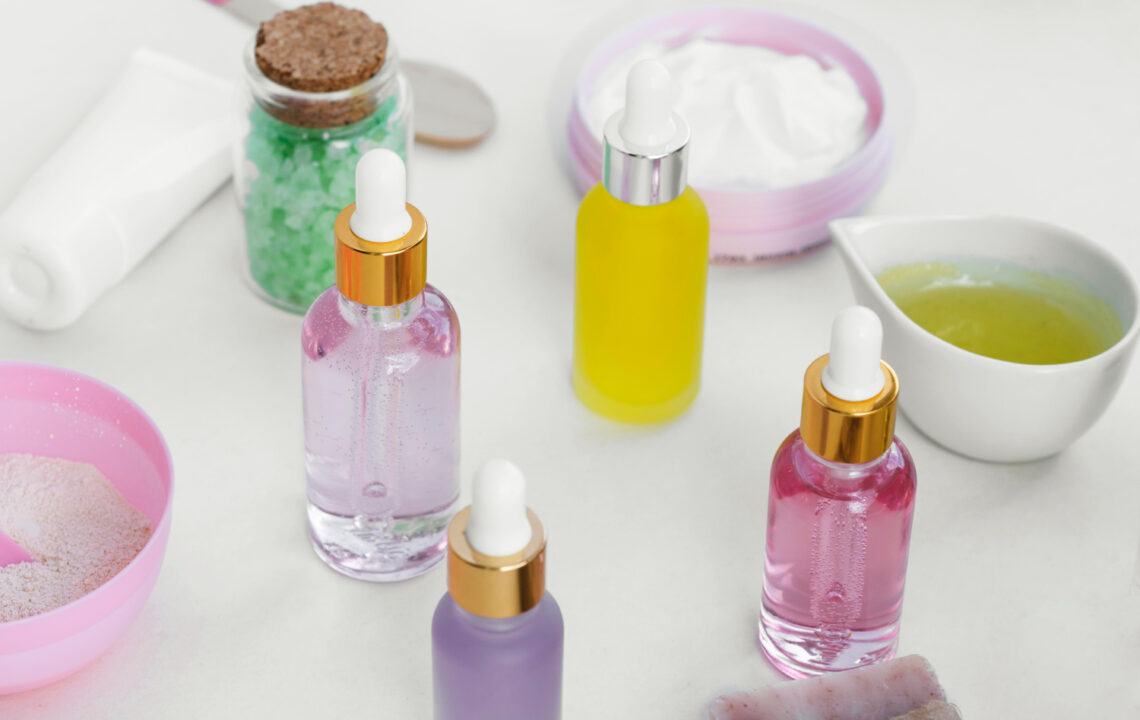
Xenoestrogens in cosmetics are mainly parabens (methylparaben, propylparaben), phthalates hidden under “parfum” and certain UV filters. The skin absorbs part of these ingredients, and using several products daily adds up. Reading the label and choosing “paraben-free” and “fragrance-free” versions lowers the load.
Xenoestrogens in plastic and food packaging
Xenoestrogens in plastic are released mainly from containers, PET bottles and the inner coatings of cans – especially under the influence of heat, fat and acid. In water from PET bottles tend to appear when bottles overheat. Glass or stainless steel containers and avoiding heating in plastic are the simplest change.
Xenoestrogens in food – what to eat and what to avoid?
Xenoestrogens in food appear mainly in processed products packaged in plastic, fatty meat exposed to pesticides, and fish from contaminated waters. A plant-based foundation of the diet with cruciferous vegetables, fibre and fermented products supports detoxification – the liver breaks down hormones more efficiently and the gut removes them with fibre. The longevity diet is built on exactly such products – plants, fermented foods and fibre that support natural detoxification.
Cruciferous vegetables – broccoli, cauliflower, kale, Brussels sprouts – provide indole-3-carbinol, a compound supporting estrogen breakdown in the liver. A small tip: decant your favourite snacks from plastic bags into a glass container – one move per week makes a difference.
How do xenoestrogens affect hormonal health?
The mechanisms have been studied mainly in animal models and population research. The conclusions are cautious but consistent – chronic exposure during critical periods may disrupt puberty, sperm quality, cycle regularity and thyroid function. This is one of the processes that fits within the hallmarks of cellular ageing, where impaired communication between cells worsens tissue function.
Research by Dr Shanna Swan’s team at Mount Sinai School of Medicine, published in Human Reproduction Update (2017), showed that the average sperm count among men in Western countries dropped by roughly half over the previous 40 years. As Swan herself put it: “The scale of the decline surprised us”. The authors pointed to environmental endocrine disruptors as a likely factor – a population-level signal, not an individual diagnosis.
The most common areas affected by xenoestrogens:
- Fertility and sperm quality – reduced sperm motility, lower ejaculate volume
- Regularity of menstrual cycles and timing of first menstruation in girls
- Thyroid function – some disruptors interfere with the transport of thyroid hormones
- Metabolism and body mass – obesogens (compounds that promote fat storage) disturb insulin signalling
How to reduce exposure to xenoestrogens?
Reducing exposure is a series of small decisions, not a radical detox. The liver and gut are the two main organs responsible for clearing disruptors – the liver converts compounds into forms easier to excrete, and a well-functioning gut removes them through stool. Fermented products also help, as they support microbiome diversity, which in turn influences hormone metabolism in the gut.
A 4-step xenoestrogen detox plan
The plan is built on changes to the most heavily loaded sources of exposure. The first step gives the biggest effect.
4 steps to reduce exposure:
- Replace plastic kitchen containers with glass or stainless steel and never reheat food in plastic
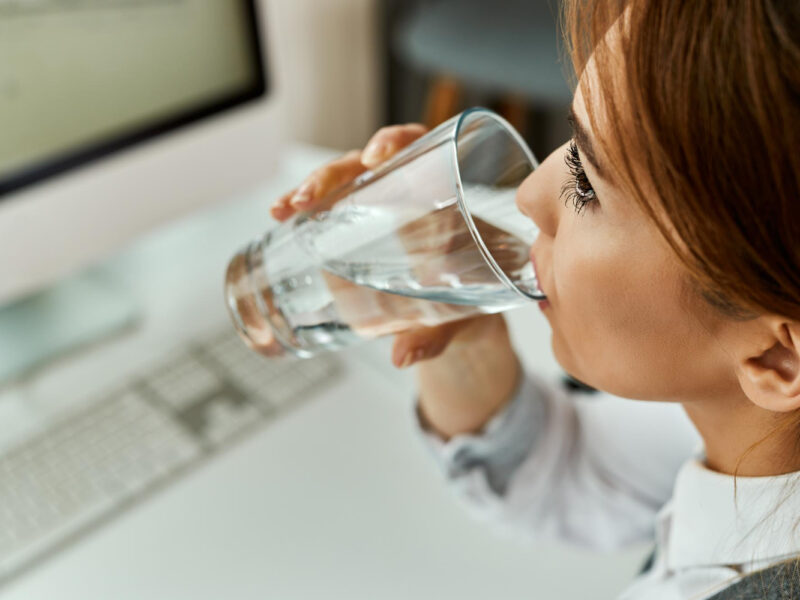
- Filter drinking water with an activated carbon or reverse osmosis filter, and limit water from PET bottles
- Review your cosmetics and choose paraben-free, phthalate-free and fragrance-free versions – especially those used daily
- Increase the share of cruciferous vegetables and fibre in your diet to at least one portion a day
Xenoestrogens in everyday life – what to actually avoid
The biggest difference comes from three things – no heating food in plastic, no daily PET-bottle water, and cosmetics free from parabens and phthalates under “parfum”. Consistency over a few months works better than a one-off “detox”.
This text is educational and doesn’t replace medical consultation. With suspected hormonal disorders, fertility issues or thyroid disease, consult an endocrinologist.
FAQ: Frequently asked questions about xenoestrogens
Can xenoestrogen levels be tested?
Metabolites of bisphenol A and phthalates can be measured in urine in specialised laboratories, although such tests are research-grade and aren’t part of standard clinical diagnostics.
Which sanitary pads and tampons are safe?
Xenoestrogens in sanitary pads may come from bleaches and fragrances – the fewest additives are found in organic cotton products without chlorine, labelled as free from pesticides and phthalates.
Is BPA-free plastic really safe?
BPA is sometimes replaced by related compounds such as BPS and BPF, whose estrogenic activity according to more recent research is comparable, so the “BPA-free” label doesn’t automatically mean a product is free of xenoestrogens.
Which cosmetics contain the most xenoestrogens?
The highest levels of parabens and phthalates are detected in perfumes, body creams, deodorants and nail polishes, which is why it’s worth starting the review of the bathroom shelf with these categories.
References:
- Gore, A. C., et al. (2015). EDC-2: The Endocrine Society’s Second Scientific Statement on Endocrine-Disrupting Chemicals. Endocrine Reviews. https://doi.org/10.1210/er.2015-1010
- Levine, H., et al. (2017). Temporal trends in sperm count: a systematic review and meta-regression analysis. Human Reproduction Update. https://doi.org/10.1093/humupd/dmx022
- Vandenberg, L. N., et al. (2012). Hormones and endocrine-disrupting chemicals: low-dose effects and nonmonotonic dose responses. Endocrine Reviews. https://doi.org/10.1210/er.2011-1050