
Indian cuisine has used turmeric for over three thousand years. The active compound in this yellow spice, curcumin, has shown anti-inflammatory and antioxidant activity in thousands of studies. The catch is that raw turmeric absorbs poorly in the body. Find out what curcumin is, what the research confirms about it, and which supplement forms have a real scientific basis.
Key facts about curcumin:
- Curcumin makes up only 2-5% of dry turmeric mass
- The bioavailability of plain curcumin is extremely low without enhancement
- Piperine from black pepper can boost absorption many times over
- Liposomal and micronised forms deliver higher bioavailability than classic extracts
- Curcumin interacts with anticoagulants and diabetes medications
What is curcumin?
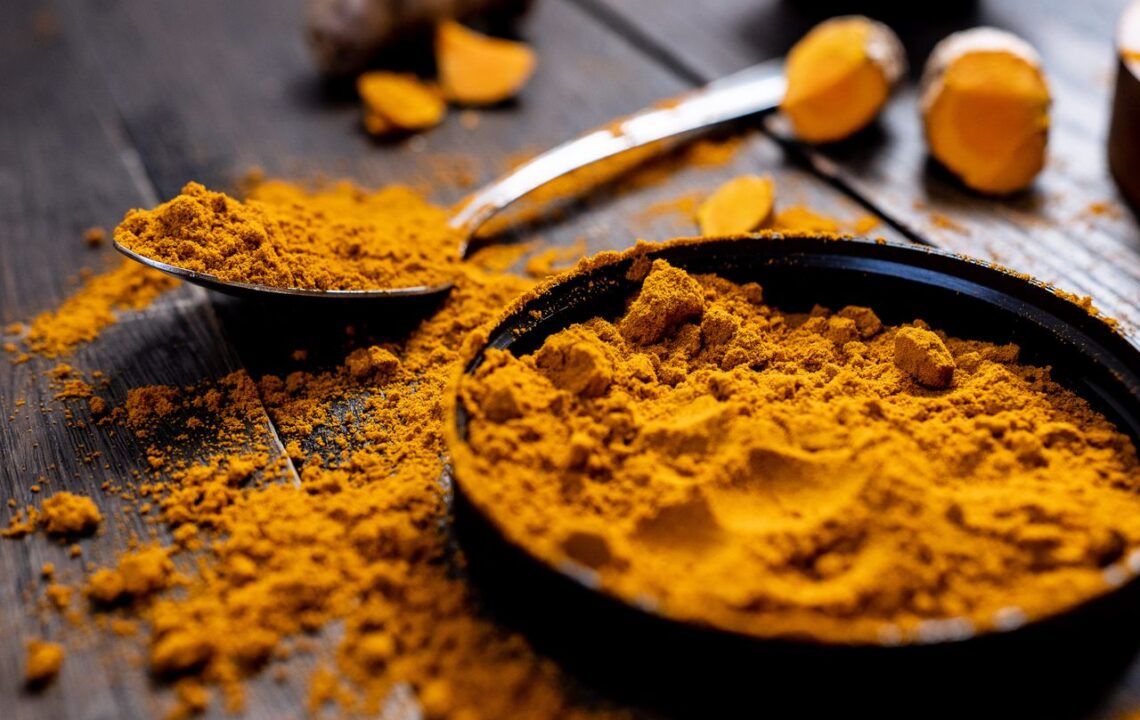
Curcumin is a yellow-orange polyphenol from the curcuminoid group, a natural pigment isolated from the rhizome of Curcuma longa. It’s responsible for the colour of curry and traditional garam masala blends. In Ayurvedic medicine, turmeric has long served as a digestive and wound-healing agent.
The curcumin molecule has strong antioxidant properties and acts on inflammatory pathways inside cells. Scientists only began studying it seriously in the second half of the twentieth century. Today it’s one of the most extensively researched natural compounds in the science of ageing and chronic inflammation.
How does curcumin differ from turmeric?
Turmeric is the whole ground spice, while curcumin is a single active compound that makes up only a small percentage of its mass. A teaspoon of turmeric contains just tens of milligrams of curcuminoids – the rest is starch, fibre and essential oils. Supplements provide a standardised extract with a known content, most often 95% curcuminoids.
What does curcumin treat – what do studies say?
Legally, curcumin doesn’t treat any disease – it’s a food ingredient and supplement, not a drug. Clinical studies, however, show a consistent effect of relieving symptoms in conditions linked to chronic inflammation. These aren’t dramatic effects, but combined with therapy curcumin can improve daily comfort.
Areas where curcumin has the best evidence:
- Knee osteoarthritis – relief of pain and stiffness
- Chronic low-grade inflammation – lowering markers such as CRP (C-reactive protein, an inflammation marker)
- Metabolic syndrome – support for blood sugar regulation and lipid profile
- Digestive disorders – relief of dyspepsia (indigestion) and irritable bowel symptoms
- Liver health – support in non-alcoholic fatty liver disease
The most widely cited joint review is the meta-analysis by Daily and colleagues from 2016 in the Journal of Medicinal Food, covering eight clinical trials. Standardised curcumin extracts relieved symptoms of knee osteoarthritis comparably to popular non-steroidal anti-inflammatory drugs, with better gastric tolerance.
How does curcumin act as an anti-inflammatory?
The main mechanism is inhibition of the transcription factor NF-kB, which switches on the production of inflammatory molecules inside the cell. Curcumin also blocks the COX-2 and 5-LOX enzymes, key steps in the prostaglandin cascade – the same pathway targeted by classic anti-inflammatory drugs. It also supports antioxidant defence through activation of the Nrf2 pathway.
Why does curcumin absorb so poorly on its own?
Curcumin is a lipophilic molecule, meaning it’s fat-soluble, but it’s also highly unstable in the gut environment. In neutral or slightly alkaline pH it breaks down rapidly. The bioavailability of plain curcumin is so low that blood levels after a standard dose are barely measurable.
Anand and colleagues described this issue back in 2007 in Molecular Pharmaceutics, summarising that without technological support curcumin shows „negligible oral bioavailability”. Since then dozens of solutions have appeared – from phospholipid complexes to nanoparticles – which change how the molecule behaves in the body.
Comparison of the most popular curcumin forms:
| Form | Mechanism | Practical notes |
| With piperine | Piperine blocks hepatic metabolism | Affordable, well documented |
| Liposomal | Phospholipid vesicles protect the molecule | Higher price, good tolerance |
| Micronised | Nanoparticles increase surface area | Stable, easy to use |
| Phytosomal | Combination with soy lecithin | High bioavailability, solid clinical data |
What are the side effects of curcumin?
Curcumin is classed as a safe ingredient in typical dietary doses. Studies most often report mild gastrointestinal symptoms – nausea, diarrhoea, heartburn and occasional abdominal pain. Higher doses can cause headaches or rashes in some people.
Situations requiring extra caution:
- Gallstones – curcumin stimulates bile secretion, which may worsen symptoms
- Reflux disease – it can aggravate heartburn in some people
- Pregnancy and breastfeeding – lack of sufficient data on high doses
- Planned surgery – stop at least two weeks beforehand
- Liver conditions – requires medical consultation
What shouldn’t curcumin be combined with?
Curcumin reduces blood clotting, so combining it with anticoagulants requires medical advice. It also strengthens the action of diabetes medications, which can lower blood sugar more than the therapy intends. It influences hepatic metabolism through the CYP3A4 enzyme system, which alters the activity of certain prescription medicines.
As Bharat Aggarwal from MD Anderson Cancer Center puts it: „curcumin is a natural compound with a broad range of action, but that breadth means people on chronic medication should talk to their doctor before introducing it”.
Which curcumin is best – liposomal, micronised, with piperine?
The best form of curcumin is the one that actually reaches the bloodstream in measurable amounts. A classic 95% curcuminoid extract with piperine works well for joint support, ideally taken with a meal containing fat. People sensitive to piperine, or those on medications whose metabolism it disrupts, should consider liposomal or phytosomal forms. A natural backdrop for curcumin in everyday meals is the Mediterranean diet, while polyphenol metabolism is supported by fermented foods.
The text above is for educational purposes and does not replace medical consultation. Before starting curcumin supplementation, especially in chronic conditions, gallstones or while taking prescription medications, consult your doctor.
FAQ: Frequently asked questions about curcumin
Does curcumin help with joints?
Standardised curcumin extracts in clinical trials reduced pain and stiffness in knee osteoarthritis, with effects comparable to some classic anti-inflammatory drugs and better gastric tolerance.
Does curcumin harm the liver?
At ordinary doses it’s well tolerated, but isolated cases of liver injury have been reported with highly bioavailable forms combined with medications – which is why people with liver conditions should only use it after medical advice.
When is the best time to take curcumin?
Best with a meal containing fat, since curcumin is fat-soluble – the presence of olive oil, avocado or nuts noticeably improves its absorption.
Can curcumin be taken daily for a long time?
In clinical trials curcumin was used continuously for up to several months without serious adverse effects, but with long-term supplementation it’s worth checking liver function tests periodically.
References:
- Daily, J. W., Yang, M., Park, S. (2016). Efficacy of Turmeric Extracts and Curcumin for Alleviating the Symptoms of Joint Arthritis: A Systematic Review and Meta-Analysis of Randomized Clinical Trials. Journal of Medicinal Food. https://doi.org/10.1089/jmf.2016.3705
- Anand, P., Kunnumakkara, A. B., Newman, R. A., Aggarwal, B. B. (2007). Bioavailability of Curcumin: Problems and Promises. Molecular Pharmaceutics. https://doi.org/10.1021/mp700113r
- Hewlings, S. J., Kalman, D. S. (2017). Curcumin: A Review of Its Effects on Human Health. Foods. https://doi.org/10.3390/foods6100092