
In Okinawa, eating is a ceremony, not an activity. Sardinia, lunches last for hours at the table with family. In Ikaria, no one eats in a rush or in front of a screen. People living past one hundred don’t treat meals as a break from work but as a key moment of the day affecting physical and mental health. Research shows that the way we eat can matter more than the diet itself. Meal rituals regulate appetite, improve digestion and build social bonds that protect against disease. Discover how simple habits from the world’s healthiest regions can transform your health!
Key meal principles in longevity cultures:
- Eating together at the table lowers stress and improves digestion more than solitary meals
- Slow pace and thorough chewing reduce overeating and stabilise blood sugar levels
- Hara Hachi Bu principle – eat to 80% fullness instead of being completely stuffed
- Meals at regular times synchronise metabolism and improve sleep quality
- No screens or distractions whilst eating increases satiety awareness
What are meal rituals?
Meal rituals are repeatable habits and principles about how, when and with whom we eat. This isn’t a diet or a list of forbidden foods, but rather an approach to eating as an important part of the day requiring attention and respect. In longevity cultures, every meal has its structure, time and place.
The modern world treats eating as a secondary activity. People eat at their desks, in front of the television and in cars whilst scrolling through their phones. This leads to overeating because the brain doesn’t register satiety when occupied with other stimuli. Rituals restore awareness and allow the body to properly process food.
What do meals look like in longevity zones?
In Blue Zones, regions where people live longest, meals are both social and physical events. In Okinawa, breakfast is a light miso soup with vegetables, lunch eaten together with family around midday, and dinner before sunset. No one snacks between meals without reason. People eating like centenarians maintain regularity and calmness at the table.
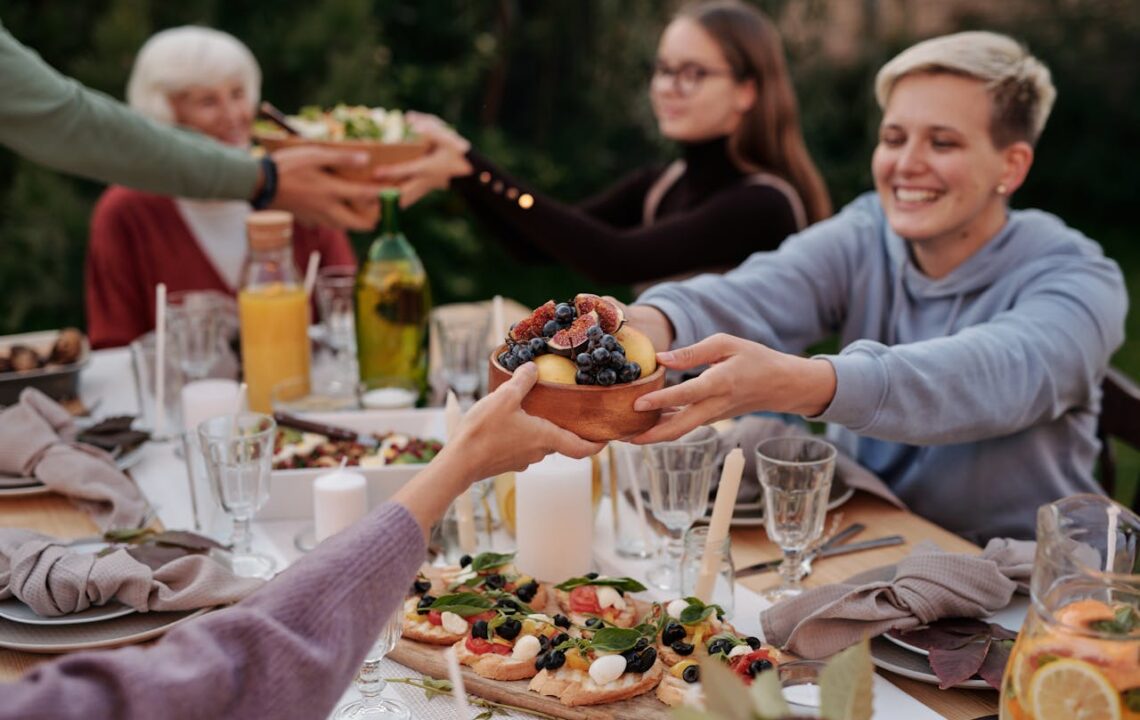
In Sardinia, a traditional lunch is a gathering of several generations around the table. Eating lasts at least an hour, conversations interweave with successive courses, and nobody rushes. Studies have shown that this way of eating lowers cortisol and improves digestion by activating the parasympathetic nervous system responsible for relaxation and regeneration.
Common features of meals in longevity zones:
- Fixed meal times synchronising the body’s circadian rhythm
- Eating together with family or friends building social connections
- Calm pace allowing for thorough chewing and digestion
- No television or phones at the table increasing eating awareness
- Plates full of vegetables as the foundation of every meal
Why does eating together affect health?
Shared meals have a measurable impact on physical and mental health. Research shows that people regularly eating with loved ones have a lower risk of depression, better weight control and lower blood pressure. Conversation at the table slows down eating pace, giving the brain time to register satiety before overeating occurs.
Shared meals build social bonds that protect against isolation, which is one of the biggest risk factors for premature death. People eating alone more often reach for ready-made, processed products and eat faster, leading to worse digestion and higher calorie intake. The table is a place of both social and physical regeneration.
What do people in Blue Zones eat daily?
The foundation of daily diet in longevity regions consists of vegetables, legumes, whole grains and fruits. Meat appears rarely, mainly during holidays or special occasions. In Okinawa, sweet potatoes, tofu and leafy vegetables make up most meals. In Sardinia, wholegrain bread, beans, tomatoes and pecorino cheese. Italians and Greeks eat fresh vegetables, olive oil, nuts and fish.
The secret of the Mediterranean diet is that meals are simple, seasonal and minimally processed. Nobody counts calories or macronutrients, but they naturally eat moderately and with variety. Sweets and desserts are reserved for special occasions rather than daily consumption, whilst portions are smaller than in Western culture but with high nutrient density.
Typical daily menu in longevity zones:
- Breakfast includes vegetables, soups, wholegrain bread with olive oil or avocado
- Lunch features legumes, vegetables, whole grains and a small portion of fish or eggs
- Dinner is light, before sunset, based on vegetables and soups
- Snacks consist of fruits, nuts and dried fruits only when genuinely hungry
Does eating pace matter for health?
Eating pace directly affects the amount of food consumed and digestion quality. The brain needs about 20 minutes to register satiety signals from the stomach. People eating quickly consume more calories before feeling full, leading to excess weight and metabolic problems. Slow eating gives the body time to secrete digestive enzymes and better absorb nutrients.
In Japan, the principle of Hara Hachi Bu speaks about eating to 80% fullness. This requires a slow pace and listening to the body’s signals. The practice involves serving smaller portions, thoroughly chewing each bite and taking breaks during meals. Research shows this technique effectively prevents overeating and extends life through calorie restriction without starvation.
How to introduce meal rituals into daily life?
Introducing rituals doesn’t require radical changes, but consistency in small habits. Start by setting fixed times for breakfast, lunch and dinner and stick to them daily. Always eat at a table without television or phone. Chew thoroughly with each bite receiving at least 20-30 chews before swallowing. Invite someone for a shared meal at least once daily, preferably at lunch. Finish eating 3 hours before sleep so the body has time to digest. The Mediterranean diet shows how calm eating builds health for years.
FAQ: Most frequently asked questions about meal rituals
How many meals per day do people in longevity zones eat?
Most people in Blue Zones eat three main meals daily without snacks between them, eating only when genuinely hungry.
Are snacks between meals healthy?
Snacks can be healthy when based on fruits and nuts, but frequent grazing disrupts metabolic rhythm and impairs fat burning.
What does the Hara Hachi Bu principle mean?
Hara Hachi Bu is a Japanese principle about eating to 80% fullness instead of complete satiation, which prevents overeating and supports longevity.
References:
- Andrade, A. M., et al. (2008). Eating slowly led to decreases in energy intake within meals in healthy women. Journal of the American Dietetic Association. https://doi.org/10.1016/j.jada.2008.05.007
- Willcox, D. C., et al. (2014). Healthy aging diets other than the Mediterranean: a focus on the Okinawan diet. Mechanisms of Ageing and Development. https://doi.org/10.1016/j.mad.2014.01.002