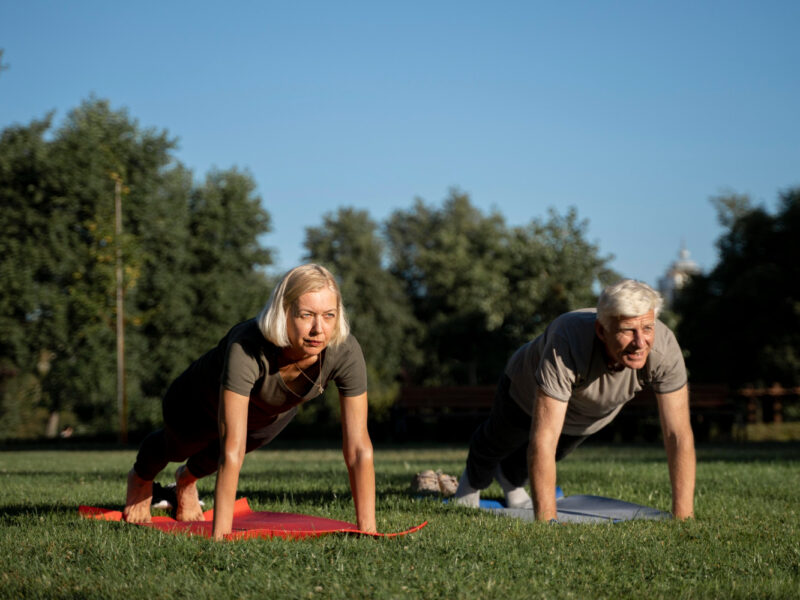


The choice between intense intervals and stable effort shapes not only fitness, but the foundations of cellular health and pace of aging. High-intensity training awakens mitochondria to life and activates renewal mechanisms, while stable, moderate effort protects the heart from overload and maintains the body in equilibrium. The longevity question is: which method is better? The answer is two forms of training that work best together, supporting the body through successive decades of life.
Key information about HIIT and LISS:
- HIIT is short, intense intervals of effort interspersed with rest
- LISS is prolonged effort at low, stable intensity
- HIIT increases mitochondrial capacity and improves insulin sensitivity
- LISS lowers cortisol and protects heart from excessive stress
- Combining both methods gives best effects for health and longevity
What is HIIT and LISS?
HIIT (High-Intensity Interval Training) is a form of training based on short, maximum efforts interspersed with rest or low intensity periods. A typical session lasts 15–30 minutes and includes a series of sprints, jumps, or intense exercises with regeneration breaks. Heart rate rises to 80–95% of maximum, and the body works in anaerobic mode.
LISS (Low-Intensity Steady State) is the opposite – prolonged effort at stable, low intensity. Walking, calm running, cycling, swimming for 30–60 minutes at 50–65% of maximum heart rate. The body remains in aerobic mode, burning mainly fats and maintaining hormonal balance.
Does HIIT training help live longer?
Research shows that HIIT triggers stronger metabolic adaptation than moderate training with less time investment. Short, intense efforts activate genes associated with longevity – SIRT1, AMPK, and PGC-1α. These proteins regulate energy metabolism, protect DNA, and support cellular repair.
HIIT improves insulin sensitivity faster than any other type of activity. Muscles become more efficient at utilizing glucose, lowering risk of type 2 diabetes and metabolic diseases. Blood sugar levels stabilize, the pancreas works less intensively, and cells respond better to insulin signals.
HIIT benefits for longevity:
- Increased mitochondrial density and function
- Improved aerobic capacity (VO2 max) by 10–20% in 8 weeks
- Reduction of visceral fat and improved lipid profile
- Increased growth hormone and testosterone production
- Shorter training time with greater metabolic effects
Impact of intense intervals on mitochondrial regeneration and slowing aging processes
Mitochondria are cellular powerhouses responsible for energy production. With age, their number drops and function worsens. This is one of the key aging mechanisms – less energy, slower regeneration, greater disease susceptibility. HIIT reverses this process.
Intense intervals trigger mitochondrial biogenesis – formation of new cellular structures capable of ATP production. Old, damaged mitochondria are removed through mitophagy, and new ones take their place. The body gains greater energy production capacity and better handles oxidative stress.
PGC-1α, the main regulator of mitochondrial biogenesis, rises sharply after HIIT sessions. This protein coordinates metabolic processes, increases antioxidant gene expression, and protects cells from damage. Higher PGC-1α levels correlate with slower biological aging and lower risk of neurodegenerative diseases.
Why is LISS training safer for the heart?
LISS maintains heart rate in a safe range without sudden pressure spikes. For people with heart disease, hypertension, or after heart attacks, this is a crucial difference. Intense intervals can overload the circulatory system, while moderate effort strengthens it gradually without risk.
Low–intensity training lowers cortisol levels – a stress hormone that in excess damages blood vessels and raises pressure. LISS activates the parasympathetic system, responsible for relaxation and regeneration. After training, the body enters a rebuilding state, not further stress. Zone 2 training is precisely an example of LISS that safely builds endurance and supports cardiovascular health.
LISS advantages for cardiovascular health:
- Gradual heart muscle strengthening without overload
- Lowering resting heart rate and blood pressure
- Improved blood vessel elasticity
- Reduction of inflammatory state markers (CRP, IL-6)
- Lower risk of arrhythmia and other rhythm disorders
Role of moderate physical activity in maintaining low oxidative stress
Oxidative stress is an excess of free radicals that damage cells, DNA, and proteins. Intense effort generates more free radicals than moderate. The body handles this through antioxidant production, but chronic overload leads to accumulation of molecular damage.
LISS generates fewer free radicals while maintaining antioxidant production. It’s balance – enough movement to activate protective mechanisms, but not so intensely as to overwhelm the antioxidant system. For older people or those with reduced immunity, this is a safer path.
Moderate activity also supports gut microbiota. Stable effort improves intestinal blood flow, supports bacterial diversity, and reduces intestinal permeability. This translates to lower systemic inflammation and better immune function.
Benefits of combining different forms of movement for health
The body responds best to varied stimuli. HIIT provides signals for metabolic adaptation and mitochondrial growth. LISS builds an aerobic base and protects against overload. Combining both methods gives synergistic effects – intensity benefits without burnout risk.
The classic arrangement is 80/20: 80% of time at low intensity (zone 2), 20% at high (HIIT). This model is used by the best endurance athletes. Most workouts are a calm effort building base, and 1–2 weekly sessions are intense intervals developing power and metabolic capacity. Choosing the best cardio exercises for longevity should include both HIIT and LISS.
Sample weekly training plan:
- HIIT 2–3 times weekly for 15–25 minutes
- LISS 3–5 times weekly for 30–60 minutes
- Strength training 2 times weekly to preserve muscle mass
- Rest days or active recovery (yoga, stretching)
- Intensity rotation – avoiding daily HIIT workouts
Best training choice for maintaining longevity
There’s no single universal answer. For younger, healthy people, HIIT offers maximum benefits with minimum time. For older people or those with health problems, LISS is safer and more sustainable long-term. The ideal approach combines both worlds – intensity for metabolic adaptation and moderation for circulatory system protection. The key is regularity, progression, and listening to your body. Training you can’t continue for years has no value for longevity, regardless of how effective it is in theory.
FAQ – most frequently asked questions about HIIT vs LISS
Can I do only HIIT and skip LISS?
You can, but long–term this increases risk of injury, burnout, and nervous system overload – LISS builds an aerobic base essential for regeneration and cardiovascular health.
How many times a week should I do HIIT?
2–3 HIIT sessions weekly is optimum for most people – more can lead to chronic fatigue and performance decline, less may not give sufficient adaptive effects.
Does LISS help lose weight as effectively as HIIT?
HIIT burns more calories in a shorter time and increases post–workout metabolism, but LISS can be done more frequently without overload risk – long–term both methods are effective with regular use.
Can older people safely do HIIT?
Yes, but after medical consultation and with appropriate progression – starting with gentler intervals and gradually increasing intensity, HIIT can be safe and beneficial for older people.
References:
- Gibala, M. J., et al. (2012). Physiological adaptations to low-volume, high-intensity interval training in health and disease. The Journal of Physiology, 590(5). https://doi.org/10.1113/jphysiol.2011.224725
- Burgomaster, K. A., et al. (2008). Similar metabolic adaptations during exercise after low volume sprint interval and traditional endurance training in humans. The Journal of Physiology, 586(1). https://doi.org/10.1113/jphysiol.2007.142109
- Seiler, S., & Tønnessen, E. (2009). Intervals, thresholds, and long slow distance: the role of intensity and duration in endurance training. Sportscience, 13. https://www.researchgate.net/publication/26824876