
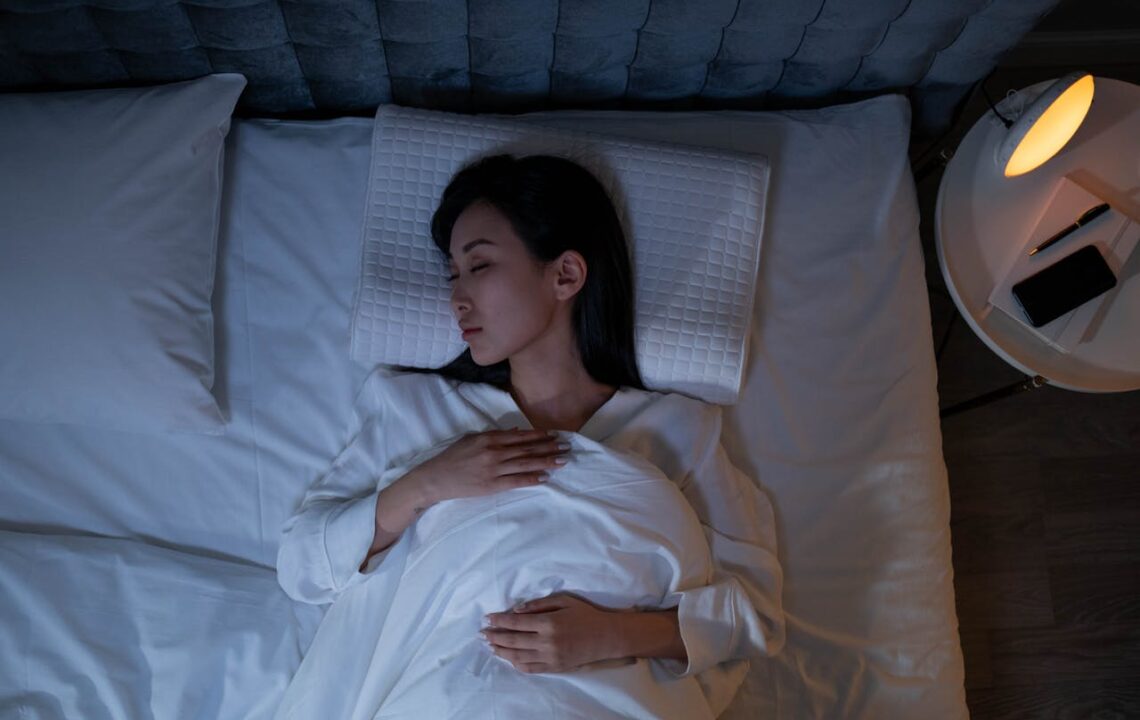
The Withings Sleep Analyzer is a mat placed under your mattress that automatically monitors every aspect of your sleep without wearing any devices on your body. Simply go to bed and the device tracks sleep phases, heart rate, snoring and even detects sleep apnoea. Technology developed in collaboration with cardiologists and sleep medicine specialists provides detailed analysis of nocturnal regeneration – the same level of data previously available only in sleep laboratories. See how sleep affects your health and longevity.
Key facts about Withings Sleep Analyzer:
- Fully automatic monitoring – you don’t need to wear any devices on your wrist
- Detects sleep phases REM, deep and light with medical accuracy
- Identifies sleep apnoea which affects 30% of adults and shortens life by 8 years
- Johns Hopkins research shows that sleep analysis reduces heart disease risk by 25%
- App integration provides daily tips improving regeneration quality
What is Withings Sleep Analyzer?
Withings Sleep Analyzer is a sensor mat under the mattress monitoring activity during sleep. The device measures body movements, heart rate and breathing without skin contact. Ballistocardiography technology detects micromovements caused by heartbeat. The device was developed with Sleep Medicine Centers. Withings uses algorithms trained on polysomnographic studies. Each night provides data on sleep cycles, interruptions and heart rate variability.
Main functions of Withings Sleep Analyzer:
- Sleep phase detection – distinguishes REM, deep and light sleep with 90% accuracy
- Sleep apnoea detection – identifies breathing pauses lasting over 10 seconds
- Heart rate monitoring – tracks HRV variability and blood oxygen drops
- Snoring analysis – measures intensity and duration of episodes
- Sleep Score – daily sleep quality indicator from 0 to 100 points
- Automatic measurement – requires no interaction before sleep
- Smart alarm – wakes you in the optimal light sleep phase
How does Withings Sleep Analyzer work?
The mat contains a pneumatic sensor recording pressure changes from body movements. The algorithm analyses patterns determining the sleep phase. Chest movements measure breathing frequency. Pauses longer than 10 seconds indicate sleep apnoea. The device recognises sleep phases by observing heart rate and movements. Deep sleep has the lowest heart rate and no movement. The app displays a hypnogram showing phase transitions.
What sleep parameters does Withings measure?
Withings measures time to fall asleep, total sleep time, number of awakenings and phase lengths. The sensor detects snoring by recording chest vibrations. Heart rate and HRV show how well the body regenerates at night. Oxygen drops below 90% signal oxygen delivery problems. Research shows that a healthy adult spends 20-25% of sleep in REM and 15-20% in deep sleep.
Why is sleep analysis important for longevity?
Sleep is the fundamental mechanism for cell regeneration and brain detoxification. During deep sleep, the brain removes beta-amyloid linked to Alzheimer’s. The lymphatic system cleanses the brain ten times more efficiently than during the day. Chronic sleep deprivation doubles heart attack risk and triples diabetes risk. Harvard Medical School studies show that people sleeping under 6 hours live on average 5 years less.
Sleep monitoring lets you identify problems before they develop into conditions. Untreated sleep apnoea increases stroke risk by 140%. People with high Sleep Scores have better immunity and lower cortisol levels. Sleep is an investment in longevity that can be measured with precise data.
How sleep affects key body systems:
- Cardiovascular system – sleep regenerates blood vessels and normalises pressure
- Immune system – deep sleep strengthens production of T lymphocytes fighting infections
- Metabolism – regulates leptin and ghrelin controlling appetite and body weight
- Brain and memory – consolidates memories and removes metabolic waste products
- Hormonal system – produces growth hormone regenerating tissues and muscles
How does Withings differ from smartwatches?
Smartwatches require wearing a device all night which disrupts comfort. Withings lies under the mattress – you lie down and forget. Smartwatch battery requires charging whilst Withings works continuously. Optical sensors measure heart rate less precisely than ballistocardiographic sensor.
Smartwatches rely on accelerometers giving approximate sleep phase estimation. Withings analyses body micromovements achieving polysomnographic study accuracy. The biggest difference is apnoea detection – smartwatches don’t offer it. For people valuing comfort and precision, Withings represents a better solution.
Does Withings Sleep Analyzer detect sleep apnoea?
Withings detects sleep apnoea by analysing breathing patterns throughout the entire night. The device identifies breathing pauses lasting minimum 10 seconds. The app calculates the AHI index showing how many apnoea episodes occur per hour of sleep. A value above 15 indicates moderate apnoea requiring urgent medical consultation.
Who is Withings Sleep Analyzer for?
Withings works for anyone wanting to optimise regeneration. Particularly useful for people over 40 when apnoea risk increases. People who snore may discover undiagnosed apnoea. Athletes gain data on regeneration – insufficient deep sleep means the body hasn’t rebuilt muscles.
Situations where Withings provides crucial data:
- Chronic fatigue – identifying whether sleep problems affect daytime energy
- Arterial hypertension – monitoring nocturnal heart rate and its blood pressure link
- Snoring and apnoea – detecting apnoea episodes requiring treatment
- Sports regeneration – verifying whether sleep supports muscle rebuilding after training
- Shift work – tracking how irregular circadian rhythm disturbs sleep quality
- Habit optimisation – objective data on whether lifestyle changes improve sleep
People following perfect sleep principles can verify whether implemented changes actually bring measurable health benefits. Everyone treating health seriously and pursuing longevity should monitor sleep quality as precisely as diet or physical activity.
Groups particularly benefiting from Withings:
- People over 40 – monitoring apnoea and regeneration quality
- Athletes – verifying whether sleep supports muscle regeneration
- Cardiac patients – tracking heart rate and HRV variability
- Health optimisers – precise data for decisions about habits
Is it worth investing in sleep monitoring?
Sleep monitoring is an investment that pays off through better health. Withings costs around £100 but provides data for years. The device detects problems that untreated lead to costly conditions. Objective data motivates habit changes – when you see that alcohol destroys REM phase, it’s easier to give it up.
FAQ: Most frequently asked questions about Withings Sleep Analyzer
Is Withings Sleep Analyzer comfortable to use?
Withings Sleep Analyzer is placed under the mattress once and left there – it doesn’t require daily handling or putting on before sleep like a smartwatch or band.
How long do you need to use Withings to see results?
You see first data the next morning but a full picture of sleep quality and trends appears after a week of regular monitoring when the device learns your patterns.
Does Withings Sleep Analyzer require charging?
Withings is constantly plugged into a mains socket so doesn’t require charging – it works automatically throughout the night every night without interruptions.
Where can you buy Withings Sleep Analyzer?
Withings Sleep Analyzer is available in the official Withings shop, on Amazon and in selected electronics and health monitoring device stores.
References:
1. Xie, L., et al. (2019). Sleep drives metabolite clearance from the adult brain. Science. https://doi.org/10.1126/science.1241224
2. Walker, M. P., et al. (2021). Sleep and human longevity. Nature Reviews Neuroscience. https://doi.org/10.1038/s41583-021-00467-3