A single course of antibiotics can eliminate up to 30% of gut bacterial species – and not all of them return on their own. Some strains recover within weeks, while others need months of active support. Simply waiting isn’t enough. Effective gut microbiome recovery after antibiotics requires a specific diet and the right timing for probiotics. Find out how to actively restore your gut microbiome within 30 days.
Key facts about microflora restoration:
- Antibiotics destroy both harmful and beneficial bacteria – a side effect of every course of treatment
- Fermented food works faster than probiotic supplements in most cases
- Prebiotic fibre is fuel for recovering bacteria
- Full microbiome regeneration takes from four weeks to several months
- Sugar and processed food inhibit recovery and favour pathogens
Why is rebuilding the microflora after antibiotics so important?
Antibiotics destroy the microbiome indiscriminately. They don’t distinguish between harmful pathogens and beneficial strains, eliminating all bacteria sensitive to the drug. The adult gut is home to over 1,000 species, so after a course of treatment a biological gap remains. Reduced microbial diversity and weakened mucosal immunity (the gut lining’s defence mechanism).
Research published in Microbiology (Jernberg 2010) found that some strains don’t return to the gut even two years after antibiotic treatment. That’s why rebuilding gut microflora after antibiotics doesn’t happen on its own – it requires deliberate dietary support. That means lasting microbiome changes – not a temporary disruption.
Do probiotics after antibiotics really help?
The answer isn’t straightforward. A study in Nature Medicine (Suez 2018) revealed a paradox: in some people, taking probiotics after antibiotics delayed natural gut regeneration by up to five months compared with those who let the gut recover on its own. The probiotics occupied ecological niches in the gut, blocking the return of native flora.
Why might probiotics inhibit natural microflora recovery?
Standard supplements contain only a few bacterial strains – usually Lactobacillus and Bifidobacterium (types of lactic acid bacteria). That’s a fraction of the natural diversity of hundreds of species. Colonising the gut en masse, they block the return of native flora. If you’re experiencing antibiotic-associated diarrhoea, probiotics containing Saccharomyces boulardii (a therapeutic yeast) may help. This is a clinically proven exception.
Fermented food – what works better than probiotics?
The same Suez study in Nature Medicine showed that people eating fermented products immediately after antibiotics rebuilt their microflora faster and more completely than those taking probiotics. Kefir, fermented vegetables, and natural yoghurt deliver hundreds of bacterial strains simultaneously – in a form the gut recognises far better than a capsule.
Which fermented products best rebuild microflora?
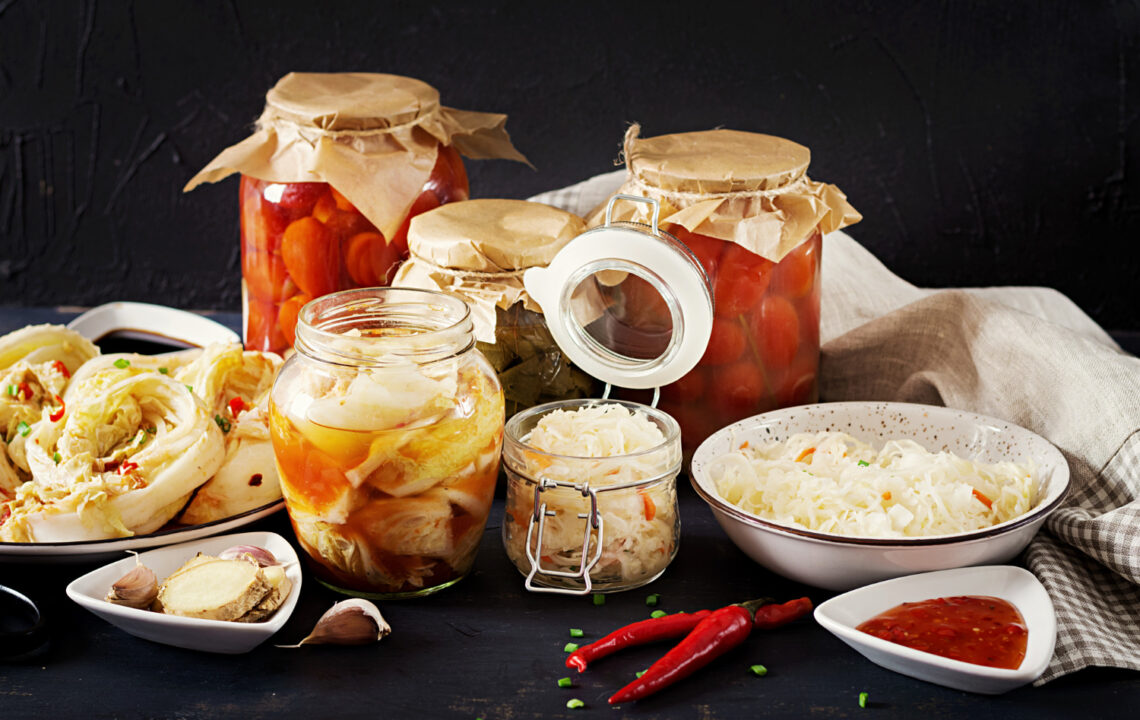
The best-studied options are kefir (from 150 ml daily), naturally fermented cabbage and cucumbers (not vinegar-preserved!), kombucha, and natural yoghurt with live cultures. The benefits of fermented products for the microbiome become visible after 2-3 weeks of regular consumption. Start with 150-200 ml – it sounds modest, but for a gut recovering from antibiotics, that’s the right starting dose.
Does fibre protect the microbiome during antibiotic treatment?
Yes – natural prebiotics and prebiotic fibre (chicory, garlic, leeks, Jerusalem artichoke, oats) feed bacteria that produce short-chain fatty acids – compounds that nourish gut cells and strengthen the mucosal barrier. Even during antibiotic treatment, prebiotics help protect some bacteria from elimination and speed up post-treatment recovery.
Best prebiotic sources:
- Chicory and Jerusalem artichoke – rich in inulin, the best-studied prebiotic
- Leeks, garlic, and onions – fructooligosaccharides (plant sugars that feed Bifidobacterium)
- Oats and green bananas – resistant starch, fermented slowly by gut bacteria
- Lentils and beans – fibre and plant protein combined
What does the microflora recovery protocol look like step by step?
Gut regeneration progresses in stages – each phase of microbiome recovery has different priorities and is worth approaching with care. There’s no benefit in rushing the first stage or skipping the second.
Gut regeneration – days 1-7: where to start?
The first phase is about minimising damage and supporting the intestinal barrier. A post-antibiotic diet should be gentle on digestion: cooked vegetables, oat porridge, bone broth – an adaptive diet helps broaden the menu gradually. Introduce kefir drink (150 ml) and small portions of fermented vegetables. Avoid alcohol, sugar, and processed food.
Weekly protocol – priorities:
- Days 1-7: Gentle diet, kefir 150 ml/day, prebiotics in small amounts
- Days 8-14: Increase fermented food portions, add fermented vegetables twice daily
- Days 15-21: Introduce full prebiotic fibre portions, increase vegetable variety
- Days 22-30: Consolidate habits, monitor digestion, maintain fermented food
What to avoid during microbiome recovery?
Three categories of food most strongly inhibit gut regeneration after antibiotics. Sugar and sweet drinks feed yeasts and opportunistic bacteria at the expense of beneficial strains. Alcohol damages the gut barrier and kills fermentative bacteria. Processed food containing emulsifiers. Chemical substances binding fat with water – (E471, E472) destroys the mucus layer protecting the intestinal wall. Before changing your diet or lifestyle, consult your doctor.
FAQ: Most frequently asked questions about rebuilding microflora after antibiotics
How long does it take to rebuild gut microflora after antibiotics?
Most bacteria return within 4-6 weeks, but full microbiome diversity may require 3-6 months of active dietary support.
How much kefir should you drink daily?
In the first week, 150-200 ml daily is sufficient – after two weeks you can increase to 250-300 ml, observing how your gut responds.
When does the microbiome return to normal?
Research shows that how long the microbiome takes to recover after antibiotics depends on diet: with active support from fermented food and fibre, measurable improvements appear within 30 days.
How does fermented food affect the microbiome?
It delivers hundreds of live bacterial strains simultaneously, and the natural acids it contains create an environment that favours beneficial microorganisms.
References:
- Jernberg C., et al. (2010). Long-term impacts of antibiotic exposure on the human intestinal microbiota. Microbiology. https://doi.org/10.1099/mic.0.040618-0
- Suez J., et al. (2018). Post-antibiotic gut mucosal microbiome reconstitution is impaired by probiotics and improved by autologous FMT. Cell. https://doi.org/10.1016/j.cell.2018.08.047
- Zmora N., et al. (2018). Personalized gut mucosal colonization resistance to empiric probiotics is associated with unique host and microbiome features. Cell. https://doi.org/10.1016/j.cell.2018.08.041