

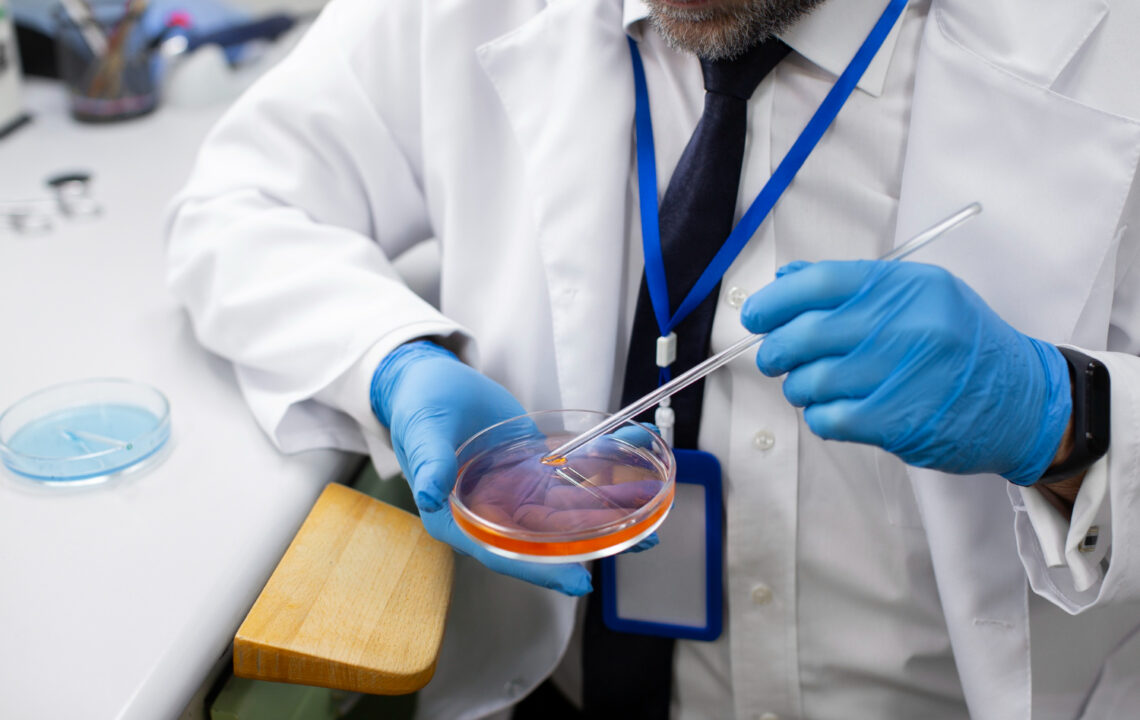
In 2022, scientists at the Weizmann Institute transferred microbiota from young mice to older ones and observed improvements in vision, memory, and motor function. Faecal microbiota transplantation (FMT) is one of the fastest-growing fields in medicine. Researchers are testing it as a tool against ageing itself. Find out where the science ends and the speculation begins – and what FMT research actually tells us about ageing.
Key facts about faecal microbiota transplantation:
- FMT for Clostridioides difficile achieves success rates above 90% – no antibiotic comes close
- Mouse experiments show that transplanting microbiota from young donors improves brain and eye function in older animals
- The gut microbiome changes with age – diversity falls and pro-inflammatory strains increase
- DIY FMT is dangerous and can lead to serious infection or sepsis (a life-threatening blood infection)
- Clinical trials in humans are ongoing – results on ageing and neurology are still being gathered
What is faecal microbiota transplantation (FMT)?
Faecal microbiota transplantation (FMT) involves transferring microorganisms from a healthy donor’s gut to a recipient’s gut. The aim is to restore a healthy, diverse community of bacteria, fungi, and viruse. Together they form the gut microbiome, which regulates immunity, metabolism, and brain function.
How does the faecal transplant procedure work, step by step?
The microbiota donor undergoes rigorous screening for dozens of infectious and metabolic conditions. Collected material is processed and filtered, then delivered to the recipient. Most commonly via colonoscopy (a procedure using a flexible camera to view the large intestine), rectal infusion, or oral capsules. The entire procedure takes place exclusively in a clinical setting under gastroenterological supervision.
Can FMT extend life – microbiome rejuvenation?
There is currently no clinical evidence that FMT extends lifespan in humans – but the underlying mechanisms are promising. With age, the gut microbiome loses diversity. Strains producing short-chain fatty acids – compounds that nourish the gut lining and suppress inflammation – give way to pro-inflammatory bacteria. This has made microbiome therapy an active research target: can transplanting gut microbiota from a young, healthy donor rejuvenate the ageing microbiome?
What did mouse experiments with microbiota transplantation reveal?
A 2022 study in Nature Aging by Prof. Eran Elinav’s team at the Weizmann Institute found that older mice receiving microbiota from young donors recovered visual acuity and performed better in memory tests. Microbiome rejuvenation altered gene expression in the retina and hippocampus – regions central to vision and learning. The effects were reversible: when the microbiota aged back, the benefits faded. Translating these findings to humans requires further research. The biology of ageing is too complex to draw direct conclusions from mouse models.
Can young people’s gut transplants rejuvenate the brain and eyes?
In mouse studies – yes, but there is no human data yet. The gut-brain axis links the microbiome to the nervous system. Bacteria produce neurotransmitters (chemical signals between nerve cells) and regulate inflammation. A 2021 study in Nature Communications found that older mice receiving FMT from young donors performed better in learning tests and showed reduced brain inflammation. Effects were observed in retinal cells too.
All data still come from animal models, and the hallmarks of ageing operate more complexly in humans. As Prof. Eran Elinav of the Weizmann Institute has noted: “The microbiome is a mirror of health – when we rejuvenate it, some tissues appear to follow.” Promising, but confirmation in clinical trials is needed before drawing conclusions for humans.
Which conditions is faecal microbiota transplantation already used for?
The only well-documented clinical indication remains recurrent Clostridioides difficile infection – a serious gut infection resistant to standard antibiotics. FMT effectiveness in this disease exceeds 90%, a result no other treatment achieves. FMT for this indication is available at selected academic centres across Europe.
Conditions with ongoing FMT clinical trials:
- Inflammatory bowel disease (Crohn’s disease – chronic intestinal inflammation, ulcerative colitis)
- Obesity and insulin resistance – metabolic effects through microbiome composition changes
- Neurodegenerative conditions – Parkinson’s and Alzheimer’s disease (early-stage trials)
- Depression and mood disorders – mediated through the gut-brain axis
- Long COVID complications – research under way since 2022
What are the risks of faecal transplantation?
FMT carries real risks. Every donor candidate undergoes broad screening panels, but no protocol guarantees complete safety. In 2019, the FDA issued a safety warning after a patient died following a transplant containing a resistant bacterial strain.
Main risks of FMT:
- Pathogen transmission from the donor – drug-resistant bacteria, viruses, parasites
- Colonoscopy complications – mechanical bowel injury
- Unpredictable response – the new microbiome may not establish itself durably
The risk is acceptable for serious disease but unjustifiable outside a controlled clinical trial.
Why must FMT never be done at home?
Online guides for DIY faecal transplants circulate widely – this is an extremely dangerous practice. An unscreened donor can transmit pathogens absent from home test kits. Deaths from home FMT are documented in medical literature. Autophagy, the natural process by which cells remove damaged components, is a safer path to supporting cellular health.
The content of this article is for informational purposes only and does not replace medical advice – before making any decisions regarding FMT, supplementation, or dietary changes, consult a gastroenterologist or your healthcare provider.
FAQ: Frequently asked questions about faecal microbiota transplantation
Can I do FMT myself?
DIY faecal transplantation is dangerous – an unscreened donor can transmit serious pathogens, and sepsis deaths following home FMT are documented in medical literature.
Where can FMT be done in Poland?
Faecal microbiota transplantation in Poland is available at several academic centres and specialist gastroenterology clinics, exclusively as a medical procedure for recurrent C. difficile infection or within a clinical trial.
Do mouse results translate to humans?
Mouse study results are promising, but medical history is full of interventions that worked in rodents but failed in clinical trials – which is why controlled human studies are essential before drawing firm conclusions.
Why is FMT so effective against C. difficile?
FMT works for Clostridioides difficile treatment because it restores healthy bacterial competition in the gut – transplanted strains physically outcompete the pathogen in a way no antibiotic can achieve sustainably.
References:
- Boem, F., et al. (2022). Effects of faecal microbiota transplantation in ageing mice. Nature Aging. https://doi.org/10.1038/s43587-021-00122-7
- Sharon, G., et al. (2022). Human gut microbiota modulation via comparative diet-induced shifts. Cell Host & Microbe. https://doi.org/10.1016/j.chom.2022.01.001