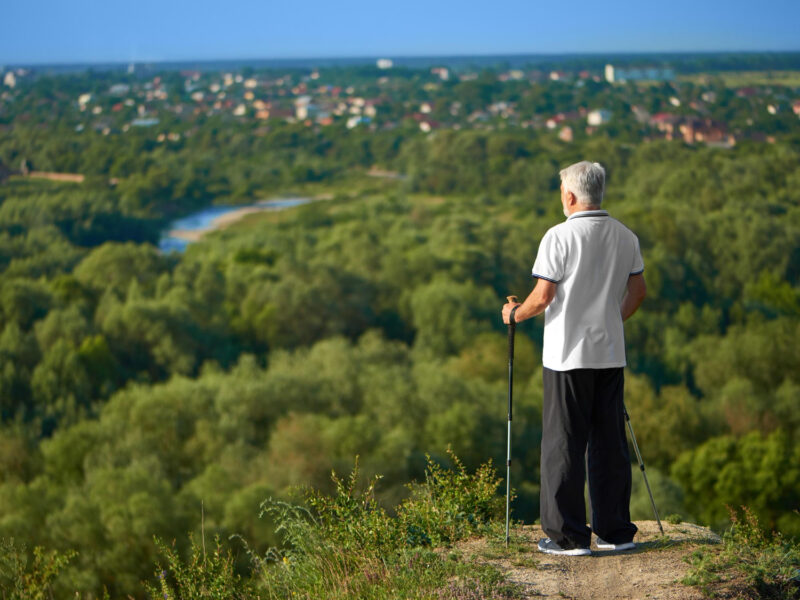


On Okinawa, 97-year-old Ushi Okushima rises at six every morning, works in her garden and meets neighbours for tea. She’s never heard of preventive medicine and doesn’t count calories – she simply lives the way her mother and grandmother did. What has the greatest impact on life expectancy is a question scientists have been pursuing for decades. It turns out the answer lies closer to daily habits than to breakthrough therapies. Find out what truly determines how many years lie ahead!
What’s worth knowing about life expectancy:
- Genes account for roughly 20-25% of lifespan – the rest depends on lifestyle
- Physical activity is the single strongest predictor of longevity
- Social relationships affect lifespan as powerfully as smoking
- A plant-rich diet dominates in every longevity zone in the world
- Sleep and recovery regulate repair processes at the cellular level
Does life expectancy depend more on genes or lifestyle?
Genes set certain biological boundaries, but lifestyle determines how those boundaries are used. Research on identical twins conducted by the Danish Twin Registry found that genetic factors account for just 20-25% of the variation in lifespan. The rest comes down to environment, habits and the choices we make every day.
This means that even someone with a genetic predisposition for longevity will shorten their life through a sedentary lifestyle, a poor diet and chronic stress. Conversely, people without particularly favourable genes can reach old age if they consistently look after the basics. Epigenetics shows that lifestyle switches specific genes on and off, altering how they function.
Five factors with the greatest impact on life expectancy
Physical activity, diet, sleep, social connections and avoiding harmful substances are the five pillars that consistently appear in longevity research. The discussion about what has the greatest impact on life expectancy comes down to precisely these five elements. Those who follow all five principles live an average of 12-14 years longer than those who follow none.
Five pillars of longevity:
- Regular physical activity – a minimum of 150 minutes of moderate movement per week lowers the risk of premature death by 30-35%
- A plant-based diet – vegetables, fruit, legumes and whole grains dominate in longevity zones
- 7-8 hours of sleep – regular, quality sleep supports cellular repair and immune function
- Strong social bonds – loneliness increases the risk of premature death by 26%
- Avoiding tobacco and excess alcohol – smoking shortens life by an average of 10 years
Why is physical activity more important than diet?
Physical activity influences more biological processes simultaneously than any single dietary component. Movement improves insulin sensitivity, lowers blood pressure, strengthens the heart, reduces inflammation and stimulates the production of a protein that supports brain health. People who exercise regularly have a lower risk of death from any cause – not just heart disease or cancer.
How do social relationships affect life expectancy?
Loneliness and social isolation accelerate inflammatory processes in the body, raise blood pressure and weaken the immune system. A meta-analysis published in PLOS Medicine involving over 300,000 participants found that strong social ties increase the odds of survival by 50%. That’s comparable to giving up smoking and stronger than regular exercise. Populations in longevity zones – on Okinawa, in Sardinia and Ikaria – share one thing: a dense network of family and neighbourhood relationships.
Movement as the strongest predictor of longevity
Even a modest dose of movement makes an enormous difference. Those who walk just 15-20 minutes a day have a 20% lower risk of premature death than completely sedentary individuals. Increasing activity to 150-300 minutes per week raises that reduction to 30-35%. Crucially, this isn’t about intense training – the best cardio exercises are those you can do consistently for years.
A sedentary lifestyle is an independent risk factor – even someone with a healthy weight and good diet loses years of life if they spend most of the day immobile. Skeletal muscles act as an endocrine organ – during contraction they release protective substances that shield the heart, brain and immune system. No movement means no such protection.
Diet and life expectancy – what do studies from Blue Zones tell us?
In the five Blue Zones – Okinawa, Sardinia, Ikaria, the Nicoya Peninsula and among Adventists in Loma Linda – people reach advanced ages more frequently than anywhere else. Their diets differ in detail, but share a common pattern: a dominance of plants, little processed food and moderate portions.
Okinawans eat mainly sweet potatoes, tofu and sea vegetables. Sardinians base their diet on whole grains, beans and pecorino. Ikarians consume wild herbs, honey and local vegetables. The common thread is 90-95% of calories from plant sources. They don’t count macronutrients or follow complicated protocols. The diet of centenarians is a simpler rule than most popular diets.
Sleep, stress and recovery
Sleep is when the body repairs DNA damage, consolidates memories and clears the brain of toxic proteins – including beta-amyloid, linked to Alzheimer’s disease. Those who regularly get 7-8 hours have lower inflammatory markers, better insulin sensitivity and a stronger immune system.
Chronic stress works in the opposite direction – it raises cortisol, accelerates the shortening of telomeres – the protective caps on chromosomes – and keeps the body in a state of persistent inflammation. Long-lived populations don’t live without stress, but they have well-established coping mechanisms.
Proven ways to reduce stress:
- Outdoor movement – lowers cortisol and improves mood within 20 minutes
- Contact with loved ones – talking to a trusted person regulates the stress response
- A regular bedtime – a predictable rhythm stabilises the body’s stress axis
- Conscious breathing – slow, deep breaths activate the parasympathetic nervous system
How many hours of sleep are needed to live longer?
The optimal amount of sleep for adults is 7-8 hours. Both regular sleep deprivation (under 6 hours) and excessive sleeping (over 9 hours) are associated with a higher risk of cardiovascular disease. It’s not just duration that counts but quality. Deep sleep and the REM phase play a crucial role in bodily recovery.
Does preventive medicine extend life?
Regular screening allows diseases to be detected at an early stage, when treatment is most effective. Monitoring blood pressure, cholesterol and glucose levels. These are simple tests that can prevent heart attacks, strokes or type 2 diabetes. Early intervention for hypertension reduces the risk of stroke by 40%.
Tests worth having regularly:
- Blood pressure – annually after 40, more frequently if there’s a family history of hypertension
- Lipid profile – LDL cholesterol, HDL and triglycerides every 2-3 years
- Fasting glucose – early detection of insulin resistance and prediabetic states
- Full blood count – a general health overview and detection of deficiencies
Preventive medicine has its limitations, however. No test or medication can replace a healthy lifestyle. The most effective strategy combines regular check-ups with daily habits – movement, a good diet and stress management. Cholesterol-lowering drugs alone, without dietary changes and activity, deliver considerably smaller benefits than combining both approaches.
What can we learn from people who live past 100?
Centenarians in the Blue Zones don’t follow any special health protocols. Their secret lies in the consistency of simple habits maintained throughout life. They eat locally, move naturally – walking, gardening, carrying shopping. Have strong ties with family and community. They eat moderately – on Okinawa the principle of hara hachi bu means eating until 80% full.
Common traits of centenarians:
- Daily movement woven into life – not formal workouts but natural activity
- A strong sense of purpose – Okinawans call it ikigai, Nicoyans plan de vida
- Moderate eating – small portions, mainly plants, rarely processed food
- Time for rest – relaxation rituals built into the daily routine
- Belonging to a community – family, neighbours, religious or social groups
Growing evidence shows that reaching advanced age in good health is becoming realistic for a growing number of people – provided they start looking after the basics early enough.
Small changes that could add years to your life
The longest-lived populations don’t treat health as a project with a checklist. Their habits are so deeply woven into daily life that they require neither willpower nor discipline. In Sardinia, shepherds cover 8-12 kilometres a day across mountainous terrain without thinking of it as exercise. On Okinawa, older women meet in moai groups – mutual support circles – from youth until death. These habits cost nothing, yet they add years of healthy life.
FAQ: Frequently asked questions about life expectancy
Is longevity hereditary?
Genetics account for 20-25% of the variation in lifespan, meaning that lifestyle and environment have three to four times greater influence than genes alone.
How many years of life can a healthy lifestyle add?
Following five basic health principles – regular activity, a healthy diet, a healthy weight, moderate alcohol, no smoking – extends life by an average of 12-14 years compared with those who follow none.
Do lonely people live shorter lives?
Social isolation increases the risk of premature death by 26%, and its impact on health is comparable to smoking 15 cigarettes a day.
References:
- Holt-Lunstad, J. et al. (2010). Social Relationships and Mortality Risk: A Meta-analytic Review. PLOS Medicine. https://doi.org/10.1371/journal.pmed.1000316
- Li, Y. et al. (2018). Impact of Healthy Lifestyle Factors on Life Expectancies in the US Population. Circulation. https://doi.org/10.1161/CIRCULATIONAHA.117.032047
- Buettner, D. & Skemp, S. (2016). Blue Zones: Lessons From the World’s Longest Lived. American Journal of Lifestyle Medicine. https://doi.org/10.1177/1559827616637066