
After forty, the body starts losing muscle – about 1% of mass yearly. After sixty, the process accelerates. Experts warn that loss of muscle strength is one of the main predictors of mortality in seniors. Is more protein the solution? The answer isn’t straightforward, as excess also causes harm. Find the balance between building muscle and burdening your kidneys!
Does high protein intake support longevity?
It depends on age. Research conducted by Dr Valter Longo at the University of Southern California revealed a surprising relationship – high protein intake before age 65 is associated with higher cancer risk and overall mortality. But after 65, the relationship reverses – more protein means better protection against death. This is because at younger ages, protein stimulates the mTOR pathway, which promotes cell growth – including cancer cells.
For seniors, preserving muscle mass becomes the priority. Muscles aren’t just about strength – they’re a reservoir of amino acids during illness, a regulator of glucose metabolism, protection against falls. After 65, the benefits of adequate protein intake outweigh potential risks. The source matters – plant protein appears safer than red meat at any age.
How much protein does the body need after 40?
Official guidelines suggest 0.8 g of protein per kilogram of body weight daily. For a 70 kg person, that’s 56 grams. The problem is these guidelines were developed for young, healthy people and define the minimum to prevent deficiency – not the optimum for muscle preservation. Aging experts recommend 1.0–1.2 g/kg for seniors, and 1.2–1.6 g/kg for those who exercise regularly.
Approximate daily protein requirements:
- Ages 40–65, sedentary lifestyle: 0.8–1.0 g/kg
- Ages 40–65, physically active: 1.0–1.2 g/kg
- Seniors 65+, sedentary lifestyle: 1.0–1.2 g/kg
- Seniors 65+, strength training: 1.2–1.6 g/kg
Protein and muscle and cell regeneration
Amino acids from protein are the building blocks the body uses to construct new tissue. Leucine – an amino acid abundant in eggs, dairy, and meat – directly activates muscle protein synthesis. In young people, 20 g of protein per meal is enough to maximally stimulate muscle anabolism. In seniors, the threshold is higher – 30–40 g of protein is needed to achieve the same effect.
This phenomenon is called anabolic resistance – aging muscles respond less well to growth signals. That’s why seniors should eat more protein at every meal, not just once daily. Spreading intake evenly throughout the day yields better results than one large protein–rich meal.
How to prevent muscle loss with age?
Sarcopenia – progressive loss of muscle mass and strength – affects one in three people over 60. It’s not an inevitable consequence of aging but results from lack of movement and insufficient protein intake. Muscles work on a “use it or lose it” basis – without regular loading, they waste away regardless of diet.
Strategies for preventing sarcopenia:
- Resistance training at least twice-weekly
- Protein with every meal (not just at lunch)
- Minimum 30 g protein per meal for those 65+
- Vitamin D supplementation if deficient
- Adequate sleep for recovery
Best protein sources in the longevity diet
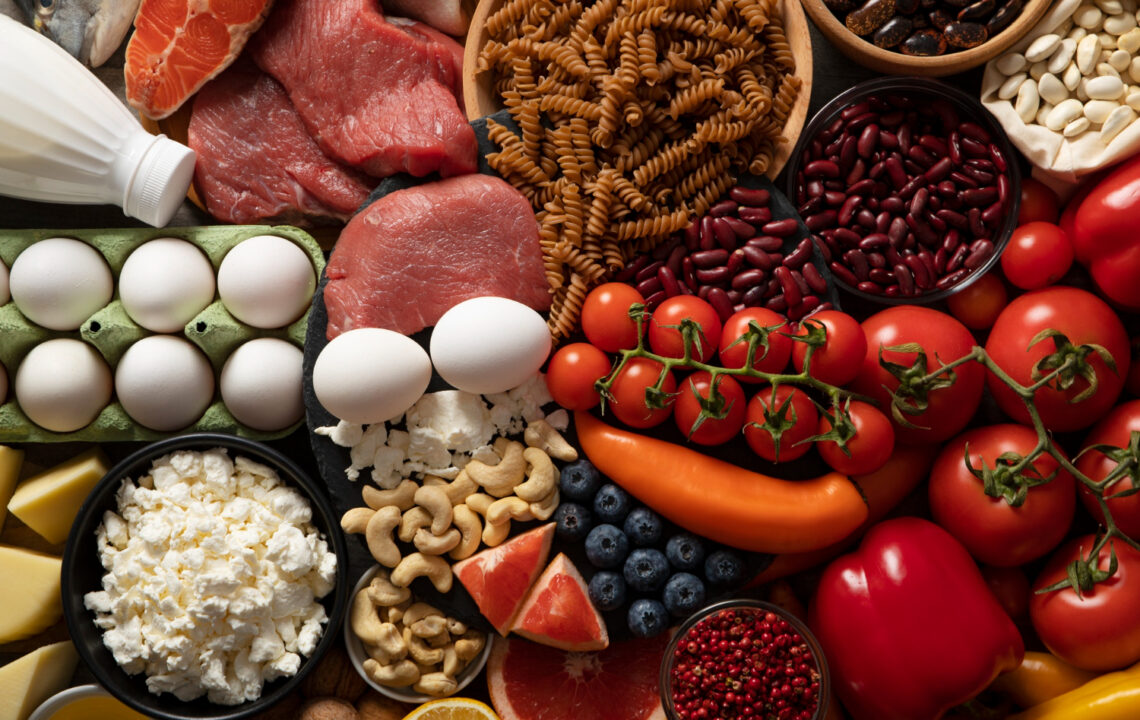
Not all protein works the same. Studies of long-lived populations show that centenarians eat relatively little meat – legumes, fish, and dairy form the basis. Red meat appears rarely. In the longevity diet, plant protein and fish dominate over meat, reducing kidney burden and inflammatory marker levels.
Protein sources ranked from most recommended:
- Legumes – lentils, chickpeas, beans
- Fish – especially fatty marine varieties (sardines, mackerel)
- Eggs – complete amino acid profile
- Fermented dairy – yoghurt, kefir, cottage cheese
- Poultry – chicken, turkey in moderate amounts
Optimal macronutrient intake for seniors
Protein is just part of the puzzle. Seniors also need adequate carbohydrates as fuel for training and fats for brain health. Macronutrient ratios change with age – protein’s share increases at the expense of carbohydrates, especially for less active individuals. Strength training after sixty requires adapting diet to increased amino acid demands and proper recovery.
Approximate macronutrient ratios for seniors:
- Protein: 20–25% of calories (1.0–1.2 g/kg body weight)
- Fats: 30–35% of calories (emphasising unsaturated)
- Carbohydrates: 40–50% of calories (mainly complex)
The key to preserving muscle mass
Protein alone won’t build muscle – a stimulus in the form of resistance training is needed. Combining regular strength exercises with adequate protein at every meal is the most effective strategy against sarcopenia. Seniors who is a strength train and eat 1.2–1.6 g of protein per kilogram of body weight maintain functional capacity comparable to people a decade younger – they can get up from a chair unaided, climb stairs, and carry shopping without strain.
FAQ: Most frequently asked questions about protein and longevity
Are protein supplements necessary for seniors?
They’re not necessary if diet provides enough protein – supplements help those with appetite problems or difficulty chewing.
Does too much protein damage the kidneys?
In people with healthy kidneys, high protein intake doesn’t cause damage, but those with kidney disease should limit intake.
What time of day is best for eating protein?
Spread evenly throughout the day – 25–40 g with each main meal works better than one large portion.
Is plant protein as good as animal protein?
Yes, provided you combine different sources (e.g., rice + beans) to obtain a complete amino acid profile.
References:
1. Levine, M. E., et al. (2014). Low protein intake is associated with a major reduction in IGF–1, cancer, and overall mortality. Cell Metabolism, 19(3). https://doi.org/10.1016/j.cmet.2014.02.006
2. Bauer, J., et al. (2013). Evidence-based recommendations for optimal dietary protein intake in older people. Journal of the American Medical Directors Association, 14(8). https://doi.org/10.1016/j.jamda.2013.05.021
3. Cruz–Jentoft, A. J., et al. (2019). Sarcopenia: revised European consensus on definition and diagnosis. Age and Ageing, 48(1). https://doi.org/10.1093/ageing/afy169