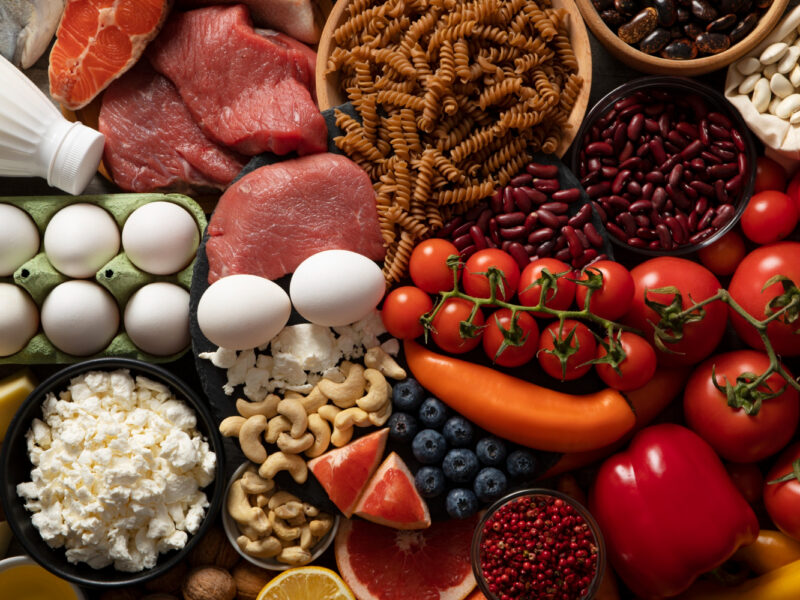


The average Western European consumes around 15 grams of fibre a day. The WHO recommendation is 25-30 grams. That gap between what we eat and what we need is one of the main drivers behind the epidemic of gut disorders, diabetes, and heart disease. A diet rich in fibre isn’t a modern trend. It’s a return to the way of eating that shaped human guts for thousands of years. Find out how a simple dietary ingredient transforms health from the inside out!
What’s worth knowing about fibre:
- Fibre is the only dietary component that passes through the gut undigested – and that’s precisely what makes it so valuable
- Two types of fibre serve completely different functions – soluble fibre feeds bacteria, insoluble fibre cleanses the gut
- 25-30 g per day is the WHO recommendation, yet most of us consume barely half that amount
- A sudden increase in fibre can cause bloating – increase gradually, giving the gut time to adapt
- Fibre protects against colorectal cancer, type 2 diabetes, and cardiovascular disease
Fibre – the underrated component of everyday diet
Dietary fibre is a collective term for indigestible plant components that aren’t broken down by digestive enzymes. It reaches the large intestine unchanged, where it becomes food for billions of bacteria that make up the gut microbiome. That’s where – not in the stomach – most of its health effects unfold.
For decades, fibre was regarded as useless bulk in food. We now know it’s quite the opposite – an active participant in immune, metabolic, and hormonal processes. A low-fibre diet is a diet low in microbial diversity, and that translates to poorer general health, weaker immunity, and a higher risk of chronic disease.
Soluble and insoluble fibre – two different jobs
Fibre falls into two groups with complementary functions. Soluble fibre – found in oats, apples, legumes, and psyllium – absorbs water and forms a gel that slows digestion. It lowers LDL cholesterol, stabilises blood sugar, and feeds beneficial gut bacteria. Insoluble fibre – in wheat bran, nuts, and vegetable skins – speeds up gut transit and reduces the risk of constipation.
Differences between fibre types:
- Soluble fibre – oats, apples, pears, chia seeds, psyllium, lentils, beans
- Insoluble fibre – wheat bran, nuts, flaxseeds, vegetable and fruit skins
- Prebiotics (FOS, inulin) – chicory, garlic, onion, Jerusalem artichoke, bananas – selectively feed Bifidobacterium
- Resistant starch – cooled potatoes, rice, green bananas – ferments in the large intestine, producing butyrate
How much fibre does an adult need each day?
The WHO and most dietary organisations recommend 25-30 grams of fibre per day for adults. Some guidelines, such as those from the American Heart Association, recommend as much as 38 grams for men and 25 grams for women. The European Food Safety Authority (EFSA) sets 25 grams as sufficient for normal gut function.
For context: a cup of cooked lentils provides around 16 grams of fibre, an apple with its skin 4-5 grams, a serving of oats 4 grams, and a handful of almonds 3.5 grams. Clearly, reaching 25-30 grams requires deliberate choices at every meal – one apple a day isn’t enough.
Children need less – a rough guideline suggests “age plus 5-10 grams”. An eight-year-old needs around 13-18 grams. Older adults often consume less fibre due to reduced appetite and simplified diets. It’s worth compensating by consciously including legumes and wholegrains.
The best fibre sources in everyday diet
Fibre comes exclusively from plant foods. Meat, dairy, and eggs contain none at all. The densest sources are legumes, nuts, seeds, and wholegrains – not vegetable juice or white bread with added bran.
Which vegetables and fruits provide the most fibre?
Raspberries, avocado, and artichokes deliver the most fibre among popular fruits and vegetables. Avocado (6-7 g per fruit), artichokes (10 g), cooked broccoli (5 g per cup), raspberries (8 g per cup), and pears (5-6 g) are among the denser sources. Raw carrots, cucumber, and lettuce contain less – but eaten regularly in larger amounts they add up to meaningful portions.
Vegetables and fruits rich in fibre:
- Raspberries and blackberries – 6-8 g per cup, one of the best choices among fruits
- Avocado – 6-7 g per fruit, also rich in healthy fats
- Broccoli and Brussels sprouts – 4-5 g per cup of cooked portion
- Pears and apples with skin – 4-6 g per fruit, fibre concentrates in the skin
- Artichokes – 10 g per cooked head, one of the densest vegetable sources
Are wholegrains the best source of fibre?
Wholegrains are valuable but not the only fibre source. Wholegrain bread provides 2-3 g of fibre per slice, buckwheat 4-6 g per serving, and oats 4 g per 40 g portion. By comparison, half a cup of cooked chickpeas delivers 6 g – more than two slices of wholegrain bread.
Wholegrains and cereals:
- Oats (rolled) – 4 g per 40 g serving, rich in beta-glucan which lowers cholesterol
- Buckwheat – 4-6 g per serving, gluten-free and with a low GI
- Wholegrain rye sourdough – 2-3 g per slice, far better than white wheat bread
- Brown rice – 3.5 g per cup cooked, three times more than white rice
- Quinoa – 5 g per cup, also provides complete protein
How does fibre affect gut health?
Fibre ferments in the large intestine, producing short-chain fatty acids – mainly butyrate, propionate, and acetate. Butyrate is the primary fuel for intestinal epithelial cells. Without enough fibre, these cells essentially starve, and the integrity of the gut barrier falls. This is the state sometimes called “leaky gut”, which is associated with chronic inflammation and increased permeability to pathogens.
Gut microbial diversity – the number of different bacterial species – is strongly linked to the amount and variety of fibre in the diet. People eating more than 30 different plants a week have a richer microbiome than those consuming fewer than 10. Fermented foods and fibre work synergistically – prebiotic and probiotic are the ideal combination.
How to increase fibre intake without digestive discomfort?
It’s best to increase fibre gradually – by around 5 grams per week over 4-6 weeks, while drinking at least 2 litres of water a day. The gut needs time to adapt its microbial composition to the new substrate – a sudden jump can cause bloating, gas, and abdominal discomfort. Spreading the change over 4-6 weeks gives the microbiome time to adjust. Fibre without water can cause constipation rather than prevent it.
Practical ways to eat more fibre:
- Swap rather than add – white rice for brown, wheat pasta for wholegrain, juice for whole fruit
- Add seeds to every meal – a tablespoon of chia in yoghurt, ground flaxseed in porridge
- Eat the skin – in apples, pears, and potatoes, fibre concentrates in the skin, not the flesh
- Include legumes three times a week – as a meat substitute, salad topping, or in soups
- Eat fruit rather than drink it – pressing destroys fibre, leaving only sugar and water
What diseases does fibre protect against?
A fibre-rich diet is one of the most thoroughly documented protective factors against several serious diseases. The risk of colorectal cancer falls by 10-17% for every 10 grams of fibre consumed daily. Fibre shortens the time carcinogens spend in contact with the gut lining and produces butyrate, which inhibits the growth of cancer cells. It also lowers LDL cholesterol by 5-10% by binding bile acids in the gut.
The longevity diet across all cultures and blue zones is characterised by high fibre intake from vegetables and legumes. People consuming more than 25 grams of fibre daily have a 15-20% lower risk of death from cardiovascular causes compared to those consuming fewer than 15 grams.
FAQ: Frequently asked questions about fibre in the diet
Can you eat too much fibre?
Consuming more than 60-70 grams of fibre per day may interfere with the absorption of minerals such as iron, calcium, and zinc, but on a normal diet based on solid foods, exceeding this threshold is difficult to achieve.
Do fibre supplements replace fibre from food?
Fibre supplements such as psyllium or inulin can complement the diet, but they don’t replace fibre from whole foods – they lack the accompanying phytonutrients, vitamins, and the synergistic effect of a complex plant matrix.
How quickly does the gut adjust to more fibre?
With a gradual increase in portions, the gut adapts within 4-6 weeks – bloating and discomfort fade as the gut microbiome adjusts its composition to the new, fibre-rich diet.
References:
- Aune, D., et al. (2011). Dietary fibre, whole grains, and risk of colorectal cancer. BMJ. https://doi.org/10.1136/bmj.d6617
- Reynolds, A., et al. (2019). Carbohydrate quality and human health. The Lancet. https://doi.org/10.1016/S0140-6736(18)31809-9
- Makki, K., et al. (2018). The impact of dietary fiber on gut microbiota in host health and disease. Cell Host & Microbe. https://doi.org/10.1016/j.chom.2018.05.012