
Smartwatches measuring heart rate, rings tracking sleep, apps analysing activity – health technologies have shifted from clinical settings to our wrists and bedrooms. Wearable devices collect millions of data points daily, creating a health picture impossible to obtain during an annual GP visit. Artificial intelligence analyses patterns, detecting issues before symptoms appear. It’s a revolution in prevention – instead of reacting to illness, we can predict and prevent it.
Key facts about health technologies:
- Wearable devices monitor heart rate, sleep, activity and stress levels 24/7
- AI analyses data detecting patterns unavailable to the human eye
- Continuous monitoring allows noticing changes before they become problems
- Stanford research shows that data awareness motivates healthier choices
- Technology doesn’t replace a doctor – it supports prevention and conscious decisions
Health technology: What is it and how does it work?
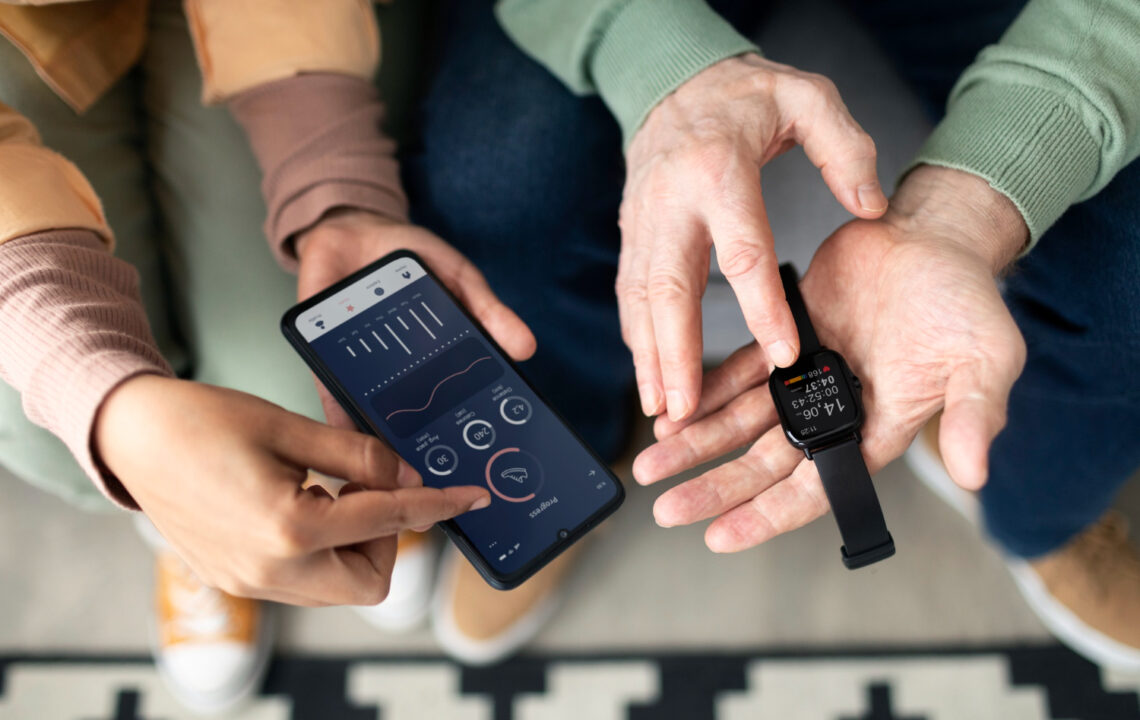
Health technologies are devices and apps that monitor physiological parameters in real time. Smartwatches measure heart rate every second, rings like the Oura Ring track sleep quality, whilst smart scales analyse body composition. Data syncs with apps, creating trends that show how you’re changing over time.
Main categories of health technologies:
- Wearables – devices worn on the body monitoring heart rate, sleep, activity
- Smart home health – intelligent scales, mattresses, blood pressure devices
- Mobile apps – diet analysis, meditation, personalised training
- Biosensors – continuous glucose, temperature, saturation measurement
- AI diagnostics – algorithms predicting disease risk from historical data
How do wearable devices work?
Wearables use optical sensors to measure blood flow through the skin. Green LEDs shine onto your wrist whilst photodiodes detect changes in light reflections synchronised with your heartbeat. This provides heart rate, heart rate variability (HRV), and blood oxygen saturation. Accelerometers and gyroscopes track movement, distinguishing between walking, running, and sleep.
The data feeds into AI algorithms that compare your results with databases of thousands of users. If your HRV drops for three consecutive nights, the algorithm detects an overload pattern and suggests rest. If your resting heart rate rises, it may signal an infection before you feel any symptoms. This is data-driven prevention, not intuition.
Parameters measured by wearables:
- Heart rate and HRV variability – indicators of stress and nervous system regeneration
- Sleep quality – REM, deep, light phases, time in bed vs actual sleep
- Physical activity – steps, distance, calories, exercise intensity
- Blood saturation SpO2 – oxygen level in blood during sleep and exercise
- Body temperature – deviations that may signal infection or fatigue
Which health parameters are worth monitoring daily?
The most important are sleep, HRV, and resting heart rate. Sleep affects everything – recovery, immunity, metabolism. HRV shows how well you’re recovering after stress and physical exertion. Resting heart rate rises when your body’s fighting infection or dealing with overload. These three parameters provide a clearer picture of fitness than daily scales or mirrors ever could.
How does artificial intelligence support health prevention?
AI analyses data from millions of users, detecting patterns that link behaviours with health outcomes. Algorithms learn that an HRV drop combined with a resting heart rate increase of 5 beats typically precedes a cold by 48 hours. This enables the system to warn users before symptoms appear, suggesting rest and immune system support.
AI applications in health:
- Infection prediction from heart rate and temperature patterns before symptoms
- Heart arrhythmia detection from rhythm irregularities unnoticeable manually
- Training optimisation matched to current fitness and recovery
- Diet personalisation based on metabolic reactions to specific meals
- Risk forecasting of chronic diseases from health history and genetics
Can health monitoring replace GP visits?
Technology supports prevention but doesn’t replace medical diagnosis. Whilst wearables detect anomalies, a doctor interprets results in the context of your medical history and clinical tests. These devices motivate healthier choices and warn you of potential issues – prompting you to see your GP earlier rather than waiting for serious symptoms. They’re a supporting tool, not a replacement for medical care.
Best devices for sleep monitoring
Sleep is the foundation of health, affecting everything from immunity to metabolism. The Withings Sleep Analyzer is a mat that sits under your mattress, tracking sleep phases, heart rate, breathing, and snoring without you wearing anything. Oura Ring is a smart ring that measures temperature and HRV, providing readiness scores each morning.
The Eight Sleep Pod is a mattress that regulates each side’s temperature separately – cooling your body to facilitate falling asleep and warming it before you wake. Sleep Medicine research shows that lowering body temperature by 1-2 degrees accelerates sleep onset and deepens rest. Sleep technology has evolved from passive tracking to active optimisation of recovery quality.
Key functions of sleep monitoring devices:
- Sleep phase tracking – REM, deep, light, waking
- Night heart rate and HRV analysis showing regeneration quality
- Sleep apnoea detection and breathing disorders
- Body and environment temperature measurement affecting sleep quality
- Smart alarm waking in optimal light sleep phase
How does technology help with training and physical activity?
Wearables measure VO2 max – your oxygen capacity, which is the best predictor of lifespan. Smartwatches estimate VO2 max from heart rate during exercise and compare it with age-related norms. A VO2 max drop signals the need for more intensive cardio training. An increase shows that your fitness is improving, even if your weight or physique remains unchanged.
Future of health – what awaits us in coming years?
Biosensors will become invisible: think skin patches, fabrics with built-in sensors, and implants monitoring parameters from inside your body.
Upcoming innovations in health technology:
- Continuous glucose monitoring for everyone not just diabetics – diet optimisation
- At-home blood analysis from a drop showing hormone and vitamin levels
- AI doctor available 24/7 diagnosing symptoms and suggesting actions
- Personalised genetics – supplements and diet matched to your DNA
- Virtual reality in pain, anxiety therapy and movement rehabilitation
Health technologies – are they worth investing in?
A basic smartwatch costs 1000-2000 zlotys and provides data previously available only in clinical settings. If it motivates you to get 30 minutes more movement daily, improve your sleep, or make more conscious food choices – the return on investment is substantial. Health is the only thing you can’t buy back once you’ve lost it. Health technologies don’t guarantee longevity, but they facilitate informed decisions that support your health every day. Start with a simple device, track one parameter, and observe how the data influences your habits.
FAQ: Most frequently asked questions about health technologies
Are wearable devices accurate?
Modern wearables measure heart rate with 95-98% accuracy, comparable to professional medical equipment, though precision depends on device quality and measurement conditions.
How long does the battery last in health monitoring devices?
Smartwatches typically last 1-2 days, rings like the Oura Ring last 4-7 days, whilst devices that sit under your mattress are mains-powered and operate continuously.
Can data from a smartwatch help a GP with diagnosis?
GPs increasingly use data from wearables to assess heart rate, sleep patterns, and activity levels – particularly valuable in cardiology and sleep medicine.
References:
1. Quer, G., et al. (2021). Wearable sensor data and self-reported symptoms for COVID-19 detection. Nature Medicine. https://doi.org/10.1038/s41591-020-1123-x
2. Perez, M. V., et al. (2019). Large-Scale Assessment of a Smartwatch to Identify Atrial Fibrillation. New England Journal of Medicine. https://doi.org/10.1056/NEJMoa1901183