
Japan is a country of volcanoes, and volcanoes are natural sources of hot water flowing from the earth’s interior. Onsens – traditional Japanese baths in thermal springs – have been part of health culture for over a thousand years. They’re not just places of hygiene, but spaces of ritual, contemplation, and deep rest for body and mind. Japanese people believe that regular onsen baths prolong life, improve circulation, and cleanse not only the skin but also the soul. The combination of hot mineral water, natural surroundings, and silence creates a regenerative experience impossible to achieve in an ordinary spa.
Key facts about Japanese onsens:
- Onsen is a bath in natural thermal water from volcanic hot springs
- Water temperature is typically 38-42 degrees Celsius ideally warming the body
- Japan has over 27000 onsens scattered throughout the country
- Water contains minerals – sulphur, iron, sodium – supporting skin and joint health
- Onsen tradition combines bathing with mindfulness principles and respect for nature
What are Japanese onsens?
Onsen is a natural volcanic hot spring used for therapeutic bathing. The word “onsen” literally means “hot spring” and according to Japanese law, water must contain at least one of 19 specified minerals and have a temperature of at least 25 degrees Celsius at the point it emerges from the source. Most onsens have much higher temperatures – 40-45 degrees requiring cooling before entering the water.
Types of Japanese onsens:
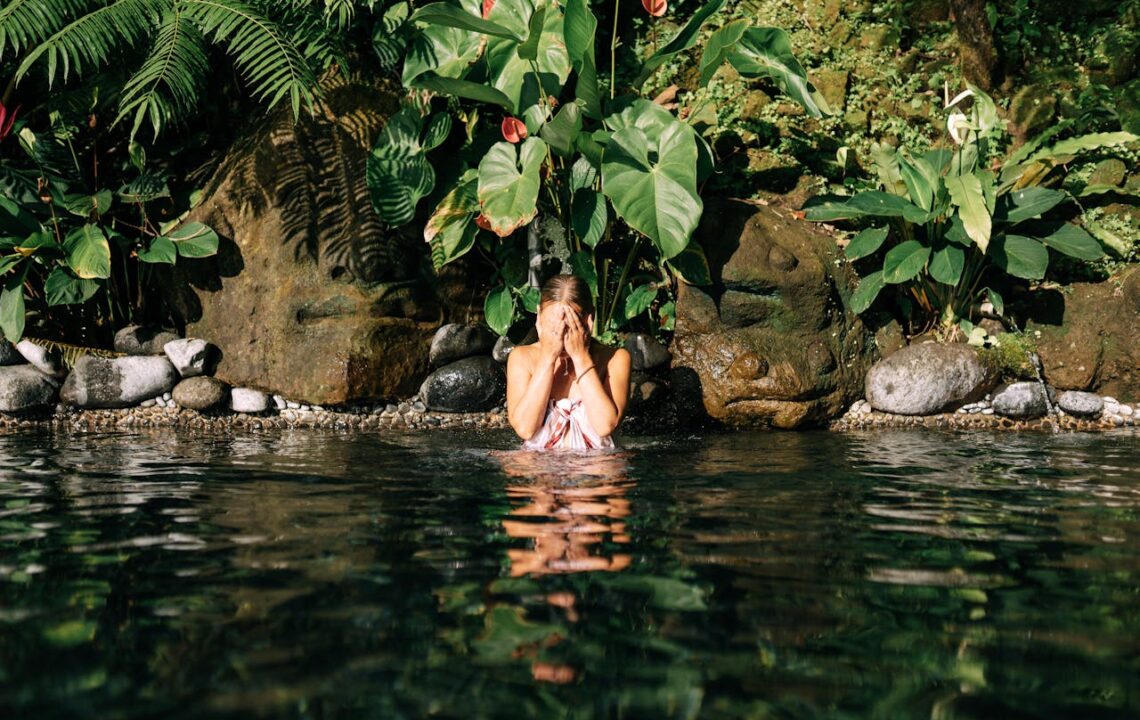
- Rotenburo – outdoor pools surrounded by nature and mountain landscapes
- Uchimuro – indoor pools in traditional wooden buildings
- Ashiyu – foot baths only, publicly accessible and free
- Kawayu – natural onsens in riverbeds where geothermal water mixes with river water
- Sunayu – baths in hot volcanic sand instead of water
How does the bathing ritual in onsen work?
The onsen ritual begins with thoroughly washing your body outside the pool – sitting on a small stool, you rinse yourself with water from a shower or ladle before entering the communal water. This is a cleanliness rule respecting other users. Then you slowly immerse yourself in the hot water allowing your body to acclimatise to the temperature. Japanese people spend 10-20 minutes in an onsen contemplating the surroundings, breathing deeply, letting thoughts escape.
After leaving the water, tradition dictates not rinsing off – minerals should remain on the skin continuing their therapeutic action. Then you rest in a yukata (light kimono) drinking cold water or milk. The entire process is meditation in motion – consciously performing each action with respect for the space and other people.
Steps of the bathing ritual in onsen:
- Undress completely – onsens are baths without swimsuits
- Wash your body thoroughly before entering the communal pool
- Immerse yourself slowly giving your body time to adapt to the temperature
- Sit in silence contemplating surroundings and breathing deeply
- Exit after 10-20 minutes don’t remain too long in hot water
- Don’t rinse off minerals let them continue acting on the skin
Why do Japanese people value onsens so highly?
Japanese people perceive onsen as a way to disconnect from everyday life and return to balance. In a culture focused on work, duties, and social expectations, onsen offers a space of complete privacy and peace. It’s a place where body and mind can regenerate without hurry. Research shows that communities living near onsens have lower rates of cardiovascular disease and longer average life expectancy.
What health properties do hot springs have?
Hot thermal water acts on the organism on multiple levels. A temperature of 40-42 degrees dilates blood vessels improving circulation and delivering more oxygen to tissues. Hydrostatic pressure relieves joint load bringing relief to people with arthritis or back pain. Minerals dissolved in water – sulphur, sodium, calcium, iron – penetrate through the skin affecting cell metabolism.
Regular onsen baths lower cortisol levels – the stress hormone and stimulate endorphin production. This makes you feel not only physically relaxed but also mentally calm after bathing. Japanese traditional medicine treats onsen as therapy for chronic ailments – insomnia, muscle tension, skin problems, poor circulation.
Sulphurous water supports eczema and psoriasis treatment, iron-rich helps with anaemia, sodium-rich alleviates digestive problems. Each onsen has a unique chemical composition resulting from local geology which means different springs specialise in different ailments. Japanese people often choose onsens according to water composition matched to their health needs.
Can everyone use an onsen?
Most onsens are open to everyone, but certain restrictions exist. People with tattoos traditionally are not admitted, tattoos in Japan are associated with yakuza and gangs. Currently some modern onsens accept small tattoos covered with a plaster, but large ones remain problematic. Pregnant women, people with heart disease or high blood pressure should consult a doctor before visiting – hot water affects the circulatory system.
How does water temperature affect the organism?
A temperature of 40-42 degrees triggers physiological reactions beneficial for health – vessel dilation, metabolism acceleration, perspiration stimulation.
Impact of hot water on the body:
- Blood vessel dilation improves circulation and lowers pressure
- Metabolism acceleration supports calorie burning and detoxification
- Perspiration stimulation cleanses skin of toxins and pollutants
- Muscle relaxation reduces tension and chronic pain
- Stress level reduction through cortisol and adrenaline reduction
Onsen and mindfulness – how bathing becomes meditation?
Japanese onsen philosophy combines bathing with mindfulness practices – full presence in the present moment. Immersion in hot water requires focus on body sensations, breathing rhythm, surrounding sounds. It’s a natural form of meditation accessible without years of practice – water warmth calms the mind automatically.
Onsens are often located in natural surroundings: mountains, forests, rivers – which strengthens the relaxing effect. The combination of shinrin-yoku (forest bathing) with onsen creates a synergistic experience engaging all senses. You hear water murmur and birdsong, see greenery of trees or snow on branches, smell sulphur and wood, taste purity of mountain air.
Elements of mindfulness in onsen tradition:
- Silence and peace – conversations in onsens are limited to a minimum
- Conscious breathing – deep breaths synchronising body and mind
- Focus on sensations – water warmth, skin texture, muscle relaxation
- Nature contemplation – landscape observation without judging or analysing
- Acceptance of impermanence – each bath is unique and unrepeatable
What are the etiquette rules in Japanese onsens?
Onsen etiquette is based on respect for communal space and other users. Basic rules are thorough body washing before entering the pool, prohibition of bringing towels into water (you can fold them on your head), silence and peace, avoiding intense staring at others. Drinking alcohol directly before bathing or diving or swimming is forbidden – onsen is a place of contemplation not recreation. Phones and cameras are prohibited protecting users’ privacy.
Most beautiful onsens in Japan – where is it worth going?
Hakone near Tokyo offers dozens of onsens with views of Mount Fuji surrounded by a volcanic valley. Kusatsu in the Gunma mountains is famous for the highest sulphur concentration in healing water for skin. Beppu on Kyushu island is a centre with eight different types of onsens called “hells” due to intense water colours – red, blue, muddy.
Nyuto Onsen in the Tohoku region offers traditional wooden buildings surrounded by snow in winter creating an atmosphere from old Japan. Each region has unique onsens reflecting local geology and tradition – from minimalist modern to rustic historical.
FAQ: Most frequently asked questions about Japanese onsens
Do you enter an onsen in a swimsuit?
In traditional Japanese onsens, everyone bathes completely naked – swimsuits are forbidden for hygienic reasons.
Can people with tattoos use onsens?
Most traditional onsens prohibit entry to people with tattoos due to associations with gangs, but some modern facilities accept small tattoos covered with a plaster.
How much time can you spend in hot onsen water?
The recommended time is 10-20 minutes in hot water, after which you should exit, rest, and possibly return – staying too long can cause dizziness.
References:
1. Goto, Y., et al. (2018). Physical and Mental Effects of Bathing: A Randomized Intervention Study. Evidence-Based Complementary and Alternative Medicine. https://doi.org/10.1155/2018/9521086
2. Becker, B. E. (2009). Aquatic therapy: scientific foundations and clinical rehabilitation applications. PM&R Journal. https://doi.org/10.1016/j.pmrj.2009.05.017